It was 6:12, and half the team was still rolling soccer balls under their feet while I was trying to explain the next passing pattern. One kid was tying a shoe. Two were poking each other with pinnies. An assistant had already started setting the next grid, which meant every set of eyes drifted that direction instead of mine. I heard myself getting louder. That’s usually the first sign you picked the wrong move.
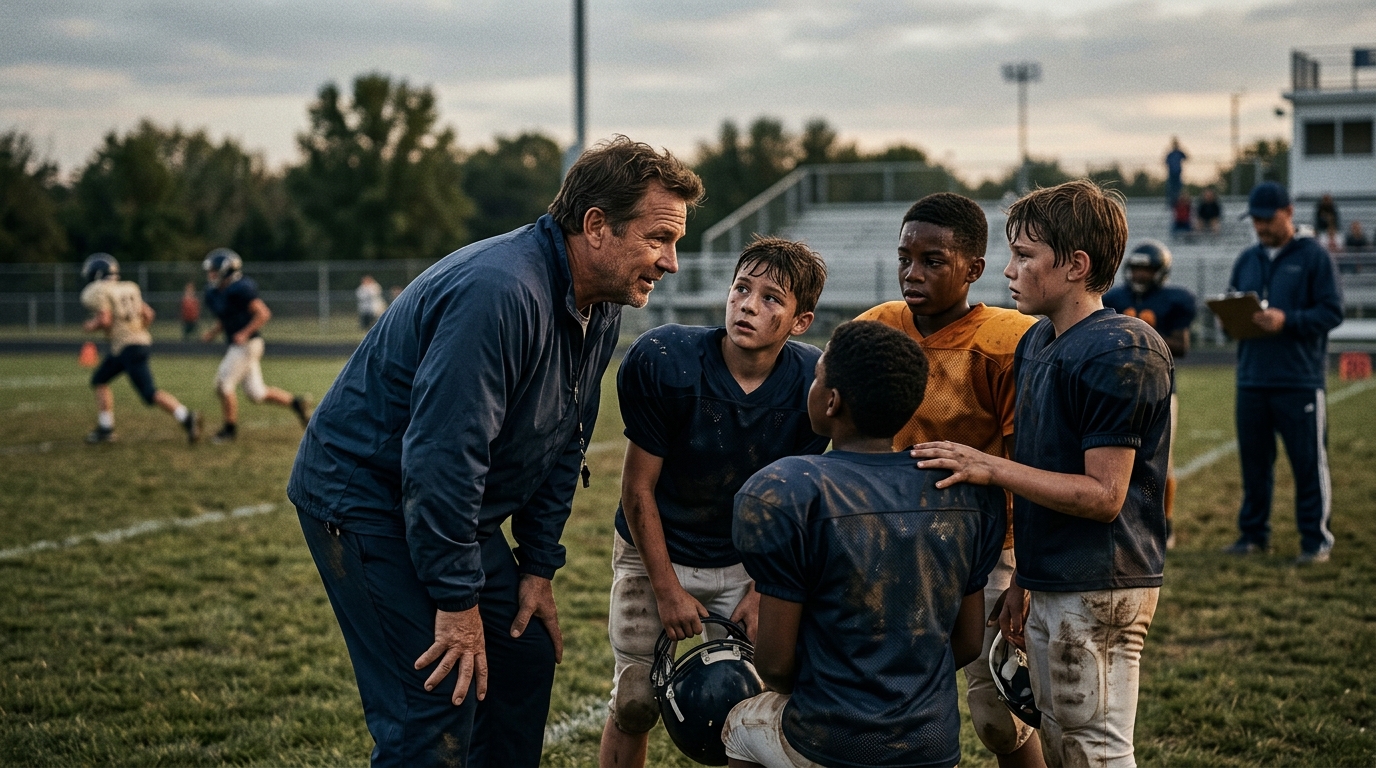
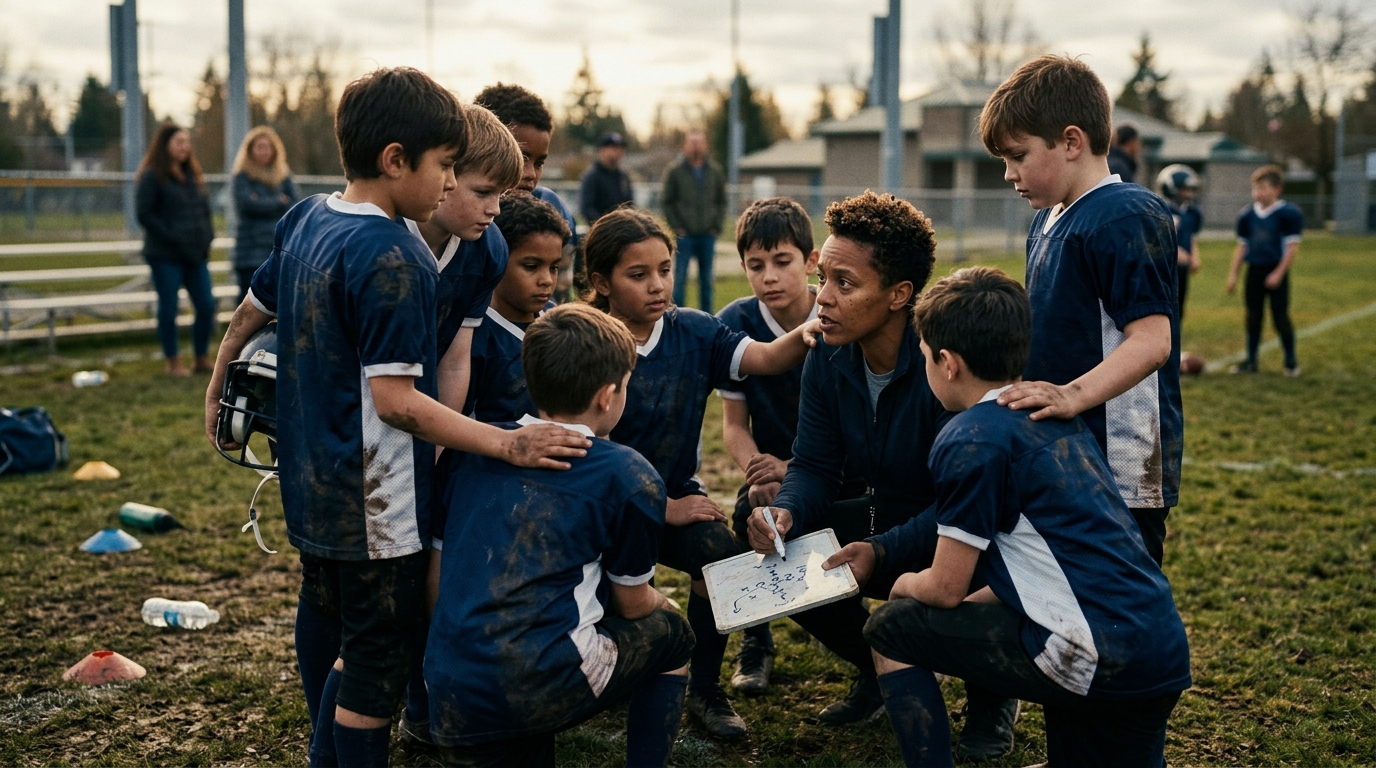
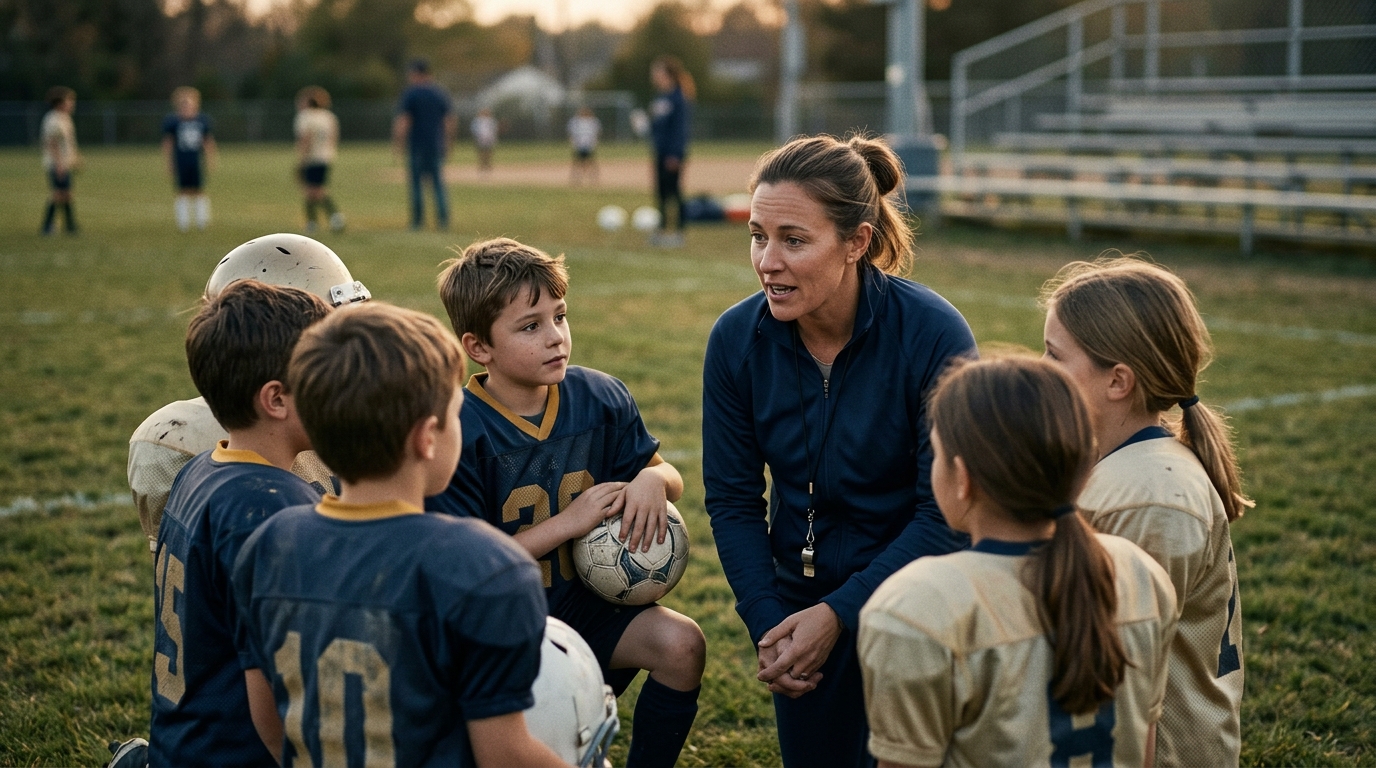
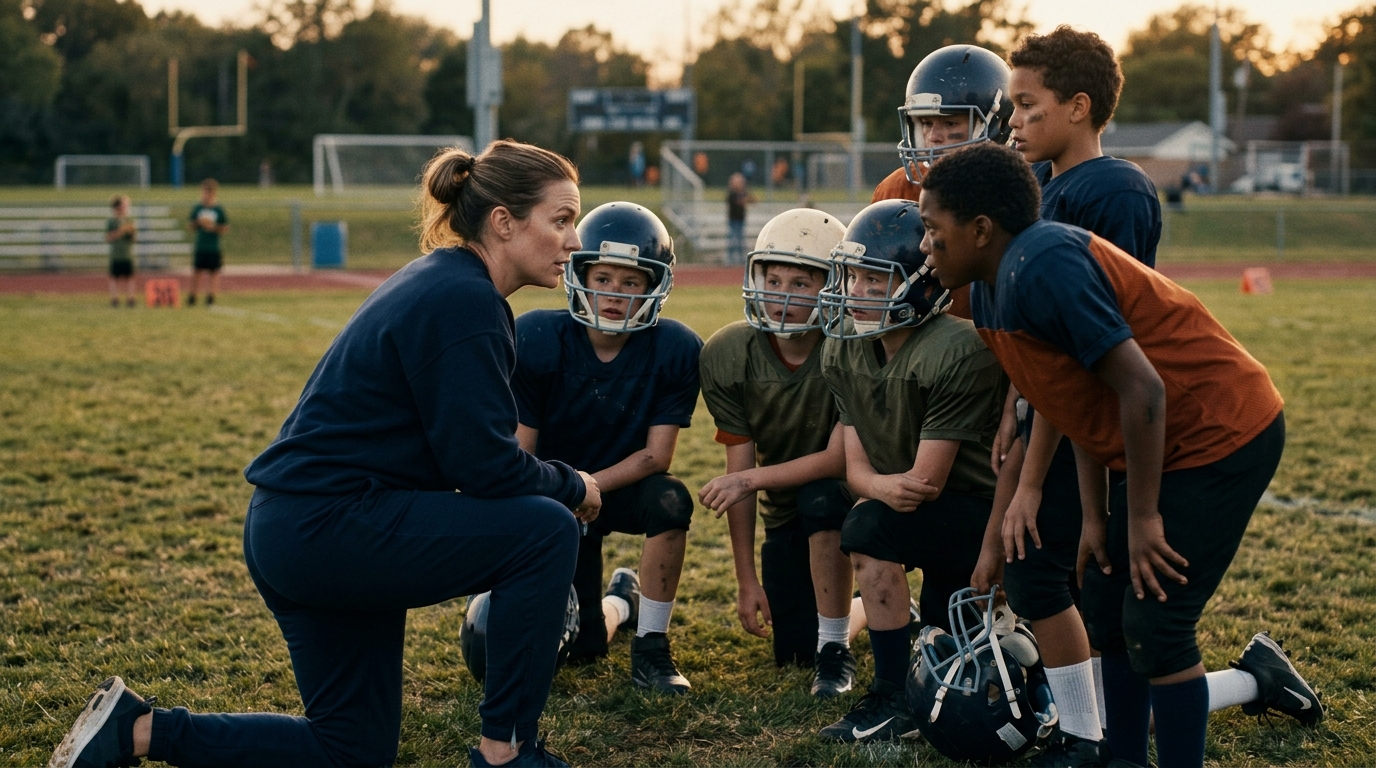
So we stopped. I didn’t repeat the instruction. I just said, “Take a knee.”
Not as punishment. Not as a power play. Just as a clean reset.
And in about three seconds, practice got organized again.
Coaches talk a lot about attention like it’s some character issue. It usually isn’t. Most of the time, kids aren’t disrespectful. They’re just still in motion. Their bodies are moving, their brains are on the last rep, and we’re trying to drop new information into a room that hasn’t gotten quiet yet.
I learned this the hard way over a lot of years. If I gave instructions while kids were standing, wandering, bouncing, fiddling with gloves, or staring at the next drill setup, I’d get about 60 percent of the team and then spend the next five minutes patching holes. One group would start wrong. Another would ask a question I had already answered. A third would copy the wrong version because that’s what they saw first.
That’s not a listening problem. That’s a setup problem.
Taking a knee is a practice-management tool, not a toughness test
When you say, “Take a knee”, you’re doing three useful things at once.
- You stop body movement.
- You lower eye level and reduce distractions.
- You create a clear line between the last rep and the next instruction.
It works because it changes the moment physically before you ask kids to change it mentally.
That matters more than coaches like to admit.
Young players don’t always switch gears just because we started talking. They switch gears when the environment tells them the rep is over and a new one is beginning.
Still bodies hear better than busy bodies.
I’ve used this with little kids, middle school teams, and high school groups. The older the group, the more some coaches worry it feels too elementary. In my experience, older players don’t mind structure nearly as much as adults think they do. They mind wasted time. If taking a knee makes the next drill cleaner and faster, they’re in.
When to use it
Not before every sentence. Not every three minutes. If you do that, it loses its punch and practice starts to feel choppy.
Use it when the next instruction actually matters.
- Before a new drill with multiple parts
- Before a change in groups or rotation
- After a sloppy segment when you need a reset
- When energy is high and attention is scattered
- When safety or spacing matters on the next rep
If all you need is, “Switch lines,” then just say it. Don’t turn every transition into a speech.
But if you’re about to explain where the pass goes, who follows it, where the extra balls are, and what happens after the shot, standing kids will miss half of it. Then you’ll spend the next four minutes correcting something that was preventable.
How to do it without making it weird
Keep the language plain and the tone normal.
“Take a knee. Eyes here. Two things, then we go.”
That’s enough.
The phrase matters less than the consistency. If the team learns that taking a knee means quick information, not a lecture, they respond faster. If every reset turns into a three-minute monologue, they’ll start dreading the command.
That part is on us.
I try to follow a simple rule: if I ask for stillness, I owe them clarity. Short explanation. One demo if needed. Send them.
Don’t kneel them down and then ramble your way through six coaching points, a life lesson, and a story from your own playing days. That’s how a useful routine turns into dead air.
What it fixes that yelling never does
Some coaches respond to scattered attention by raising volume. I’ve done it too. But louder doesn’t equal clearer. Usually it just adds tension to confusion.
When you take a knee first, you don’t have to compete with movement. You don’t have to talk over bouncing balls or side chatter or wandering feet. You’re not dragging attention back. You’re building the condition where attention is easier to give.
That’s a big difference.
And there’s a side benefit: assistants get cleaner cues too. Parents on the sideline can tell there’s a structure. The whole practice feels more settled, even if the energy stays high.
Calm isn’t quiet. Calm is organized.
One small decision that saves ten little corrections
Good practices don’t usually fall apart on the big stuff. They leak time on tiny preventable messes. Bad starts to drills. Repeated instructions. Kids doing version A while you meant version B. The same correction made four times because not everyone heard it the first time.
Taking a knee won’t solve every practice problem. But it’s one of those small, repeatable moves that keeps confusion from multiplying.
If you need their eyes, earn the moment first. Stop the feet. Lower the noise. Make the transition obvious.
Then talk.
It’s a simple move. But simple beats louder almost every time.