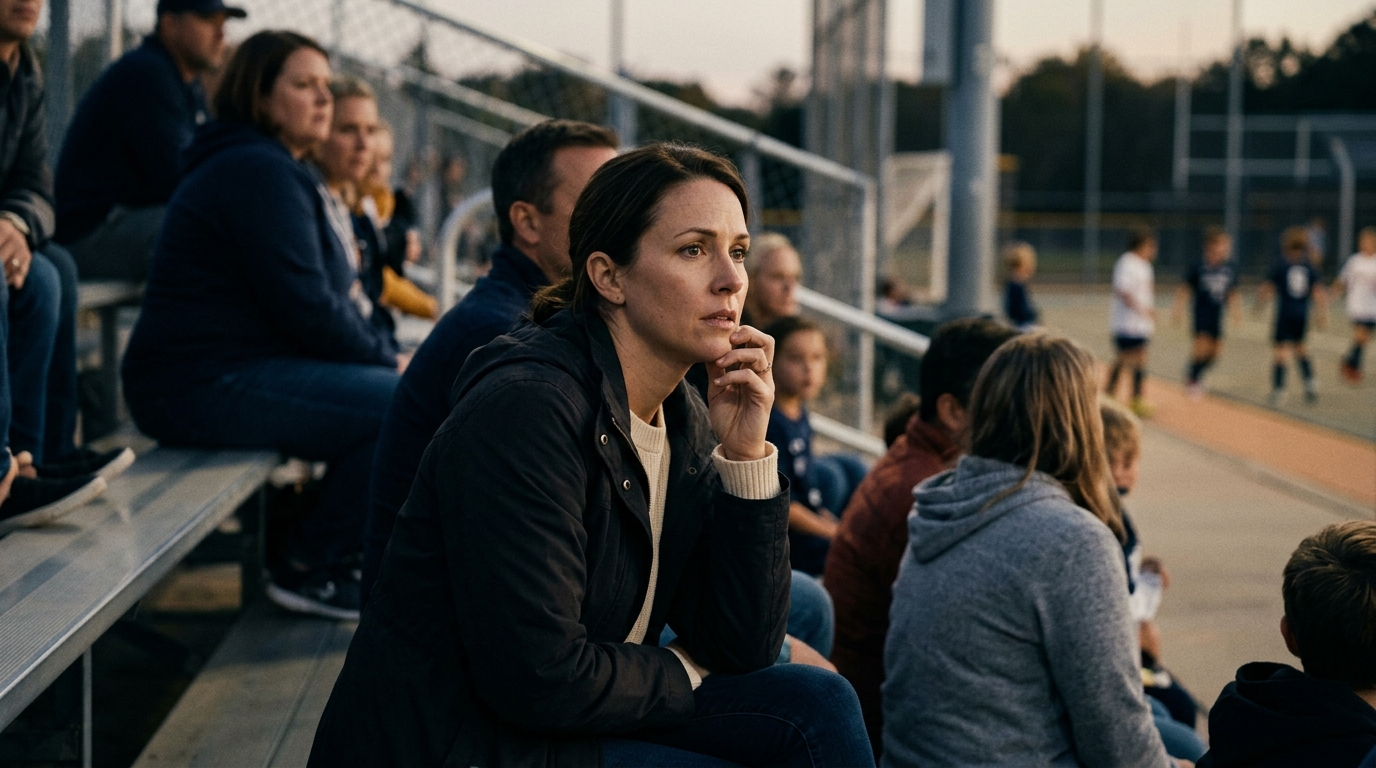

Youth sports should still feel like scraped knees, missed catches, bad cartwheels in warmups, and kids asking on the ride home, “When’s the next game?” If you’ve stood on a sideline lately and thought, Why does this feel this tight for nine-year-olds? you’re not imagining it.
I’ve been around this long enough to know the warning signs usually show up before anyone says them out loud. The parking lot is full. The team store is busy. The schedule is packed. But then you watch a kid make one mistake and immediately look at the stands. You hear adults talking about “getting behind” in third grade. You see families running from lesson to lesson like they’re trying not to miss a flight.
That’s the part people feel but don’t always name: a game kids loved starts feeling like work.
What’s Happening to Youth Sports?
From the outside, youth sports can look healthy just because they look busy. More teams. More tournaments. More camps. More texts. But busy and healthy are not the same thing.
I’ve coached plenty of kids who were involved in everything and enjoying almost none of it. They weren’t playing because they were lit up by it. They were keeping pace with the machine built around them.
Busy is not the same as bought in.
The Pressure to Win Starts Too Early
You hear it in conversations that sound normal now but shouldn’t. A second grader boots a ground ball and somebody’s already talking private instruction. A ten-year-old wants to try a new sport and adults act like they’re making a life-altering mistake.
After 20 years of coaching, I can tell you pressure rarely arrives wearing a big scary label. It usually walks in dressed like good intentions.
- “If they want a scholarship, they’ve got to get serious.”
- “They can’t fall behind.”
- “They need to pick one and commit.”
I’ve watched kids tighten up under that kind of messaging. They stop reacting. They start performing. They play scared. After a mistake, their eyes go straight to the sideline to check the temperature.
That’s not development. That’s surveillance with cleats on.
Pressure doesn’t always yell. Sometimes it politely calls itself opportunity.
When the message is always prove it, earn it, don’t waste it, the game stops feeling like a place to grow. It starts feeling like a test.
Youth Sports Are Looking More and More Like a Business
Travel ball. Skill sessions. Position trainers. Elite camps. Recovery gadgets. Highlight reels. Some of that can help. I’ve seen useful instruction change a kid’s confidence in a good way. But I’ve also seen adults stack so much onto a young athlete that there’s no oxygen left.
That’s when I start asking the real question: Whose pace is this?
Because there’s a difference between a kid asking for more and adults building a whole plan the kid is too young to evaluate. I’ve seen both. One comes from hunger. The other usually comes from fear.
I played for a long time and I’ve coached long enough to know most kids are not headed to the pros. Most are not getting full rides. That is not depressing news. It’s clarifying news.
Sports were never supposed to be only a sorting system for future athletes. They’re one of the best places kids learn how to handle disappointment, deal with nerves, be part of something, and figure out who they are when things don’t go their way.
Sports are a classroom, not just a pipeline.
Money Is Changing Who Gets to Stay In
This one is impossible to miss now. A lot of families aren’t just registering for sports. They’re reorganizing their budget around them.
I’ve had conversations with parents deciding between one more season expense and something their family actually needs. I’ve watched good players miss camps, skip travel, or stay quiet about extra training because they know the answer before they ask. Meanwhile, the “extras” keep getting treated like they’re mandatory.
That’s where the whole thing starts drifting. Not always on purpose. But in real life, access starts deciding who gets seen and who gets left behind.
Some of the toughest, most coachable kids I’ve ever worked with were not the ones with the most resources. And some kids get pushed out not because they lack talent or heart, but because the bill keeps growing.
When commitment starts getting measured by spending, a lot of kids never get the same shot.
Parents Can Steady the Experience — Or Make It Heavier
Most parents are trying to help. They drive all over town, pay fees, wash uniforms at 10 p.m., bring snacks, and give up weekends. Kids feel that support. It matters.
And still, from the bench, you can spot the difference between support and weight pretty fast.
You see the kid whose whole body changes after striking out because they already know the car ride is coming. You hear the postgame breakdown start before the seat belt clicks. You watch a rough game turn into a family mood for the rest of the night.
I’ve coached enough to know this part clearly: home is either where a kid exhales or where the performance review continues.
- Am I praising effort, toughness, and growth, or just results?
- Am I hearing what my kid wants from sports, or telling them what it should mean?
- After a bad game, do they feel loved or analyzed?
Kids need room to fail without feeling like they let down the people they care about most. That room is where confidence gets built honestly.
The car ride home is part of coaching, whether parents mean for it to be or not.
What Can We Do to Bring Back the Joy?
The good news is this stuff is fixable. I’ve seen team cultures shift. I’ve seen tense kids loosen back up. I’ve seen standards stay high while the experience gets lighter and healthier.
It doesn’t take lowering expectations. It takes remembering what makes kids want to keep showing up.
Put Fun Back in the Middle
Fun is not some bonus kids get after they’ve “earned it.” In youth sports, fun is often the thing that keeps effort alive.
Kids who enjoy being there usually listen better, bounce back faster, and stick with hard things longer. That’s not soft. That’s just true.
I’ve had teams work hard because they loved the environment. I’ve also seen teams with every resource in the world drag through practice because joy had been coached right out of them.
Ask your player what they actually love about their sport. It might be their friends. It might be learning a skill. It might just be game day. Pay attention to that answer. Protect it.
If a kid loves the process, you won’t have to chase them toward improvement.
Don’t Rush Specialization
I’ve coached multi-sport kids who became better athletes because they learned different movements, different roles, and different ways to compete. I’ve also seen kids buried in one sport too early end up tired, flat, and mentally done before high school.
Different sports help. Downtime helps. Being a whole kid helps.
When a child’s identity gets trapped inside one jersey, every slump feels personal. Every setback feels bigger than it is.
Trying other things can improve athleticism, reduce overuse issues, and keep sports fresh. More than that, it gives kids the chance to discover what they actually enjoy instead of just following the loudest plan in the room.
A wider path early often leads to a stronger athlete later.
Support Coaches Instead of Coaching Over Them
Most youth coaches are not doing this because it’s easy. They’re giving up evenings, weekends, and a lot of mental energy because they care about kids. They won’t do it perfectly. Nobody does.
But sideline coaching from the bleachers makes a mess fast.
I’ve watched kids freeze because the bench is saying one thing and a parent behind the fence is saying another. The kid isn’t choosing between two strategies. They’re just getting flooded.
If you want to help, build a real relationship with the coach. Communicate clearly. Ask questions at the right time. During games and practice, let the kid have one voice to follow.
Kids do better when the adults around them act connected instead of competing for control.
Take Mental Wellness Seriously
Not every struggle shows up as ice, tape, or a limp. Sometimes it looks like a kid shutting down after one mistake. Sometimes it’s tears after a pretty normal hard game. Sometimes it’s the player who used to love being there suddenly dragging their feet to the car.
This is part of my work, and I can tell you mental skills matter. Confidence matters. Resetting matters. Learning how to handle nerves, frustration, failure, and perspective matters.
Those aren’t bonus skills for elite athletes. They’re life skills built in a sports setting.
Strong athletes are not just physically trained. They’re supported, self-aware, and equipped for hard moments.
If a kid’s body is in the game but their mind is drowning, that still counts as struggling.
Final Thoughts
At their best, youth sports still teach some of the best lessons kids can get: show up, work with people, handle losing, keep going, care about something beyond yourself.
But adults have to protect the point of it.
The scoreboard matters. Goals matter. Standards matter. But if the cost is a kid who no longer wants to play, something important got lost on the way.
Next time you’re at the field, rink, or gym, look around for the small tells. Watch body language after mistakes. Listen to what adults celebrate. Notice whether kids seem free enough to play or tight enough to perform.
Sports should challenge kids. They should also feel alive. They should build character and leave memories worth keeping. Most of all, they should still belong to the kids playing them.
That’s worth protecting.
If your player needs help with confidence, pressure, or bouncing back after mistakes, Voluntold mindset coaching can help.