
You know Kirk Herbstreit as the voice breaking down college football on TV. But this one landed differently because he wasn’t talking like an analyst. He was talking like a dad who lived the youth sports scramble and, with some distance now, can admit his family probably should’ve slowed down sooner.
I’ve been around this long enough to know that kind of honesty matters. It usually comes after the fact. After the packed weekends. After the car meals. After everybody spent a few years calling it dedication when it was really a family running on fumes.
His warning is one a lot of parents need to hear: youth sports can quietly become the organizing principle of your whole house while everyone keeps telling themselves this is just what committed families do. Full calendar. Extra training. More travel. That low-grade fear that if you back off for a minute, your kid falls behind.
When Sports Stop Fitting Your Family
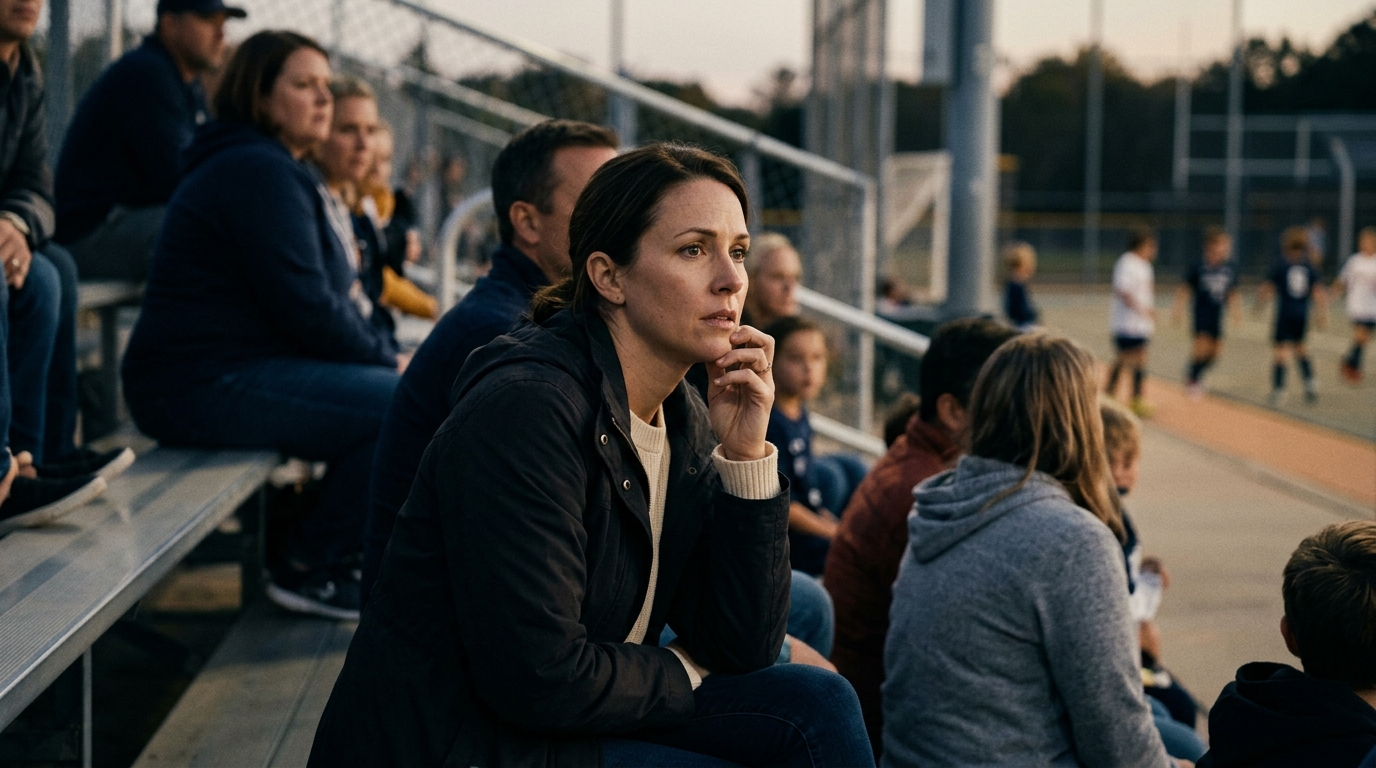
You can see it before anybody says it out loud. A kid pulling on a jersey in the backseat in a parking lot. Dinner coming out of foil between games. Mom checking one team app while Dad answers another coach text and the younger sibling is asleep under a chair with a hoodie for a blanket. Everybody calls it commitment. A lot of the time, it’s overload wearing a nicer name.
Herbstreit said his own family got swallowed by that pace. Four boys. Multiple sports. Year-round schedules. Practices, games, travel, tournaments. From the outside, that can look like a family all-in. From the inside, it can feel like nobody gets to breathe.
- Weekends stacked around tournament times instead of family time
- Meals in the car because there isn’t another option
- Trips planned around sports calendars, or scrapped because of them
- Kids needing a break but not feeling like they can say it plainly
That last one is the one coaches and parents miss most. Kids usually show you the truth before they tell you the truth.
When sports becomes the center of family life instead of one part of it, everybody feels it.
The Pressure Kids Carry Quietly
One of the biggest lessons coaching teaches you is this: a kid can look fine and still be overloaded. They still show up. They still lace up. They still say, “I’m good.” Then warmups look flat. Their fuse gets short. The kid who used to play free starts playing tight.
Herbstreit said two of his sons, now in college, later told him they were close to burnout in high school. They didn’t stop because they thought stopping would disappoint him. That’s a hard sentence for any parent to hear.
I’ve heard my own versions of it over the years. Not always in big dramatic talks. Sometimes it’s a player staring at the floor saying, “It’s okay.” Sometimes it’s a kid asking if an injury means they let everyone down. Sometimes it’s a teenager who doesn’t hate the sport at all—they just hate never getting away from it.
That’s the pressure adults often miss. Not always the loud kind from the bleachers. The quieter kind. The money spent. The rides arranged. The private lessons. The whole family schedule bending around one thing. Kids absorb the message: this matters a lot, so don’t be the one who messes it up.
Kids don’t need pressure to feel pressure.
What Sports Are Actually Supposed to Give Them
I’m pro-sports. Deeply. I’ve seen kids become tougher, steadier, more accountable, more resilient. I’ve watched them learn teamwork, communication, discipline, and how to handle failure without folding up. Those benefits are real.
But more sports does not automatically mean more growth.
That’s where families get sideways. Wins, rankings, scholarships, exposure, nonstop development—those things start taking up too much space, and suddenly the thing that was supposed to help the kid is now controlling the family.
- Time to eat together without rushing out the door
- Unstructured play with no coach watching and no evaluation attached
- Rest, boredom, creativity, and room to just be a kid
- Freedom to step back, switch sports, or stop when it’s not healthy
Not every open hour needs to be turned into an advantage plan.
Balanced kids usually last longer than overbooked kids.
Pushing Back on the “More Is Better” Story
You hear it all the time in youth sports: private lessons early, one sport year-round, travel ball by 10, extra work always. If not, your kid is behind. It gets repeated enough that good parents start treating it like fact.
It’s not.
I’ve coached long enough to know there’s no one path. Plenty of high-level athletes didn’t specialize young. A lot of them played multiple sports. A lot of them had off-seasons. A lot of them got better because they stepped away, recovered, and came back hungry instead of drained.
Rest helps the body. Breaks help the mind. Variety helps development. I’ve seen kids improve after doing less, not more. Better energy. Better mood. Better focus. Better compete level. Sometimes the missing piece isn’t another lesson. Sometimes it’s an empty Saturday.
If your 11-year-old wants to skip an extra session to hang with friends, mess around in the driveway, or do absolutely nothing for a while, that may not be laziness. That may be a healthy kid asking for some air.
Sometimes less is not quitting. It’s recovery.
What Parents Can Do Now
You don’t need some giant family summit to fix the tone. Most of the time this changes one conversation at a time, one calendar choice at a time, one car ride at a time.
- Check in about more than sports. Ask about school, sleep, friends, stress, mood. Not just practice.
- Let rest count. A day off is not weakness. Recovery is part of growth.
- Say no to some of it. Not every tournament matters. Not every add-on helps.
- Praise the person, not just the performance. Effort, attitude, coachability, and sportsmanship hold up longer than one stat line.
And if they tell you they’re tired, believe them. If they say it isn’t fun right now, don’t sprint to talk them out of it. A kid does not have to be injured for something to be wrong.
The Parent Sets the Temperature
From the bench and from home, here’s what I know: kids study us. They read our face after their mistake. They feel the silence in the car. They notice what gets talked about at dinner and what gets celebrated after the game. They know whether sports is something the family enjoys or something the family serves.
Your tone matters. On the sideline. After a loss. On some random Tuesday when nobody really feels like going. If you stay steady, keep perspective, and treat sports like part of life instead of the whole thing, your kid has a better chance to do the same.
Kids don’t just hear what we say about sports. They live inside how we act about it.
Let Kids Be Kids
What makes Herbstreit’s message stick is that it came from hindsight, not a hot take. A sports dad looking back and realizing the pace got too big and the pressure on his kids was heavier than he knew in the moment.
That’s the warning.
Childhood already moves fast. The wins fade. The losses fade. The trophies end up in a box, a closet, or a basement shelf. What sticks is how those years felt at home. Whether the game brought your family together or wore everybody down.
You do not have to do everything. Your kid does not need every opportunity. Sometimes the best move a parent can make is to clear some space and remember a child is a whole person long before they’re an athlete.
Protect the kid, not just the schedule.