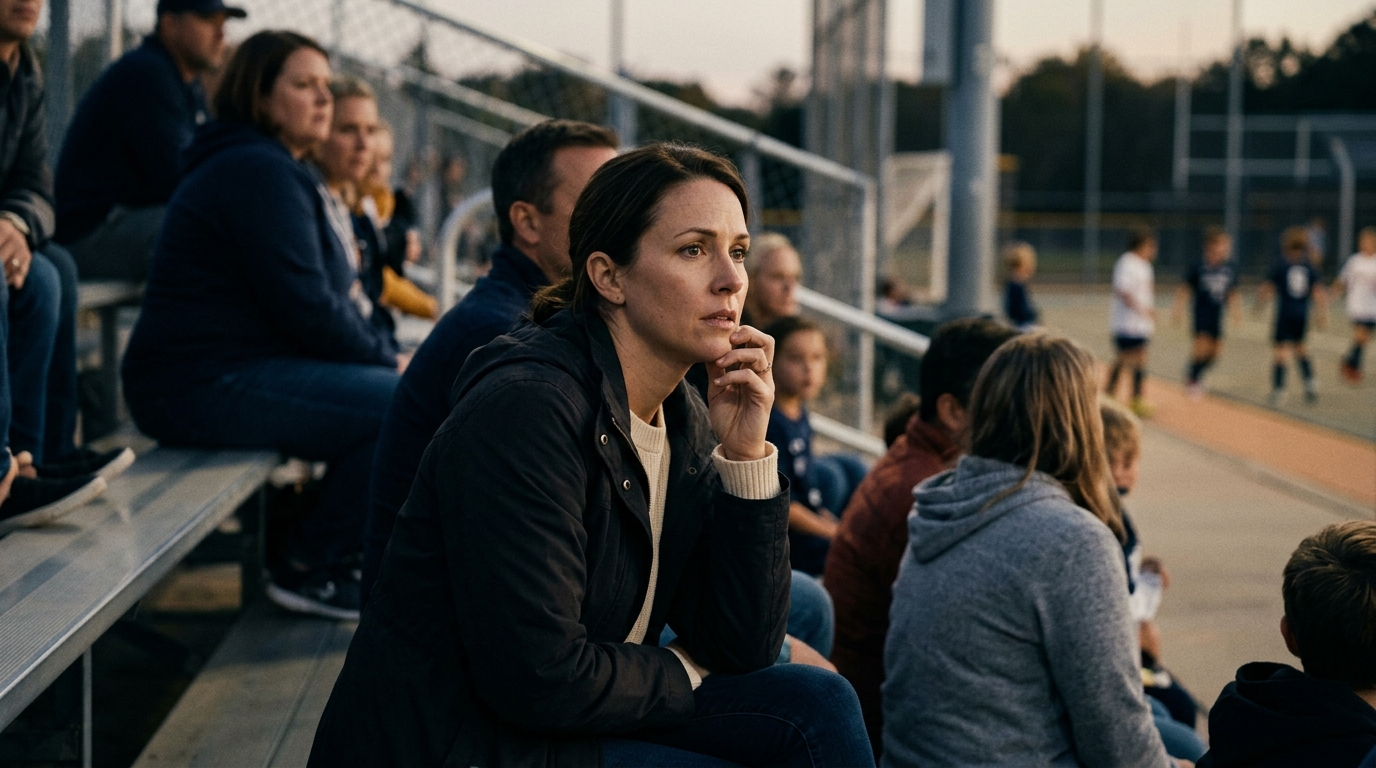

There’s a moment almost every sports parent knows: your kid comes off the field with slumped shoulders, climbs into the car quiet, and every part of you wants to fix it. You want to explain the missed pass, the bad angle, the hesitation, the error. I get it. But that’s usually the exact moment to remember: you are not their coach. You’re the person they should be able to come back to when the game feels heavy.
The Car Ride Home Test
If you’re doing most of the talking before they’ve even taken a breath, that’s your cue to back off. The ride home is not halftime. It’s not film review. It’s not the place for a surprise performance meeting at a red light.
I’ve seen kids stare out the window and nod through a five-minute breakdown they never asked for. I’ve seen parents think they’re helping while the kid is just trying to survive the drive. Most of the time, they already know what went wrong. They felt it on the field before you ever opened your mouth.
Try this instead: “What did you learn today?” or “I love watching you play.”
Short works. Calm works. Questions work better than speeches.
They Need a Safe Place, Not a Second Coach
By the time practice or a game ends, your athlete has heard plenty. Coaches corrected them. Teammates reacted. They’ve already replayed their mistakes in their own head about ten times. What they usually need from a parent isn’t more instruction. It’s somewhere safe to land.
That doesn’t mean you don’t care. It means you know your role. Support. Encouragement. Perspective. A place to decompress before the next thing starts. Kids play better over time when home still feels like home, not an extension of the bench.
After 20 years playing and 20 more coaching, I can tell you this: the athletes who stay steady longest usually have at least one adult around them who doesn’t make every game feel like an evaluation. That matters more than parents realize.
Don’t Let Your Ego Drive the Talk
This one is hard, because it hides behind good intentions. Sometimes we say we’re helping, but really we’re reacting. We’re embarrassed. We’re frustrated. We wanted them to look sharper. We wanted today to go better. We’re carrying our own competitiveness into their back seat.
I’ve watched parents tense up more over a mistake than the kid who made it. I’ve watched adults talk fast after losses because they needed relief. That’s not coaching. That’s spillover.
It’s their game, not your unfinished sports story.
Before you say anything, ask yourself: am I saying this for them, or for me?
Be Their Anchor
Wins are fun. Losses sting. Bad games happen. Great games happen too. Your job is not to rise and fall with every result. Your job is to be the same person after 3 goals, 3 errors, a win, a benching, a bad call, or a rough night.
Kids need somebody steady. Not fake. Not checked out. Steady. The parent who hands them water after a brutal game the same way they do after a big one. The parent who doesn’t turn love into a scoreboard. The parent who can sit in silence without making the moment worse.
That kind of consistency builds trust. And trust is what keeps them talking to you when sports get complicated.
Your kid doesn’t need a second coach—they need their parent. Be the steady voice after a loss, the calm during chaos, and the cheerleader when they’re unsure. Save the breakdowns and lectures. Sometimes, the most powerful thing you can say is, “I’m proud of you. I love watching you play.”
Final Word
Your kid needs a parent more than they need another postgame breakdown. Give them love. Give them space. Give them encouragement. Let the coaching happen on the field.
Not every quiet car ride needs to be filled.
Sometimes the best thing you can do is be there, keep it simple, and remind them they never have to earn your support with a good game.