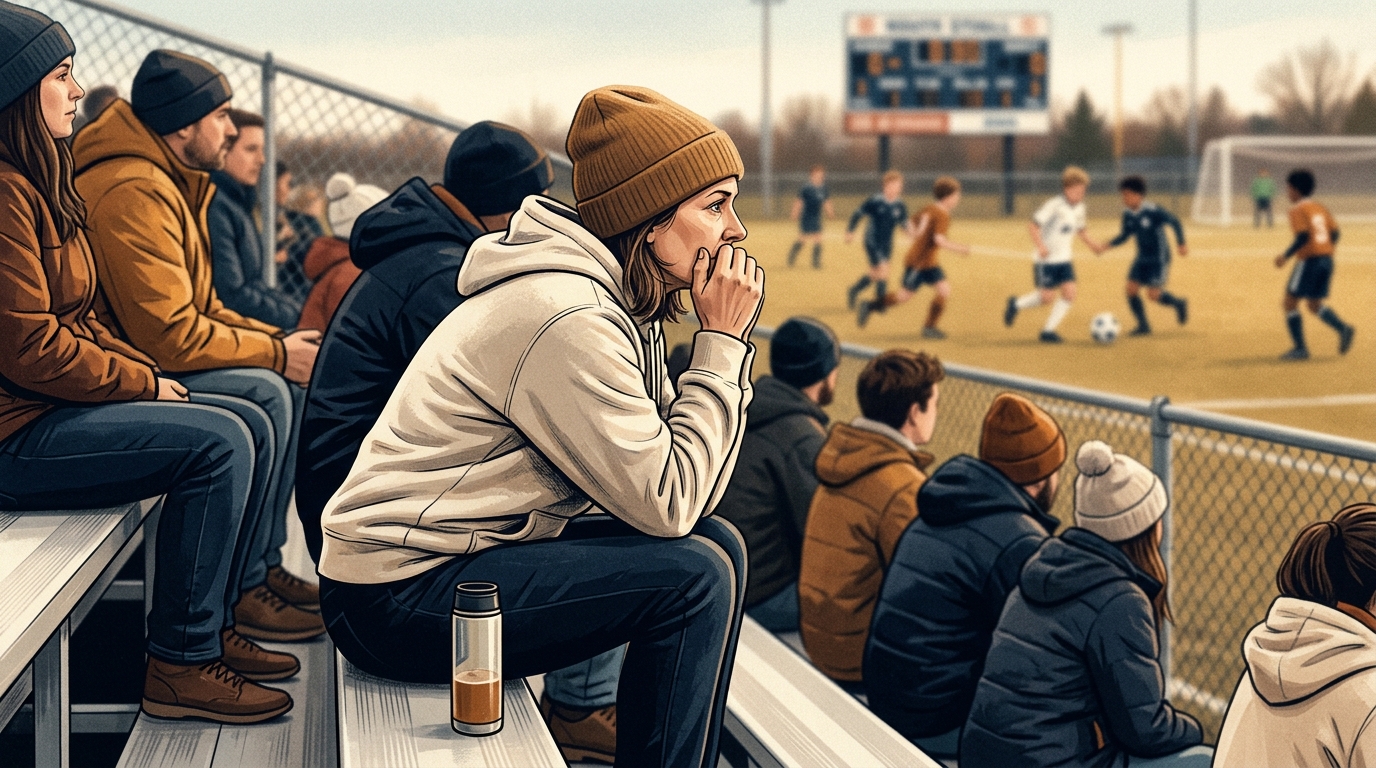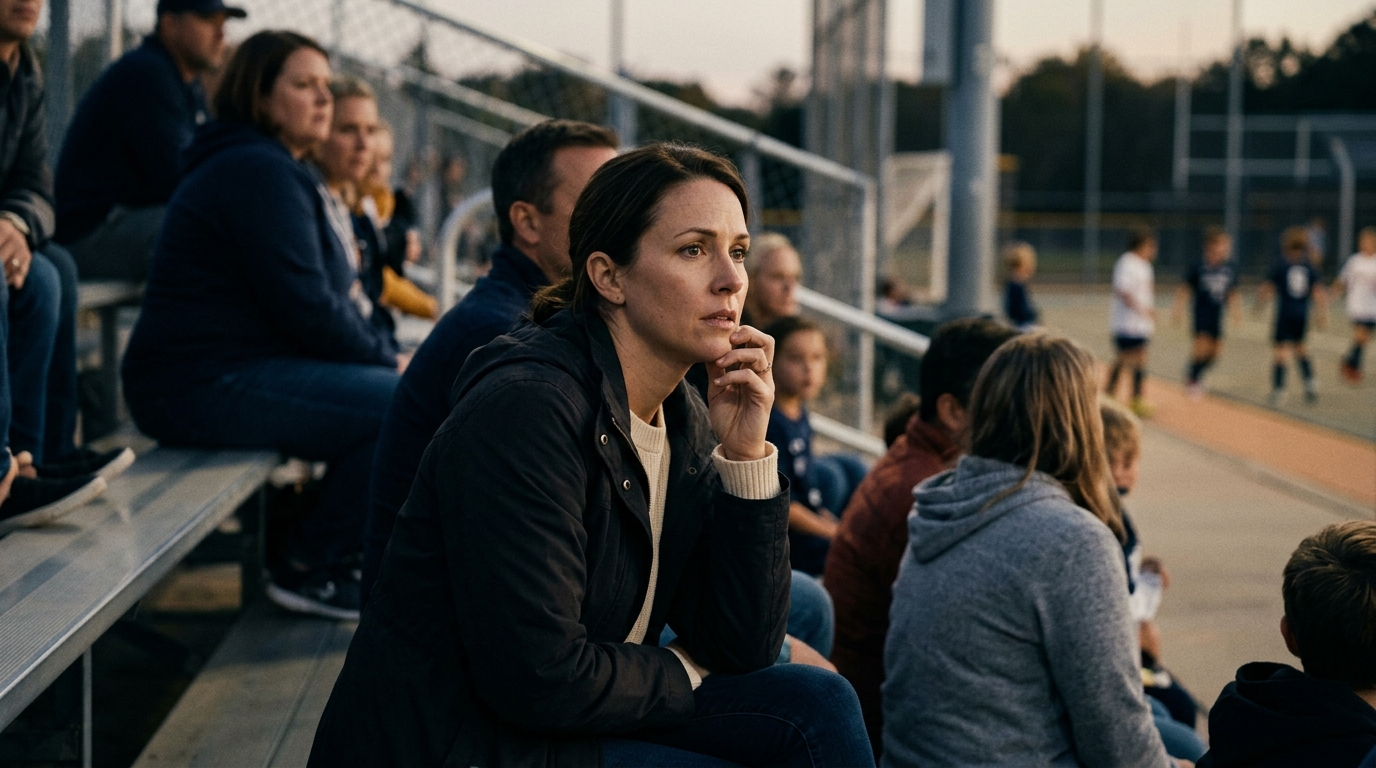

If you’ve ever hustled across a sports complex with a camp chair clipping your calf, coffee cooling in your hand, one kid asking where the shin guards went, and the other already halfway through warmups, you know this life. Youth sports can turn a simple Saturday into a full production.
It’s almost never one field, one gym, one rink. It’s two start times that somehow overlap. It’s a field change posted in the team app ten minutes too late. It’s pulling into the lot and hearing, “I forgot my water bottle.”
The Beautiful Chaos
I’ve lived this game for a long time as a player, then a coach, and now as someone who’s watched families manage the weekly shuffle from every angle. The chaos is real. So is the reason people keep coming back.
You see the same scenes over and over. A parent in slides jogging back to the car for a jersey. A younger sibling asleep in a folding chair behind the bench. A family calling granola bars and string cheese “lunch” because one game ran long and the next starts in twelve minutes. It’s loud. It’s messy. It rarely goes clean.
And still, most families would do it all again next weekend.
Because underneath the schedule mess, there’s real growth happening. Kids learning to handle nerves. Kids learning how to be part of a team. Kids growing up right in front of us, one ride home, one awkward warmup, one little burst of confidence at a time.
The calendar fills up fast. Childhood still moves faster.
That’s the part experience teaches you. The stress is obvious. The value is quieter. But it’s there every week if you know where to look.
How to Survive Sports Weekends
After enough years around benches, sidelines, and parking lots, the things that help are not complicated. They’re just easy to ignore until you’ve had one too many scrambled mornings.
- Pack the night before. Not mentally. Not “we’ll do it in the morning.” Actually pack it. Cleats, jersey, water bottle, sunscreen, extra socks, tape, snacks. Morning stress usually starts with too many small decisions too early.
- Bring more food than seems reasonable. Someone skipped breakfast. Someone changed their mind about what they like. A game got delayed. The concession stand is closed. Hungry kids get loud fast, and hungry adults are usually not much better.
- Build in buffer time. Fields are mislabeled. Parking is a circus. Traffic stacks up. Coaches move warmups earlier. If your plan only works when everything goes right, it’s not much of a plan.
- Cheer for more than your own kid. Kids hear sideline tone more than adults think. A simple “nice pass” or “great effort” aimed at any player can settle a group and raise the whole bench. It also teaches your child what a healthy sports environment sounds like.
- Keep the big picture close. The score matters for an afternoon. Growth matters longer. You’re not only watching results. You’re watching your kid learn effort, disappointment, recovery, and how to belong to something bigger than themselves.
Prepared parents tend to be calmer. Calmer parents usually help create calmer kids.
Micro thought: every rushed morning shows up on the sideline eventually.
Micro thought: extra snacks solve more problems than extra speeches.
The Real Win
Coaching teaches this pretty quickly: almost nobody remembers the exact score from some midseason Saturday. They do remember who encouraged them. They remember the teammate who stayed close after a mistake. They remember the ride home after a hard loss and whether the car felt heavy or safe.
I’ve seen plenty of seasons from the bench. The trophies get dusty. The uniforms end up too small. What sticks is the other stuff. Post-game ice cream. Replaying one great moment five different ways in the car. Friendships that started in a warmup line. Confidence that showed up slowly, then all at once.
That’s worth remembering when the alarm hits too early and the coffee still isn’t ready fast enough.
You’re not just driving. You’re not just carrying chairs. You’re not just checking schedules and digging through the trunk for missing gear. You’re helping hold together an experience your kid is likely to remember long after the season ends.
Most of youth sports looks ordinary while you’re in it. That’s usually the part that lasts.
So when the day gets scrambled, take a breath. Laugh when you can. Reset when you need to. Sideline life is chaotic. It’s also full of small moments that matter more than they seem in real time.
Micro thought: the ride home is part of the season too.
Micro thought: kids don’t need perfect weekends to get something great out of sports.