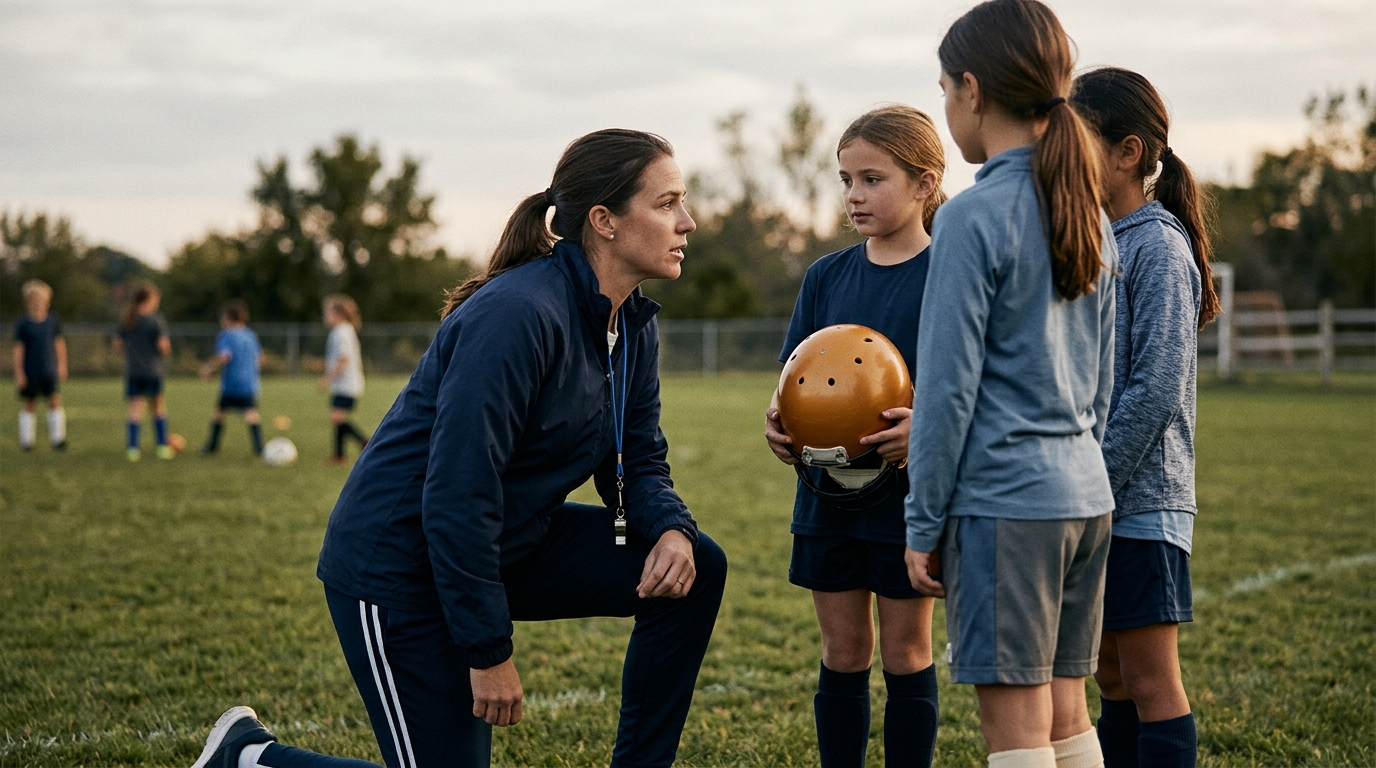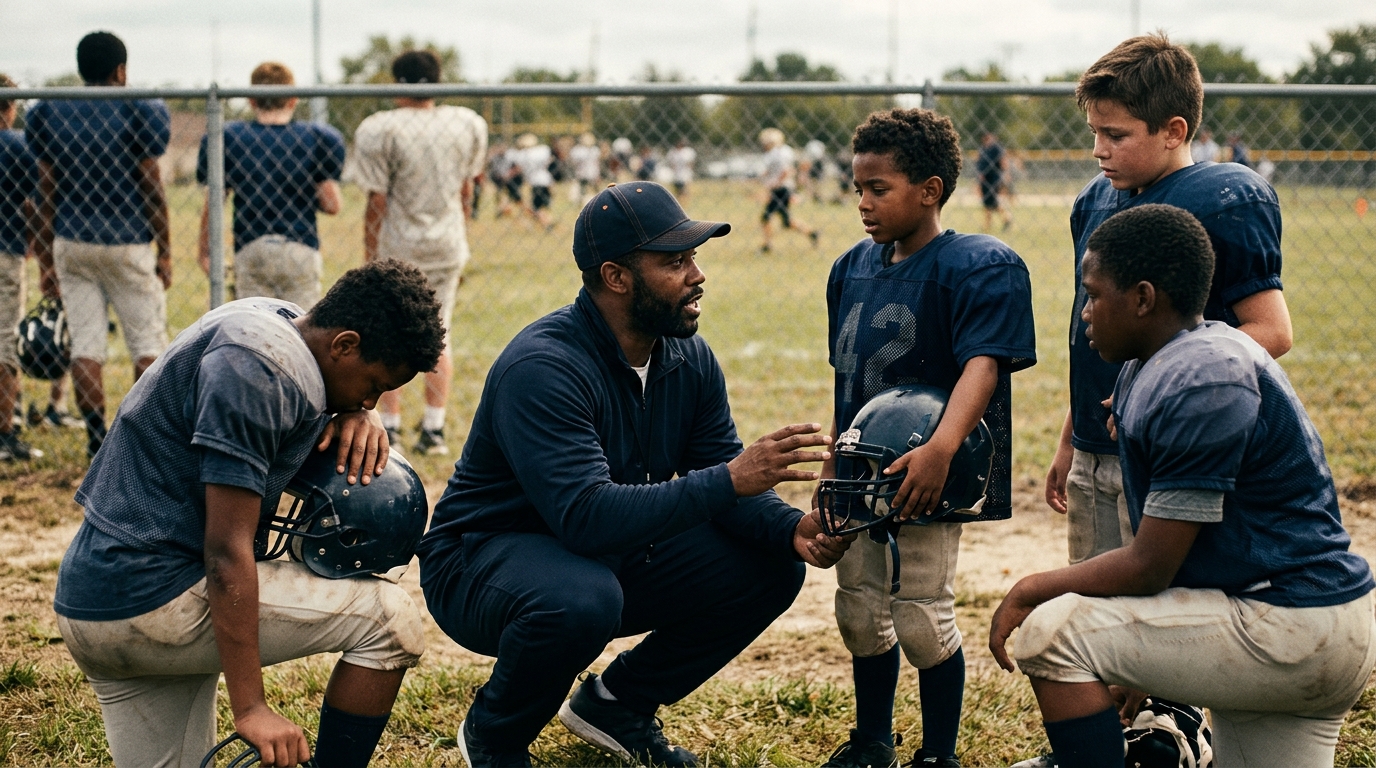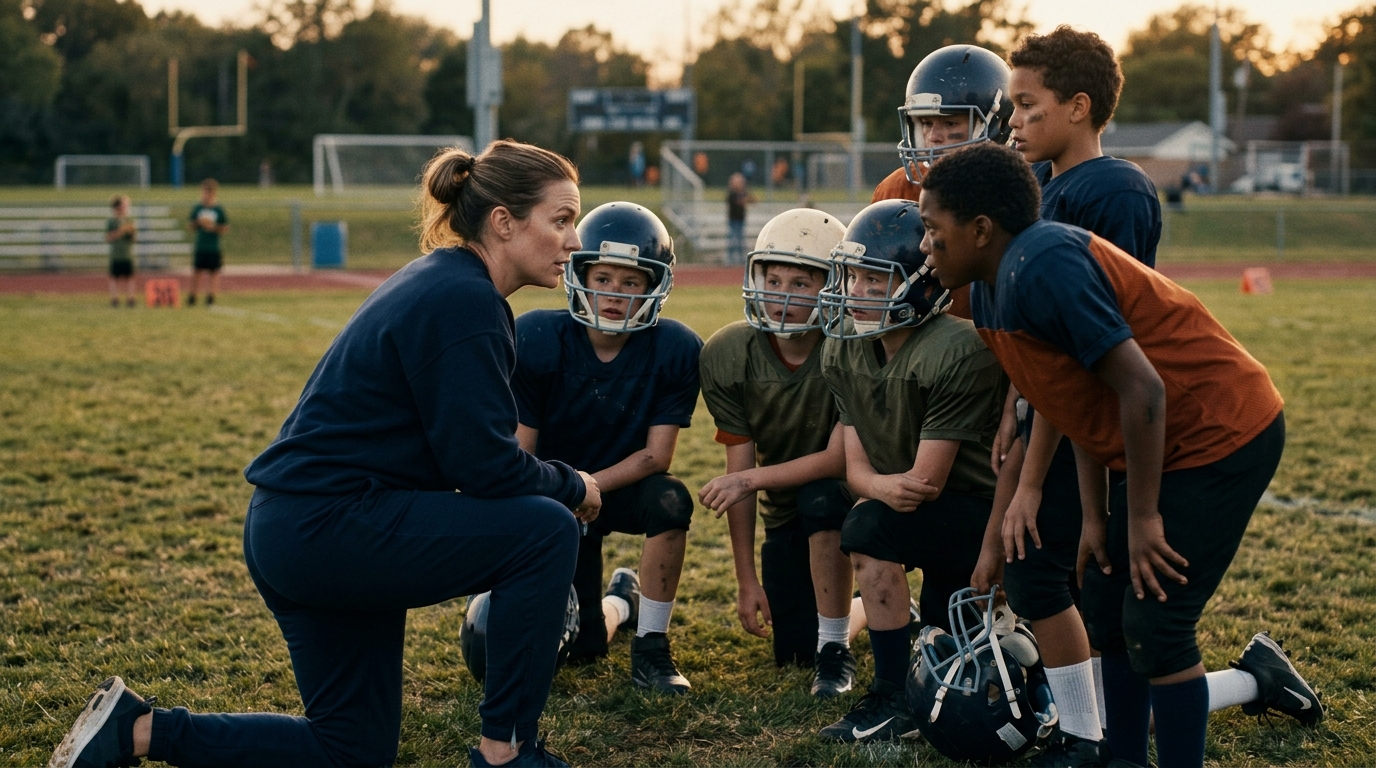

Coach long enough and you can feel it in the first ten minutes.
One team is stiff. Quiet. Every kid is checking the sideline after a mistake like they’re waiting for a verdict.
Another team is louder in the healthy way. A kid misses a pass, slaps their own leg, resets, and says, “Run it again.” A teammate answers. The coach corrects it without turning it into theater.
Same age group. Similar talent. Totally different trust level.
I’ve coached on both kinds of sidelines, and here’s the truth: the second team usually is not softer. It’s safer.
That matters more than most coaches like to admit. Before your system works, before your record means much, you’re building an environment. If kids do not feel physically safe and emotionally supported, a lot of your coaching just bounces off them.
Why trust changes everything
Most of us remember certain coaches for more than their game knowledge. We remember the ones who made us feel seen.
That part sticks.
In my years playing and coaching, I’ve watched kids accept hard coaching when they believed it was meant to help them. I’ve also watched kids shut down from the exact same correction because they heard it as embarrassment, not instruction.
That’s the difference trust makes.
- Kids take healthy risks when they are not worried one mistake will turn into a public takedown.
- They hear tough feedback better when they trust your intentions.
- They bring more of themselves to practice and games—mentally, emotionally, physically.
Trust changes how athletes learn. It changes how they respond under pressure. It changes whether they hide or grow.
Kids do not get braver because we demand bravery. They get braver because the environment makes room for it.
Start with psychological safety
“Psychological safety” can sound academic, but in a gym or on a field it’s pretty plain: can your players ask questions, admit confusion, and make mistakes without feeling judged or punished?
I’ve had athletes who would rather stay lost than raise a hand in front of the group. I’ve also had teams where a player stops a drill and says, “I don’t get my angle here,” and nobody snickers because that’s normal on that team.
That difference does not happen by accident. It’s coached.
If your reaction to mistakes is bigger than the mistake itself, players start protecting themselves. They play careful instead of learning well.
- Invite questions, then prove you mean it by how you respond.
- Give airtime to effort, grit, and progress, not just results.
- Let mistakes stay instructional. Do not turn every error into shame.
When kids know they can try, fail, and still keep your respect, they stop spending energy on self-protection and start using it to improve.
If players are more worried about your reaction than the challenge, development slows down.
Build an actual connection
The best coach-athlete relationships usually start small.
You use the kid’s name. You remember they had a math test. You ask about the sore ankle before you ask about shot selection. You notice when the usually talkative player is suddenly quiet.
After years around teams, I can tell you this part cannot be faked. Kids know when “How’s school?” is just filler before a correction. They also know when you really care what the answer is.
I learned a long time ago that connection is not some extra soft skill sitting off to the side. It is part of coaching. If I know what a kid is carrying that day, I have a better shot at coaching the kid in front of me instead of the version I expected to get.
- Use their name often.
- Check in on life outside performance—school, family, music, stress, the week they’re having.
- Share a little of your own story so they know pressure, frustration, and failure are not unique to them.
One of the best things you can do early in a season is ask about goals beyond stats and roster spots. Not just “make varsity” or “score more,” but what they want to improve as a teammate, student, or person. Those answers tell you a lot about how to coach them.
You are not only coaching athletes. You are coaching developing humans.
Lead with empathy, not ego
Every coach knows the moment. A kid blows an assignment, and you feel that flash of irritation. You want to bark the fix from across the court. Sometimes that gets a quick response. A lot of times it just teaches the athlete to tense up the next time the ball comes their way.
I’m not saying lower your standards. Don’t. Be clear. Correct what needs correcting. Coach hard when hard is required.
Just do it in a way that keeps the athlete engaged instead of shut down.
I’ve had better luck over the years when I ask before I unload. “What did you see there?” “What were you expecting?” “What could’ve gone better?” A lot of mistakes make more sense once the player talks. Sometimes the kid was confused. Sometimes rushed. Sometimes they knew exactly what happened and needed five seconds to reset before hearing the fix.
- Ask instead of only telling.
- Listen before you assume.
- Be patient with different learning speeds and different pressure responses.
Empathy is not softness. It is not the opposite of accountability. Most of the time, it is what makes accountability usable.
Being the loudest coach in the gym does not make you the strongest one.
Set boundaries and be steady
Safe and trusting does not mean vague. Kids need clear boundaries. They need to know the standards, how they will be treated, and what version of you they can expect when things get hard.
I’ve seen trust disappear fast when rules changed depending on who played well last game. I’ve also seen trust grow because a coach stayed steady after a brutal call, a sloppy loss, or even their own mistake.
Players are always reading the adults in charge. They notice your body language after an error. They notice whether your tone changes for your stars. They notice whether you own it when you miss one.
- Stay as calm as you can under pressure.
- Be consistent. No favorites. No moving standards.
- Hold yourself accountable. If you get it wrong, say so and adjust.
Your response to stress becomes part of the culture whether you mean for it to or not.
Use routines that quietly build trust
Trust usually is not built in a big speech. It shows up through repetition.
It’s the little habits that keep telling kids, over and over, this is a place where your voice matters and your effort gets noticed.
I’ve watched quiet players become leaders because they knew there would be room for them to speak. I’ve watched teams get more honest because reflection was normal, not awkward.
Some simple routines help a lot:
- Quick pre-practice check-ins. One word for how they’re doing.
- Short post-practice huddles. One thing that went well, one thing to improve.
- Recognition that goes beyond stats—courage, effort, composure, support, leadership.
These things do not look dramatic from the bleachers. They still matter.
Consistency is care with a schedule.
Choose growth over perfection
No team gets a spotless season. No coach gets one either.
The goal is not to create a year where nobody struggles and every practice runs clean. The goal is to build a place where athletes want to keep growing.
That might mean you listen a little longer before correcting. It might mean you check in with the player who has been unusually quiet all week. It might mean you let an athlete lead warm-up. It might mean you tell a quick story about a time pressure got to you and you did not handle it perfectly.
Those moments count.
In my experience, players do not need a perfect coach nearly as much as they need a trustworthy one.
Final thoughts
You do not need a psychology degree to build trust with athletes. You need attention. Consistency. Follow-through. And the discipline to show up in a way kids can rely on.
Safe, trusting relationships are not extra credit in coaching. They are part of the foundation. They help turn groups into teams and talented kids into more confident people.
Connection matters.
Empathy matters.
Standards still matter.
Keep the bar high. Keep the athletes human.
That’s good coaching.