
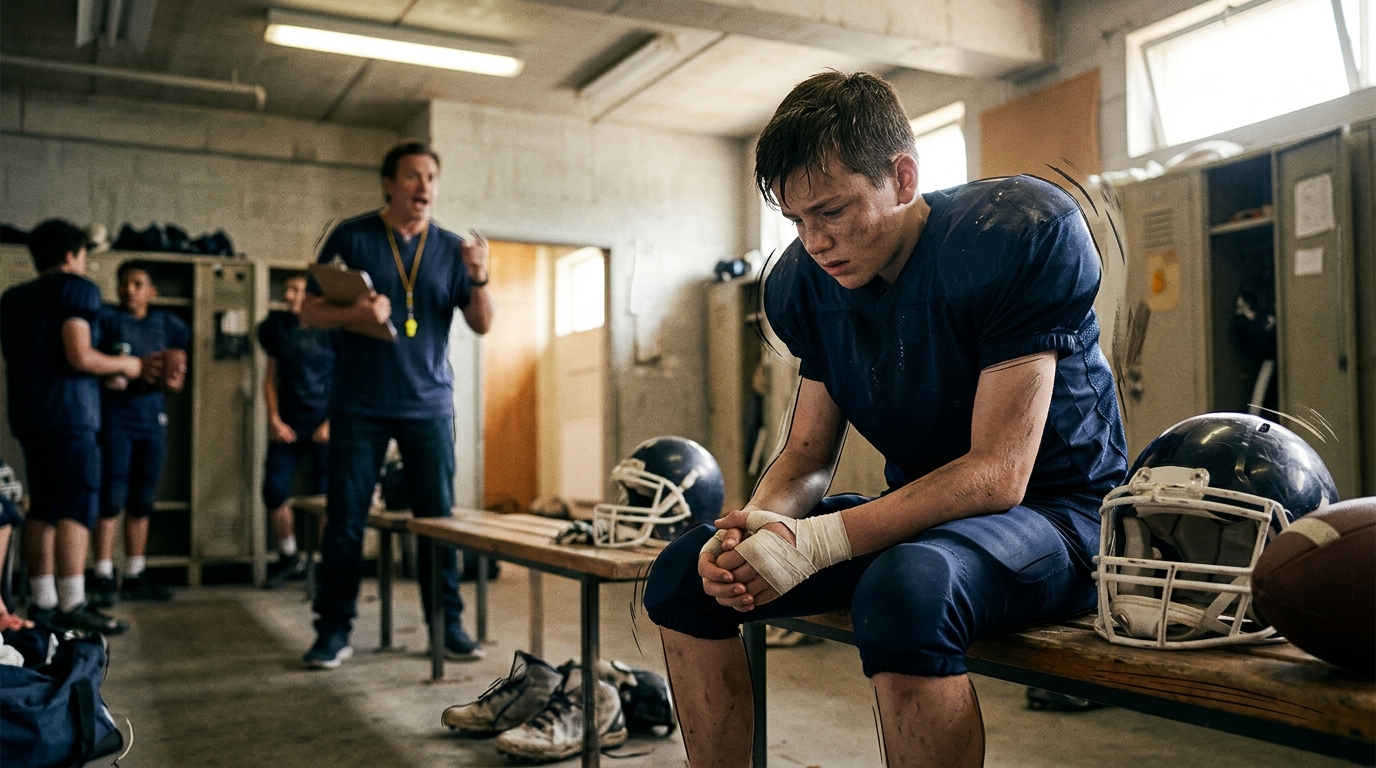
You know the moment. Practice ends, everybody’s peeling tape off their wrists and heading for the door, and you’re still replaying one thing your coach said. Maybe it was, “If you’re going to jog, come stand next to me.” Maybe it was your name getting called out again in front of everybody. Maybe it wasn’t even loud — just that look, that quick hook, that feeling that no matter what you do, it’s never quite right.
Not every rough coach-player relationship means your coach is bad. And not every “they’re just hard on you” speech from adults is true either. Sometimes a coach is demanding because they think you can handle more. Sometimes a coach is being careless, inconsistent, or flat-out unfair. Those are not the same thing. You need to know the difference, because if you lump it all together, you either stay quiet too long or blow it up too fast.
I’ve been around enough benches to know this part gets messy. Good coaches can communicate badly. Players can hear correction as disrespect when they’re already frustrated. And yes, some adults absolutely hide bad behavior behind “I’m just coaching you hard.” Hard coaching should still make sense. It should still be about helping you play better. If the message is sharp but clear, specific, and connected to your effort, decisions, habits, or role, that’s usually coaching. If it feels random, personal, humiliating, or different from the standard everybody else is held to, pay attention.
Figure out what it actually is
Start with a simple check: when your coach gets on you, can you answer, “What do they want me to do differently?” If the answer is yes — sprint back, talk more on defense, stop drifting, be stronger on the ball, quit sulking after mistakes — that’s probably hard coaching, even if you don’t like the tone. A lot of players want honesty until honesty sounds sharp. That’s real.
But if you leave every interaction confused, embarrassed, or singled out for stuff other players do too, that’s different. Unfair usually leaves a pattern. The rules change depending on who made the mistake. Your coach criticizes you but never tells you how to improve. They make it personal: your attitude, your body language, your character — without giving examples or a path forward. Or they use you as a public example way more than they coach you privately. That’s not toughness. That’s poor handling.
So here’s the first thing to do: keep receipts, not drama. For one or two weeks, write down facts after practice. Not “Coach hates me.” Write: “Tuesday — got pulled after one turnover, played 3 more shifts after that. Coach said, ‘Wake up and compete.’ Thursday — asked what I should fix, no answer.” Facts calm your brain down. They help you see whether this is a bad day, a pattern, or just a standard you haven’t met yet.
Second: ask for a conversation before your parents make it bigger. Not in the car through your mom. Not through a long text. Not right after a game when everybody’s hot. Catch your coach at a decent moment and say, “Coach, can I talk for two minutes after practice this week? I want to understand what you need from me.” That sentence matters. It sounds mature because it is. You’re not starting a fight. You’re asking for clarity.
Then in the conversation, be direct and short. Try this: “I feel like we’re not clicking right now, and I want to fix my part of it. What are two things you need from me?” Listen all the way through. Don’t interrupt just because you disagree with the first sentence. If the coach gives you real, usable answers, good. You’ve got something to work on.
If the issue is fairness, say that like an adult too: “I can handle being coached hard. I’m okay with correction. I’m struggling when I’m not sure what the standard is, or when I’m hearing it in a way that I don’t know how to act on. Can you help me understand?” That keeps you out of the “you’re mean” argument and puts the focus where it belongs: behavior, standards, communication.
Third: give the conversation a chance to work before you hand it to your parents. That doesn’t mean hide serious problems. If a coach is abusive, threatening, degrading, or crossing lines, get a trusted adult involved immediately. But if this is friction, tone, role frustration, or unclear expectations, you need reps handling it yourself. Part of growing up in sports is learning to have uncomfortable conversations without sending your parents in first like a legal team.
Sometimes the truth is your coach is right, just not smooth. Sometimes the truth is your coach is unfair, and naming it calmly is the strongest move you can make. And sometimes you do everything right, and the relationship still never becomes easy. That happens too. You are not required to love every coach. But if you can separate hard from unfair, speak clearly, and stand in your own conversation, you’ll leave with something useful — even if the connection never becomes perfect.