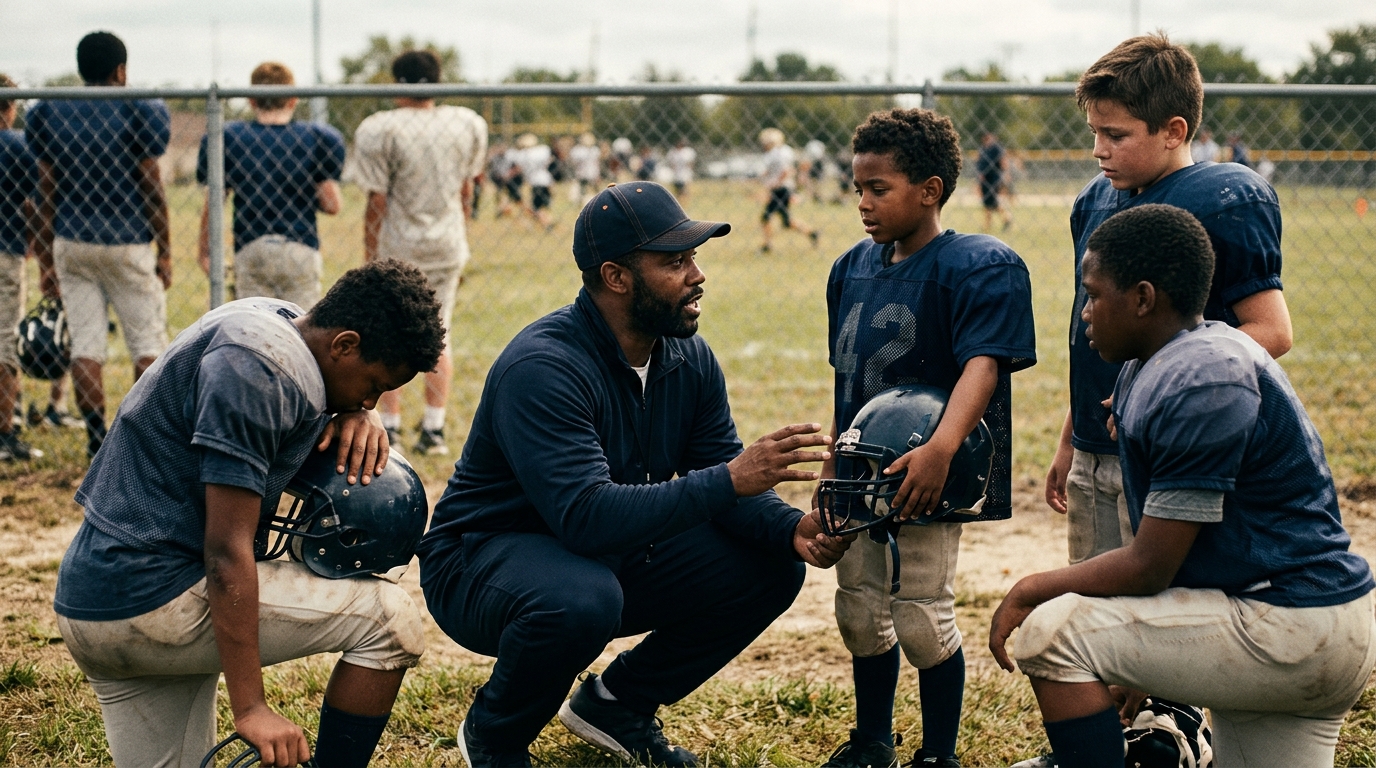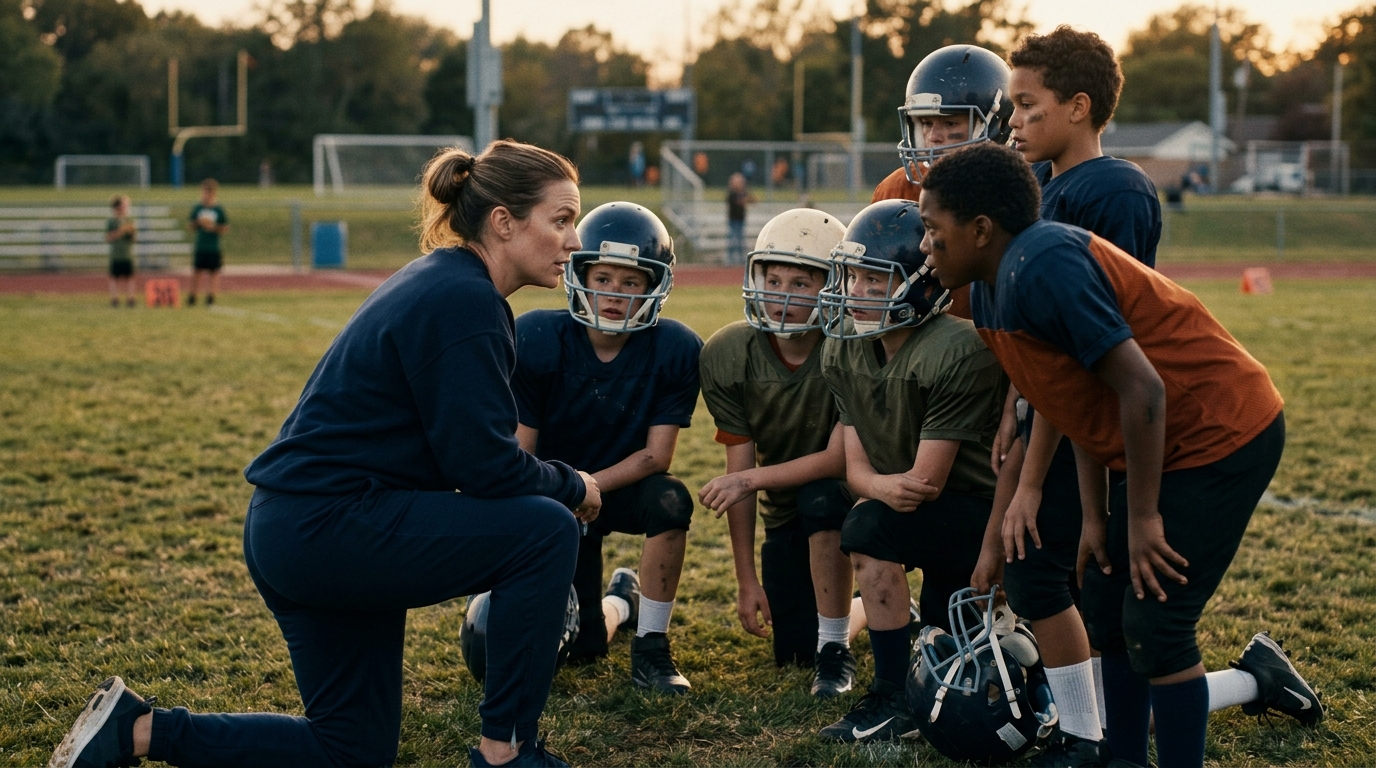

Two kids are standing at the scorer’s table. One is bouncing on their toes, ready. The other is staring at the floor, trying to figure out if that sub was for them. On the court, the ball is live, a coach is yelling a name, a parent is yelling a different name, and the kid who was supposed to come out doesn’t realize it until everyone is frustrated.
That moment eats more teams than people think. Not because substitutions are complicated. Because unclear substitutions make kids feel exposed.
I’ve coached enough games to know this: most youth players are not struggling with effort in those moments. They’re struggling with uncertainty. They don’t want to mess up the rotation, disappoint the coach, or look like the kid who wasn’t paying attention. So they freeze, half-guess, and everybody’s body language gets bad in a hurry.
One small change fixes a lot of that.
Name the next shift before the current one ends.
Not when the horn goes off. Not while the ball is already moving. Before it happens.
What this sounds like in real time
Instead of yelling, “Sam, go!” when it’s already time, say it early and say it clearly.
“Sam, you’re in next for Jordan. Jordan, you’ve got one more trip.”
That’s it. Now three people know the plan: the player going in, the player coming out, and the coach. If you want to be even cleaner, give one quick job with it.
“Sam, you’re in next for Jordan. Take top side on defense.”
Kids settle down when they know two things: when they’re going in and what they’re doing first.
That little bit of clarity changes posture. The kid going in gets ready. The kid coming out doesn’t panic. The rest of the bench sees that there is an actual plan, not just volume.
Why this matters more than adults think
Bench chaos is usually blamed on attention. A lot of times it’s really a communication problem.
Younger players especially are tracking a lot at once:
- the score
- where the ball is
- whether they made the last mistake
- what the coach might be upset about
- whether their parent is watching
Then we act surprised when “Go in!” from 30 feet away doesn’t land cleanly.
I learned this the hard way. Early on, I thought fast substitutions made me look organized. In reality, I was creating avoidable stress. Kids were checking in late, running to the wrong spot, or jogging in with that look every coach recognizes: I hope this isn’t my fault.
That’s on us.
If a player looks lost during a sub, the first place to look is the coach’s timing.
The practice habit that makes game subs easy
You can’t only do this on game day. If your team hears names and roles clearly in practice, they’ll respond better when the gym gets loud.
Build substitutions into drills.
Try language like:
- “Ava out, Mia in at wing.”
- “Ben, one more rep, then Leo takes your spot.”
- “Ella, you’re next, and you’re starting on defense.”
This does two things. First, it teaches players to listen for sequence, not just their name. Second, it removes the drama from changing groups. Subs stop feeling like punishment, reward, or a surprise test. They just become part of how the team runs.
And that matters. Because once every substitution feels emotional, kids start reading meaning into everything.
I came out, so coach is mad.
I didn’t go in yet, so I must be doing terrible.
Most of the time, you’re just trying to manage legs, matchups, or attention. But if you don’t communicate that process well, players make up their own story.
Keep the bench involved without making it noisy
There’s a difference between an engaged bench and a messy one.
If you use this “next shift” approach, the bench starts to organize itself. Players know who is up soon. They can grab water at the right time. They can watch the position they’re about to play. They stay connected to the game instead of drifting until their name gets shouted.
One thing I like is giving bench players a simple job while they wait:
- track who they’re subbing for
- watch the matchup they’re entering against
- know the first action or responsibility when they step in
That keeps the bench from becoming a second audience.
Benches don’t need more hype. They need more clarity.
What to do if you coach a lot of playing-time questions
This tactic also helps with parents and players who are always trying to decode rotation decisions.
Clearer communication lowers the temperature. It shows there is a system. Not a perfect one. Not a rigid one. But a system.
When kids know they’ll be told ahead of time, they stop feeling like they have to beg for eye contact or hover near you to prove they’re ready.
That alone improves team culture.
No player should feel like court time depends on mind reading.
The real point
Good coaching is often less about the big speech and more about the clean moment right before confusion would have started.
Naming the next shift before the current one ends is not flashy. Nobody in the stands praises it. But it protects players from unnecessary embarrassment, speeds up the game, and makes your team look calmer than it probably feels.
That’s a win.
And in youth sports, calm is a skill. Sometimes the coach has to lend it first.