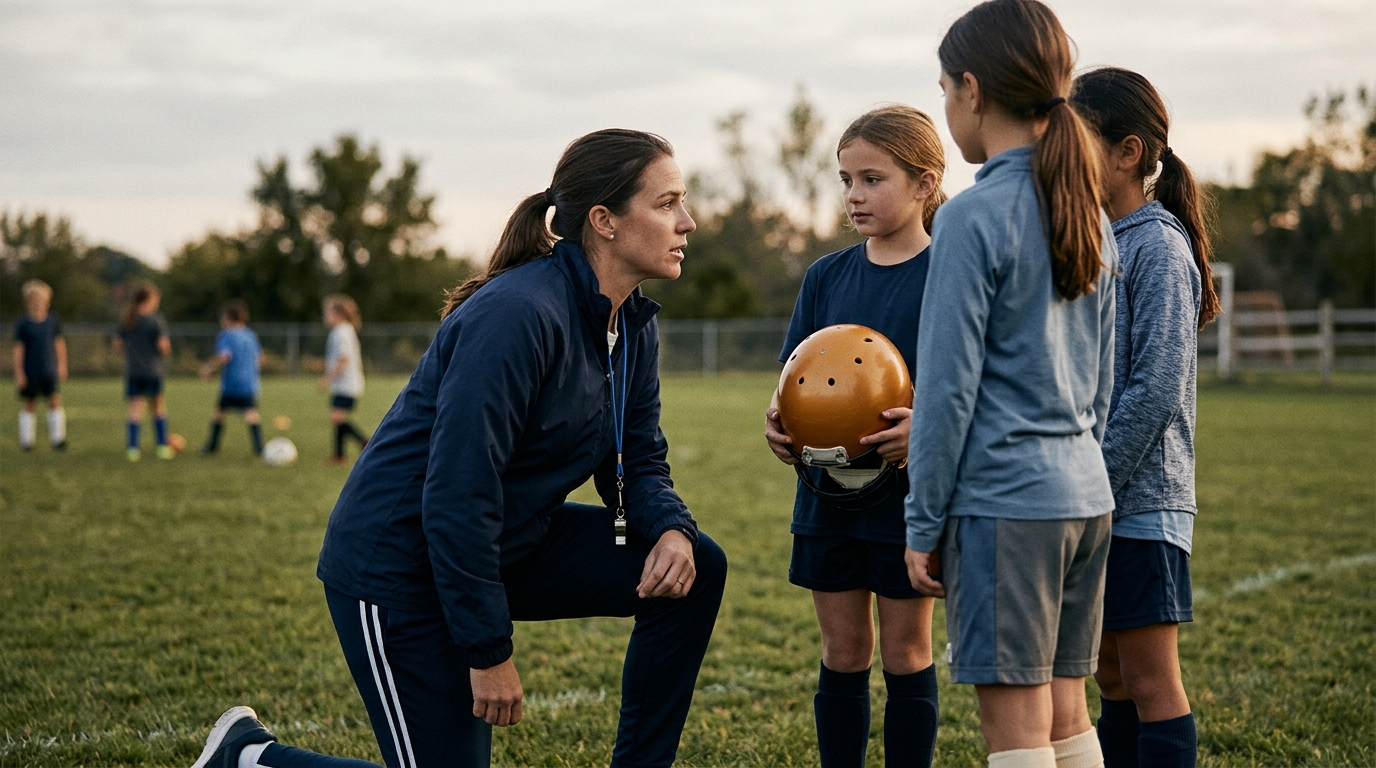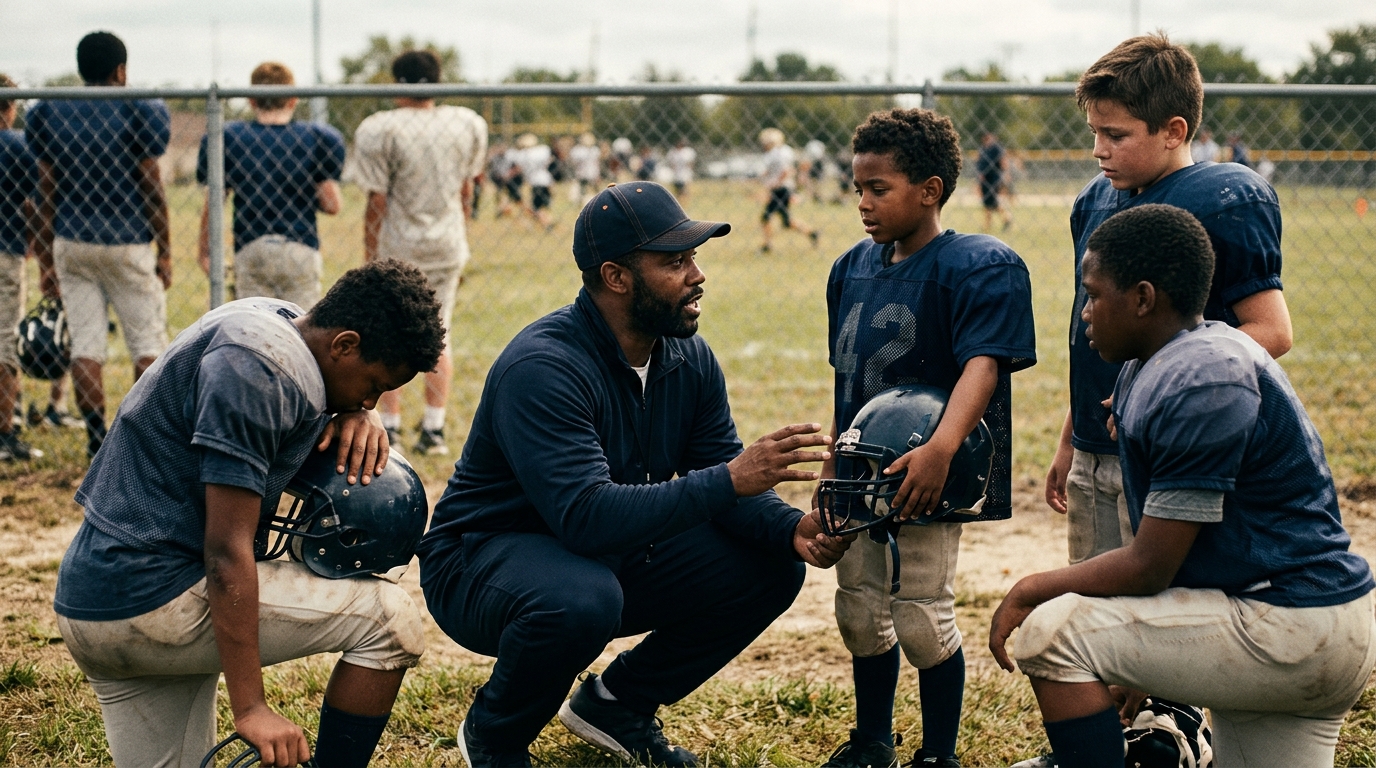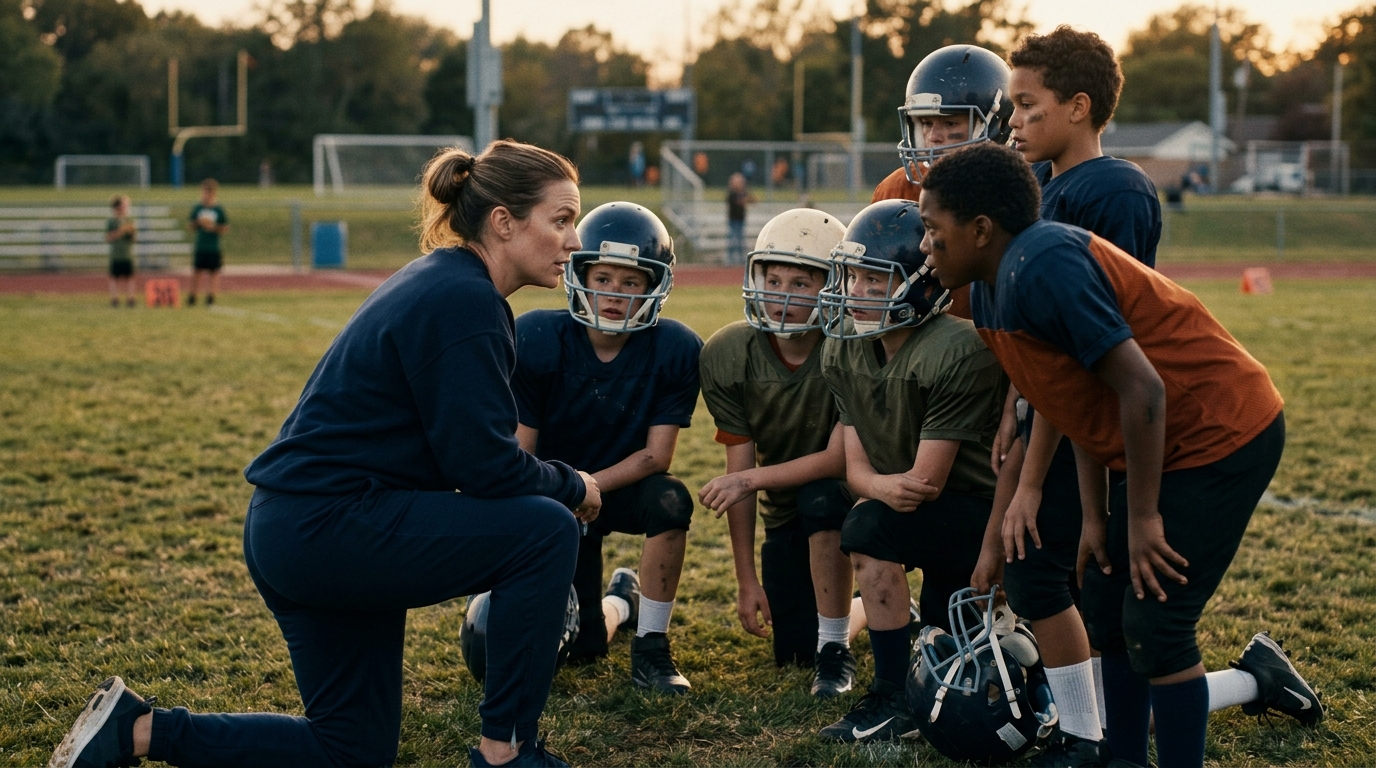
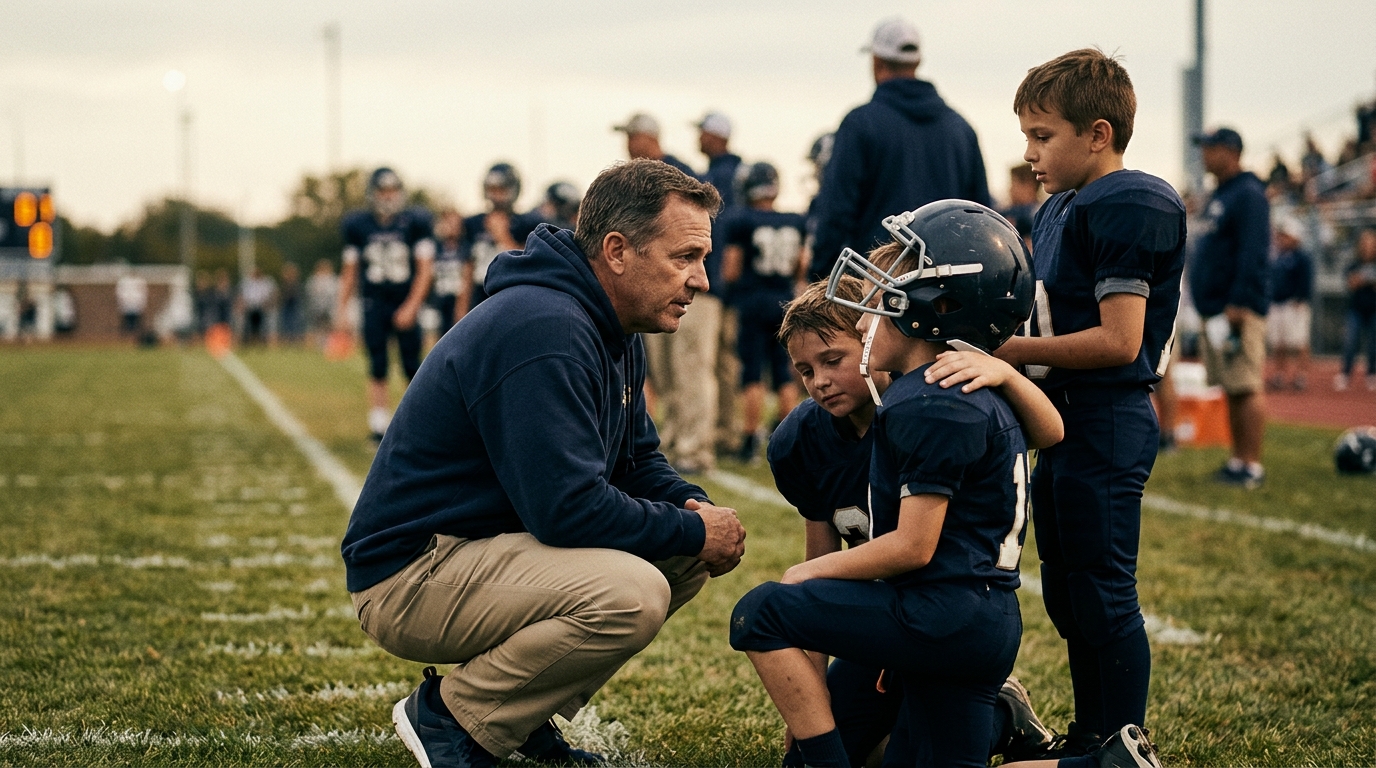
Third quarter, one-goal game, and I’ve got three kids standing shoulder to shoulder at midfield asking the same question in three different ways.
Am I in?
Who’s got left?
Are we switching lines?
Meanwhile the ball is already back in play, one player is halfway onto the field without shin guards fully set, and another kid who was supposed to check in is still holding a water bottle and staring at me like I’m going to personally escort him to the spot.
That kind of sideline chaos doesn’t usually come from bad kids. It comes from bad staging.
Coaches talk a lot about effort, focus, and readiness. Fair enough. But a lot of what looks like “kids not paying attention” is really just adults not giving them a clear place to be next.
One of the simplest things I ever cleaned up in a game was this: I gave subs a literal parking spot on the sideline.
Not a lecture. A place.
I’m talking about one clearly defined patch of sideline where the next players checking in have to stand. Not wandering. Not sitting until their name gets called twice. Not drifting toward parents. Not hovering five yards behind you while you’re trying to coach live play.
Just a spot.
Sometimes it’s near the line. Sometimes it’s a cone. Sometimes it’s “between the bag and the 40.” It doesn’t have to be fancy. It has to be obvious.
When kids know where “next up” lives, everything gets easier:
- You can see who is ready without hunting.
- Players stop asking if they’re in every 30 seconds.
- Equipment issues show up before the sub moment, not during it.
- Kids start learning how to prepare before their turn, not after you’re yelling for them.
I learned this the hard way over a lot of seasons. If you leave the sideline loose, the game starts coaching you. You spend your energy chasing organization instead of making decisions.
What the parking spot actually teaches
We make too much of “mental toughness” sometimes and not enough of plain old readiness.
The parking spot teaches a simple chain:
- If you’re next, you move now.
- If you move now, you can listen now.
- If you can listen now, you can play fast when your moment comes.
That’s a real skill. Especially with younger teams.
Kids are not naturally great at living one play ahead. Most of them are still in the last play, talking to a teammate, fixing a sock, watching the crowd, or wondering if they missed their name. A parking spot pulls their brain into the next job without you needing a speech.
Readiness gets taught best when it has a location.
How I set it up
I don’t over-explain it.
Before the game or at practice, I say something like:
“If you’re the next group going in, you’re in the parking spot. If you’re not in the parking spot, you’re not going in yet.”
That’s it.
Then I show them exactly where it is.
I also add two simple rules:
- Bring what you need. Mouthguard in, pinnie off, water handled.
- Listen while you wait. Don’t make me restate the assignment at the line.
At first, you’ll still have to redirect it. Of course you will. You’re changing a habit. But it’s easier to say “Parking spot” than to deliver a five-sentence correction in the middle of live play.
Short language travels better on game day.
Why this helps the kids who play less, too
Here’s something coaches miss: structure doesn’t just help your starters. It helps your uncertain kids.
The player who isn’t fully confident, or doesn’t always know if their turn is really coming, benefits from having a visible path. They don’t have to decode your body language. They don’t have to ask three times. They can see the system.
That matters.
I’ve had plenty of kids relax once they understood there was an actual process to getting in. Not a mystery. Not a mood. A process.
And once kids trust the process, they stop burning energy on guessing.
It also helps assistants and parents settle down
You know what creates extra sideline noise? Unclear movement.
When nobody knows who’s next, everybody starts managing the game from the edges. Assistants start pointing. Parents start calling their kid’s name. Players start creeping toward the line early just in case visibility helps them.
Now your sideline feels jumpy, even if the game itself is fine.
A parking spot quiets that down. It gives the whole bench a visual answer.
Not every question needs words.
Where coaches get it wrong
The mistake is making the spot exist, then ignoring it.
If the next player is wandering and you still send them in, you just taught the team that the system is optional. If a kid shows up late to the spot and still gets the same clean sub moment, you’ve watered down the habit.
You don’t need to be dramatic about it. Just be consistent.
If they’re not there, the next ready player goes.
That’s not punishment. That’s game management.
Kids believe what your decisions repeat.
The bigger point
Some of the best coaching decisions are boring on paper.
No parent is driving home saying, “What a brilliant sideline staging tactic.” But they do notice when the team looks organized, when subs happen smoothly, and when players step in looking like they know the plan.
And kids feel that difference right away.
Clean games usually come from clean little systems. A parking spot on the sideline is one of them.
Sometimes order is not about saying more.
Sometimes it’s just about giving “next” a place to stand.