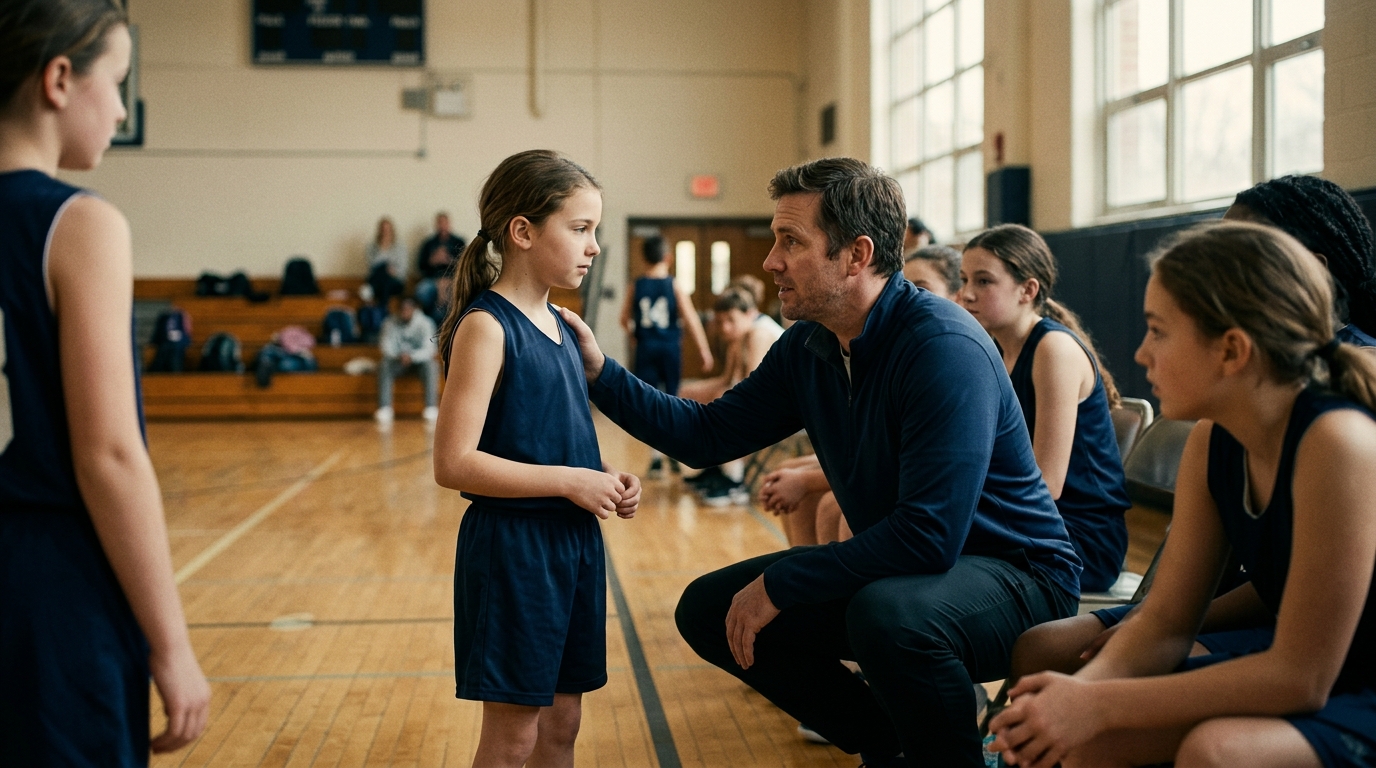

Third quarter, gym loud, one kid bent over with hands on knees, another staring straight at me from the scorer’s table side of the court. Not mad yet. Just checking. Am I coming out? Does Coach see me? Did I do something wrong? That look shows up in every sport. Soccer kids glance at the halfway line. Hockey players hover at the door. Baseball kids start counting innings in their own head. If you wait until they ask, you’re already late.
One of the easiest ways to calm a bench, protect effort, and keep trust intact is simple: tell players their sub before they need to wonder about it.
Not a speech. Not a team-wide lecture on fairness. Just clear information, early enough to matter.
Uncertainty burns more energy than running does
Kids can handle a lot. They can handle coming out. They can handle not starting. They can even handle a shorter shift when the game calls for it. What they struggle with is the mystery.
When they don’t know what’s happening, they fill in the blanks fast.
- I must be in trouble.
- Coach forgot about me.
- She likes that group better.
- If I make one mistake, I’m done.
That guessing game changes how they play. Tired kids stay quiet because they’re scared to ask out. Bench kids stop paying attention because they assume it’s not their turn. Starters play tight because every shift feels like a test instead of a job.
I learned this the hard way years ago. I thought keeping substitutions flexible made me look in control. What it actually did was make the team feel like I had a secret plan they weren’t allowed to know. The better fix wasn’t bigger authority. It was better communication.
The move is small, but the effect is big
Here’s what this sounds like in real time:
- “Mia, you’ve got one more shift, then Ava’s in for you.”
- “Ben, be ready after this batter.”
- “Two more minutes, then I’m getting fresh legs in.”
- “First dead ball, you’re going.”
That’s it. Short, direct, and said before the question reaches their face.
Now the player coming out can empty the tank instead of pacing themselves out of fear. The player going in locks in because the job is real, not vague. And your bench stops acting like an airport gate with no departure board.
Kids don’t need every decision to go their way. They do need fewer surprises.
It helps effort on both ends of the sub
Coaches usually think of substitution as a playing-time issue. It’s also an effort issue.
If a player knows she’s coming out in a minute, she’ll often sprint harder through that minute. If a player knows he’s going in next, he watches the game differently. He tracks matchups. He listens. He starts the mental reps before the physical ones.
That matters.
The worst bench behavior usually isn’t attitude. It’s disconnection. A kid who doesn’t know when or whether he’s entering drifts. A kid with a clear heads-up stays attached to the game.
Same athlete. Different information.
This is not locking yourself into a bad plan
Some coaches resist this because they think it removes flexibility. It doesn’t. You’re not signing a contract with a whistle in your mouth.
You can still change the plan if the game changes. A foul, an injury, a matchup, a kid who clearly needs another minute—fine. Just communicate the update.
“Hold up, stay ready. We need one more defensive trip here.”
Players can handle a change when the change is named. What frustrates them is silence.
Silence feels personal fast.
Where coaches get themselves in trouble
Most substitution problems don’t start with the actual sub. They start with the five minutes before it.
A few common mistakes:
- Waiting for eye contact. If you’re depending on a tired 11-year-old to read your mind, good luck.
- Talking only to the player going in. The player coming out needs the information too.
- Using punishment language for normal rotation. “Sit down for a bit” lands differently than “You’ve got one more, then out.”
- Announcing too late. If you say it at the exact moment of the sub, you didn’t give clarity. You just gave an order.
That last one is the big one. The point is not management. The point is preparation.
A simple rule that works in almost every sport
Try this: when possible, tell the player one sequence early.
One shift early. One inning segment early. One dead ball early. One rotation early.
Not so early they forget. Not so late it becomes a surprise.
That rhythm is enough to settle most teams down. It also forces you to coach ahead instead of reacting behind. And coaching ahead is usually where calm lives.
I’ve had teams with average talent and excellent clarity feel far more composed than talented teams run on mystery. The game already gives kids enough to process. The bench doesn’t need to add more static.
Parents notice this too, even if they don’t say it that way
A lot of sideline frustration starts when adults can’t tell whether there’s a plan. If every sub looks random, people create stories. If players know what’s coming, the sideline usually settles with them.
No, this won’t eliminate every complaint. Nothing will. But it removes one of the biggest sources of avoidable tension: the feeling that decisions are being made in a fog.
Clear doesn’t mean soft. It means clean.
If you know the next move, say the next move.
You don’t need a whiteboard, an app, or a giant rotation system to do this better. You need a habit.
Tell them before they wonder.
That one sentence, delivered a little earlier, can change the effort, the bench, and the trust in a game faster than most coaches think.