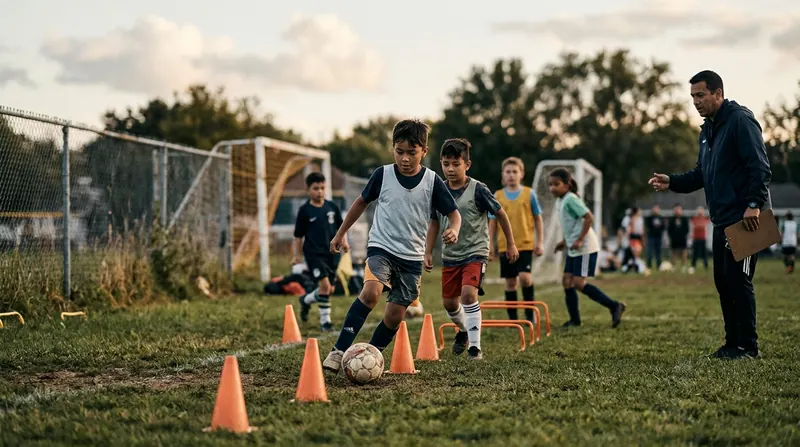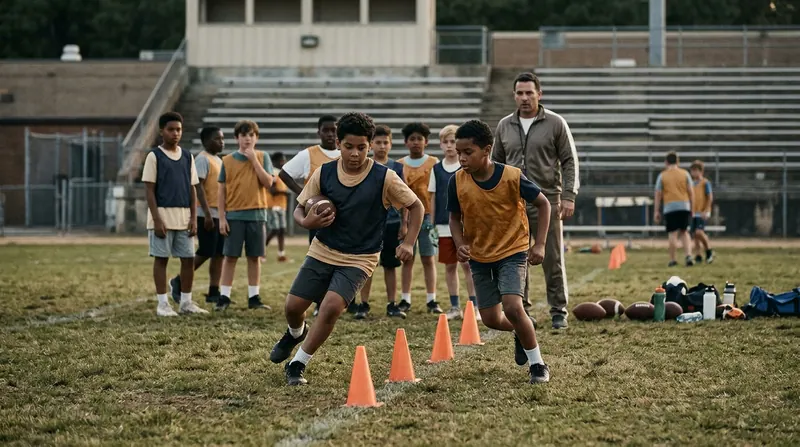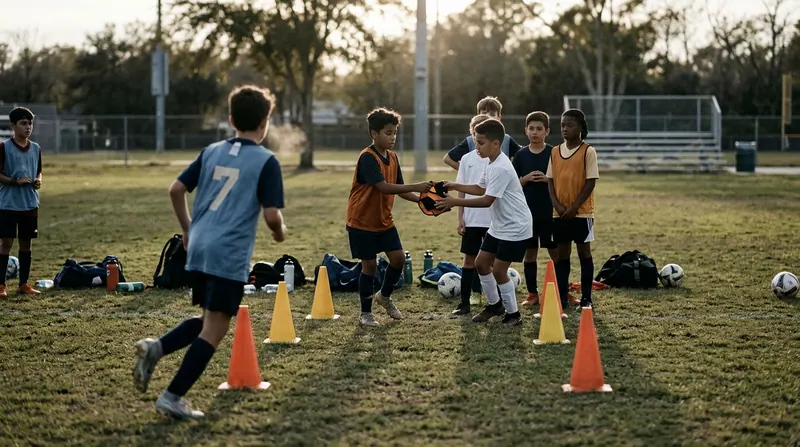
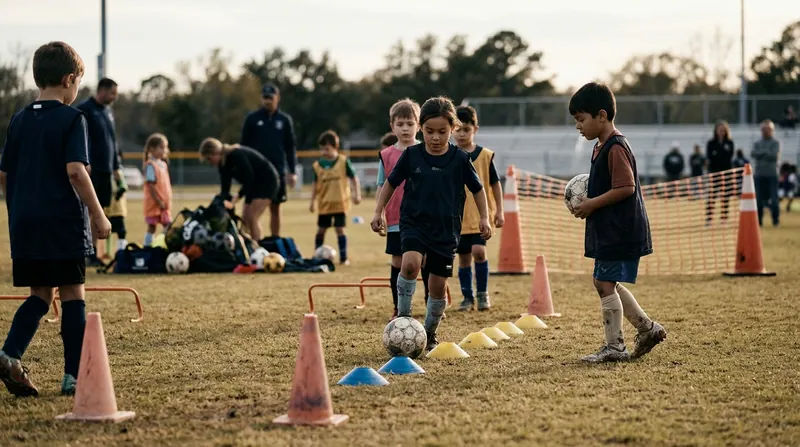
Three minutes before practice, one kid is tying a shoe in the grass, two are poking each other with pinnies, somebody’s asking where to put their bag, and the one kid who actually brought a ball is already taking full-speed shots at a goal nobody’s ready to defend. Coach has not even said the first real instruction yet, and the group is already spread across 40 yards like practice started by accident.
That part is not a talent problem. It’s an arrival problem.
I’ve coached enough teams to know this: the first five minutes decide whether the next 55 feel clean or feel like herding shopping carts in the wind. Kids do better when the field tells them what to do before the coach has to repeat it six times.
One simple fix is a cleat gate. Not a speech. Not a punishment line. Just a visible check-in spot every player passes through before warm-ups start.
What the cleat gate is
Set two cones about three feet apart near the spot where players enter the field. That’s the gate. Every player goes through it the same way:
- Bag goes in the team gear area.
- Water goes on the sideline line-up spot.
- Cleats tied and checked.
- Shin guards, glove, mouthguard, helmet, whatever your sport needs, already on or in hand.
- Then and only then, they move to the warm-up start area.
It sounds almost too basic, which is usually how you know it works.
Why it helps
Kids are not great at unspoken transitions. They’ll do what the space allows. If the field is wide open and the routine is fuzzy, they scatter. If there is one obvious path into practice, they settle faster.
I learned this the hard way on nights when we kept losing eight good minutes to the same nonsense: untied shoes, missing pennies, bathroom runs after the first instruction, water bottles dropped in the middle of the sideline, one kid wandering straight into the drill without hearing a word.
You don’t need more volume. You need a doorway.
Micro thought: Structure feels strict right up until it saves everybody time.
How to set it up
1. Put the gate where arrival naturally happens
Don’t make kids hike across the whole complex to check in. Place it between the parking-lot side and your practice space. Make it easy to use and hard to miss.
2. Pair the gate with a gear zone
If bags can land anywhere, they will. Pick one sideline strip, fence section, or bench area. Tell them once: bags here, water here, bodies there. The gate only works if the next step is obvious too.
3. Teach the routine in under 20 seconds
Try this: “Through the cones means you’re ready. Bag down, water down, gear checked, then warm-up line.”
That’s enough. You do not need a TED Talk on organization.
4. Put one player or assistant at the gate early
This is huge for the first couple practices. A kid or assistant can stand there and simply point: bag there, bottle there, tie that, then line up. The goal is not inspection. The goal is rhythm.
5. Don’t start the real warm-up until the routine matches the standard
If six kids are ready and four are still drifting, resist the urge to just roll and hope they catch up. That teaches the whole group that ready and not ready are basically the same thing.
They are not the same thing.
What this prevents
- Late shoe-tying after the drill has already started
- Water bottle hunts in the middle of instruction
- Kids joining without shin guards, gloves, or mouthguards
- Side conversations that begin because nobody knows where to be yet
- Coaches wasting their voice on things the setup could handle
It also lowers the temperature for everybody. Parents stop hovering because there is a visible process. Assistants know where to help. Players who like routine settle in quicker. Players who tend to wander get caught by the system before they disappear into the background.
What to watch for
Don’t turn the gate into a bottleneck. This is not airport security. Keep it moving. If you’ve got a big roster, widen the entry or make two gates side by side.
And don’t use it like a gotcha station. If a kid forgot something, handle it cleanly and move on. The point is to reduce chaos, not create a tiny front-desk drama before practice.
Micro thought: A routine works best when it feels normal, not personal.
When it matters most
The cleat gate is especially useful on the messy days: first practice of the season, shared field space, late sunsets, wet grass, substitute coaches, or any day when players arrive in waves instead of all at once.
Those are the days coaches usually think they need more energy. Most of the time, they need more order.
I’ve seen teams look instantly more locked in just because the start stopped being loose. Not magically better. Just cleaner. And clean starts matter. They carry into instruction, into transitions, into how much actual work gets done before the group runs out of focus.
When practice begins with kids wandering around holding half their gear, it feels optional. When practice begins with a simple gate and a ready line, it feels like a team.
That’s a small difference from the sideline.
It’s a big difference by the time the whistle blows.