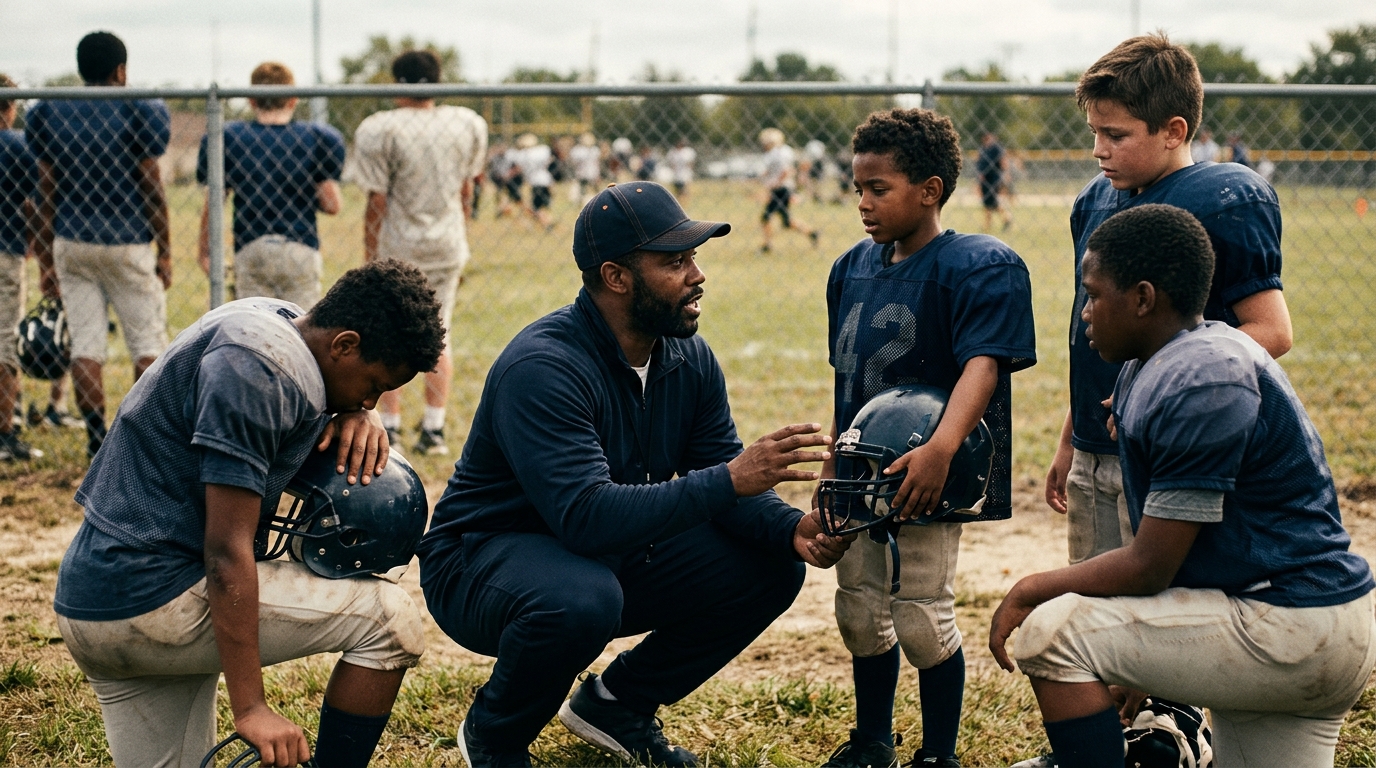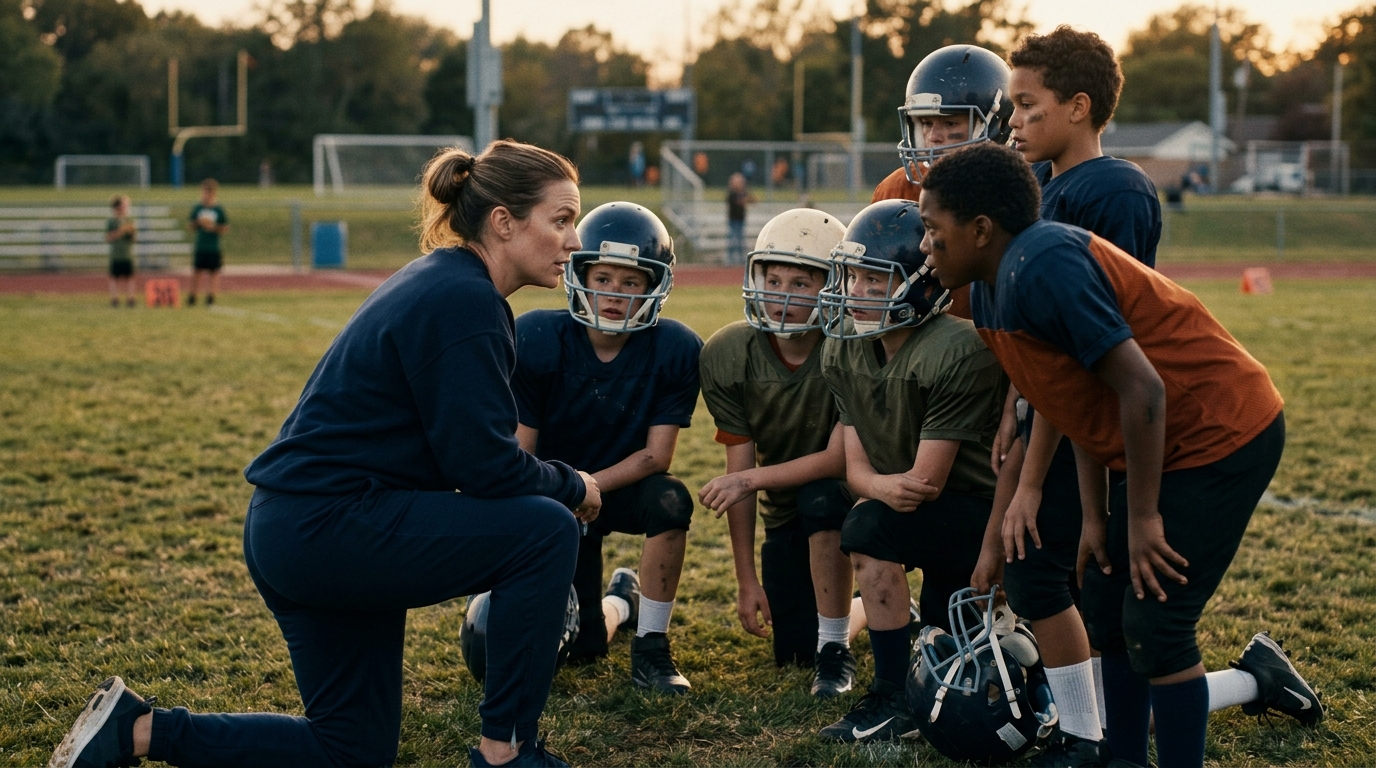

Halfway through practice, the kids finally get a water break, and that’s when a lot of coaches make their worst choice.
Balls are rolling. Two kids are still finishing the last rep. One player is asking where to put the pinnies. Another is squirting water at his teammate. And there’s a coach standing in the middle of it all giving a full team speech nobody is really hearing.
You can always tell when this happens, because 30 seconds later the coach says, “Guys, listen up,” and then repeats the whole thing again.
Water breaks are for water. Not teaching. Not long corrections. Not your best speech of the day.
I learned this the slow way. Early on, I treated every pause like a chance to squeeze in one more point. If we had 45 seconds to drink, I was going to use 44 of them talking. I thought that was efficient. It wasn’t. It was just crowded. Kids came back half-listening, half-recovering, and fully unclear on what mattered most.
Once I stopped coaching over the break, practice got cleaner almost immediately.
The problem isn’t the message. It’s the timing.
Most youth coaches don’t talk too much because they love hearing themselves. They talk too much because they care, they see three fixable things at once, and they don’t want to waste a minute.
I get it. When you only have the team for an hour, every minute feels expensive.
But here’s the trade: if kids are drinking, wandering, breathing hard, or mentally checking out for a second, your words are landing on bad soil. You’re spending energy at the exact moment they’re least able to use it.
Instruction works better when attention is still in the drill, not already on the water bottle.
That means one of two things:
- Coach it before the break
- Coach it after the break
Just don’t trap the message in the middle.
What to do instead
When it’s time for water, make it clean and short.
I like simple language: “Water and back on the line in 45.” That’s it. No hidden lecture attached. No “while I’ve got you here.” No surprise chalk talk while they’re unscrewing caps.
Then when they come back, restart with one clear point.
Not three. One.
“Next round, we’re talking about first pass.”
“This next block is about communication.”
“Defenders, your job is forcing outside.”
That kind of reset works because it respects the break and sharpens the return.
Kids don’t need constant talking. They need clear transitions.
Why this helps behavior too
A lot of what coaches call “not listening” is really bad structure.
If players never know whether a break is actually a break, they start treating all instructions like background noise. They learn that coach might be talking, or might just be filling air, or might restart the drill in 10 seconds, or 40. That uncertainty creates sloppiness.
But when water means water, and teaching happens in teaching moments, the whole group settles down.
Now they know the rhythm:
- Work hard
- Break clean
- Return fast
- Listen for the next thing
That rhythm matters more than coaches think. Practice management is culture in work clothes.
If every pause becomes a speech, kids stop recognizing what’s important.
The assistant coach test
Here’s an easy test. If you have an assistant coach, ask them after practice: “How many times did I start talking while kids were drinking?”
If the answer is “more than once or twice,” it’s probably too much.
I’ve had to catch myself on this plenty of times. You see a mistake, you want to fix it right now, and suddenly you’re delivering a monologue to a team that’s facing three different directions.
That’s not urgency. That’s leakage.
A good practice doesn’t just have good drills. It has protected moments.
Water is one of them.
When you actually should speak during a break
There are exceptions. If it’s a safety issue, an emotional temperature issue, or a total drill reset, step in. Of course.
But that should feel different from your normal rhythm. Rare things stay loud. Constant things become wallpaper.
If every break includes a correction, then no correction feels important.
Most of the time, your players will be better served by hearing less and understanding more.
The small move that makes practice feel better
One of the best compliments a coach can get is this: practice felt organized.
Not fancy. Not exhausting. Organized.
Parents can feel it from the sideline. Players feel it even more. The gym or field feels calmer. The pace improves. Kids get back quicker. Your voice carries further because you’re using it on purpose.
And the funny part is, nothing changed except one small decision:
You stopped trying to coach over the water break.
That’s the kind of adjustment that doesn’t look dramatic from the outside, but it changes the whole tone of practice.
Less chasing attention. More keeping it.
Not every empty second needs your voice in it.