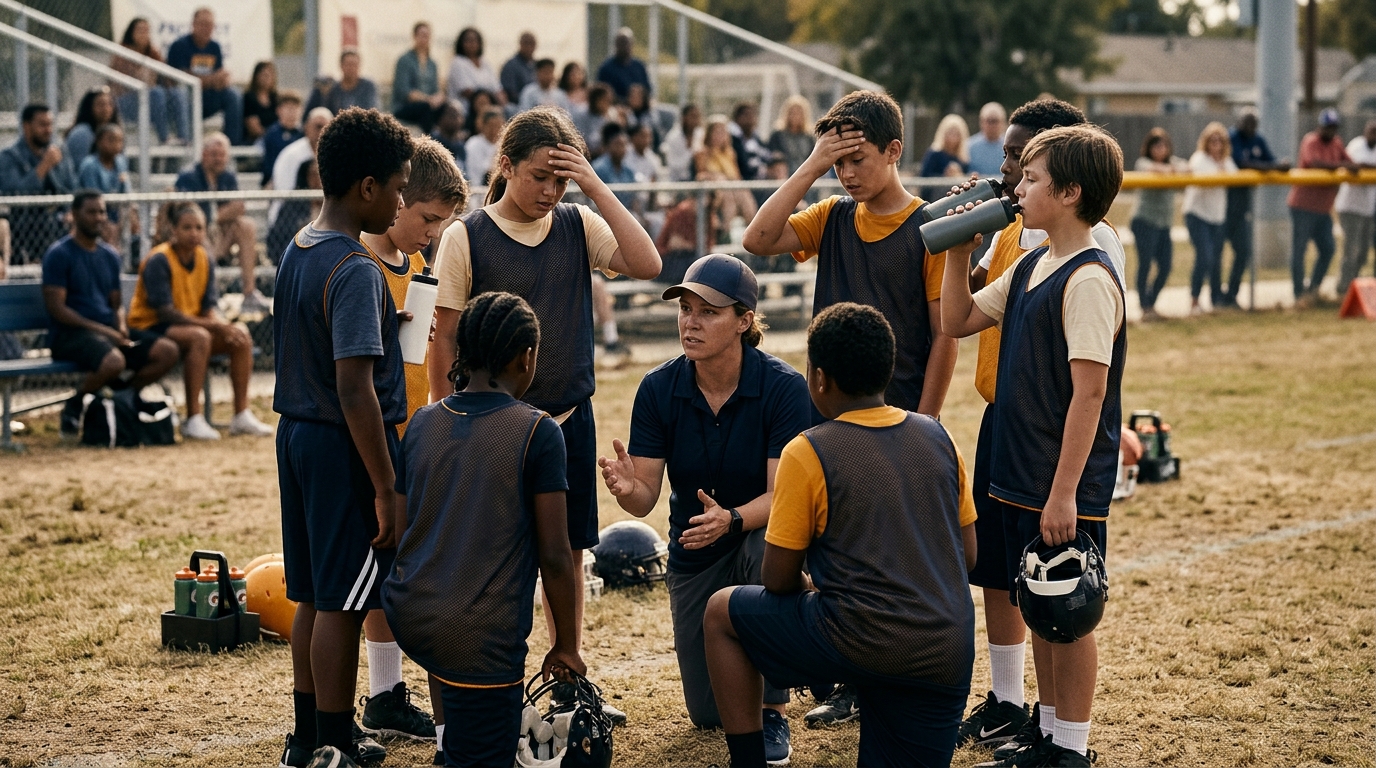
Three kids are already at the cooler. One is trying to pour water into his mouth without taking his helmet off. Two more are halfway to the fence because they saw one bottle come out and decided practice must be pausing. Meanwhile, a coach stands in the middle of it all giving the most important correction of the day to players who are looking everywhere but at him.
I have watched this happen in baseball, softball, soccer, and basketball, just with different props. Water break turns into lecture time. Lecture time turns into drift. Drift turns into you clapping for attention, repeating yourself, and wondering why the next drill starts flat.
Kids are not rude because they do not listen well with a bottle in their hand. They are just on break. If you want their legs to rest, fine. If you want their brains to hold teaching, do that somewhere else.
One of the simplest practice fixes I ever made was this: water is for water, not instruction.
The mistake is treating every pause like a teaching window
Coaches do this for good reasons. You finally have them standing still. You just saw a mistake that needs cleaning up. The next drill connects to the last one, and you want to explain the bridge. So you start talking while they drink, wander, swap gloves, or ask where their sweatshirt went.
Then you get half-listening. Worse, you get fake-listening. Heads nod. Nobody heard the point. You restart, and the exact same mistake shows up two minutes later.
That is not because your point was bad. It is because your timing was.
In my own teams, the quality of practice changed when I stopped trying to squeeze instruction into every crack. Not every dead spot is a teaching spot. Some pauses should stay pauses.
Use a clean split: teach, then break; break, then restart
Here is the practical move.
- If you need eyes and ears, call them in first. Make the correction. Show it fast. Ask one player to demo it back.
- Then send them to water. No extra notes while they walk away.
- When break is over, restart with action, not another speech. Put them right into the rep you just addressed.
That sequence matters. Teach while they are still with you. Let break actually be break. Then restart before the energy leaks out.
What you are protecting is not just attention. You are protecting rhythm.
Water breaks should do one job
A good water break is short, clear, and boring. That is the goal.
It is not a group meeting. It is not a wandering period. It is not where you solve effort, spacing, mechanics, and attitude all at once.
Say something simple like, “Water. Ninety seconds. Back on this line.”
That gives them three things kids need in practice:
- what they are doing
- how long it lasts
- where they return
When coaches skip those details, they create their own chaos. Now you are chasing kids back in, repeating the next drill, and getting annoyed at a mess you helped make.
Breaks need edges. Kids handle practice better when they can feel where one part ends and the next begins.
If the correction matters, it can survive 90 seconds
This is the pushback I hear from coaches: “If I do not say it right then, we lose the moment.”
Sometimes. But not usually.
If the fix really matters, save it properly. Grab the group before water. Or hold one player for ten extra seconds while everyone else goes. Or start the next segment with the correction built into the first rep.
What usually gets lost is not the teaching point. What gets lost is the coach’s urgency. Those are different things.
I learned that the hard way. Early on, I talked through transitions because I thought more talking meant more coaching. It mostly meant I was stepping on the natural pace of practice. Kids got slower. My voice got louder. Nothing improved until I got shorter and cleaner with when I taught.
What this looks like in real practice
Say your infielders are fielding deep and throwing off their back foot.
Bad version: you send them to water and start explaining footwork while half the group is drinking and the other half is fiddling with gloves.
Better version: whistle them in. “Watch this. Right-left through the ball, finish the throw. Ben, show it.” Ben demos. You send them to water. Ninety seconds later, first rep back is a slow roller with the exact footwork you just coached.
Now the point has a fair chance.
Same thing in soccer. Same thing in basketball. Correct the shape, spacing, or closeout before the break or after it, not during the middle of a bottle scramble.
The hidden benefit: your tone stays better
When coaches talk during breaks, they often end up talking over noise, movement, and side conversations. That raises the temperature fast. Suddenly you sound sharper than you meant to. Kids feel corrected when you were really just trying to be heard.
Separating break from instruction helps your tone as much as their focus.
You do not have to fight for attention if you only teach when attention is actually available.
That is a small practice-management choice. It also changes the feel of the whole session.
Water is for water. Teaching is for teaching. Keep those separate, and a lot of your practice cleanup happens on its own.