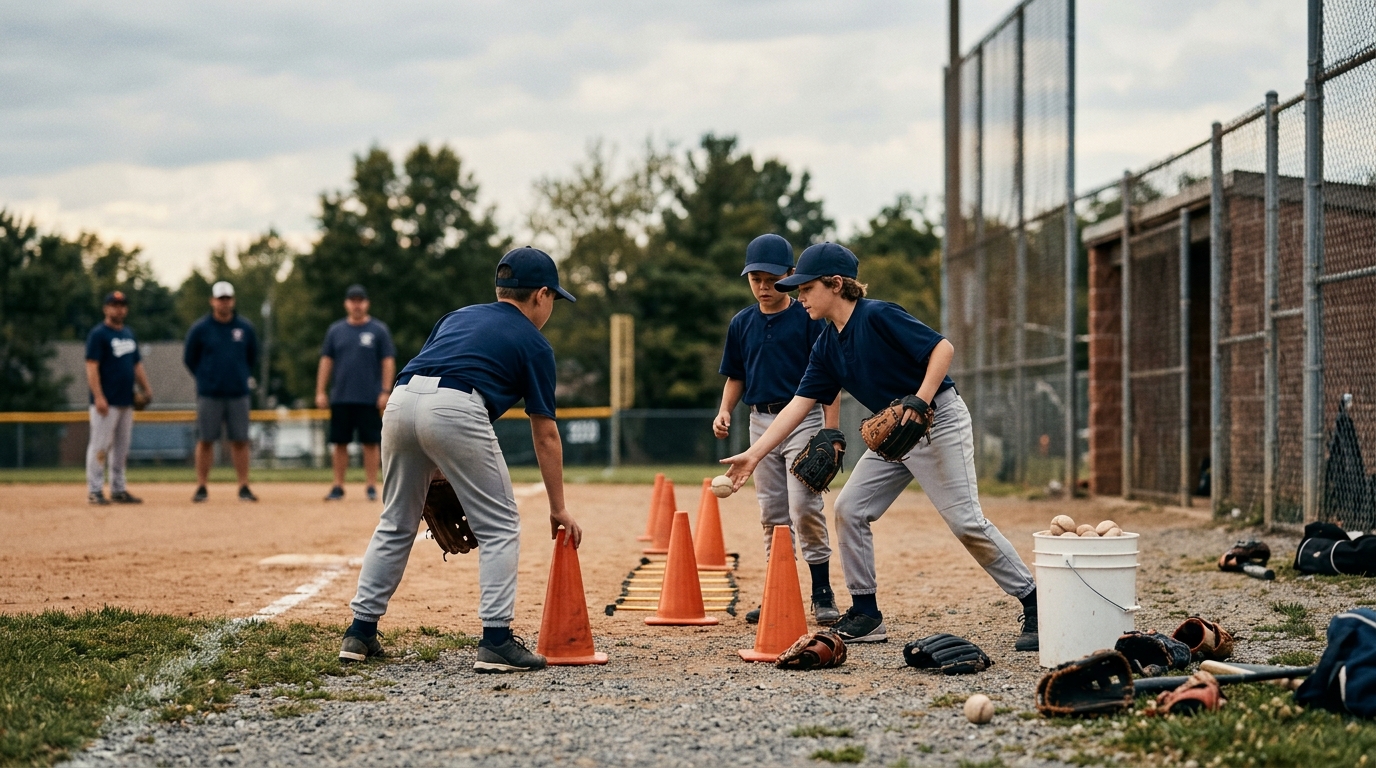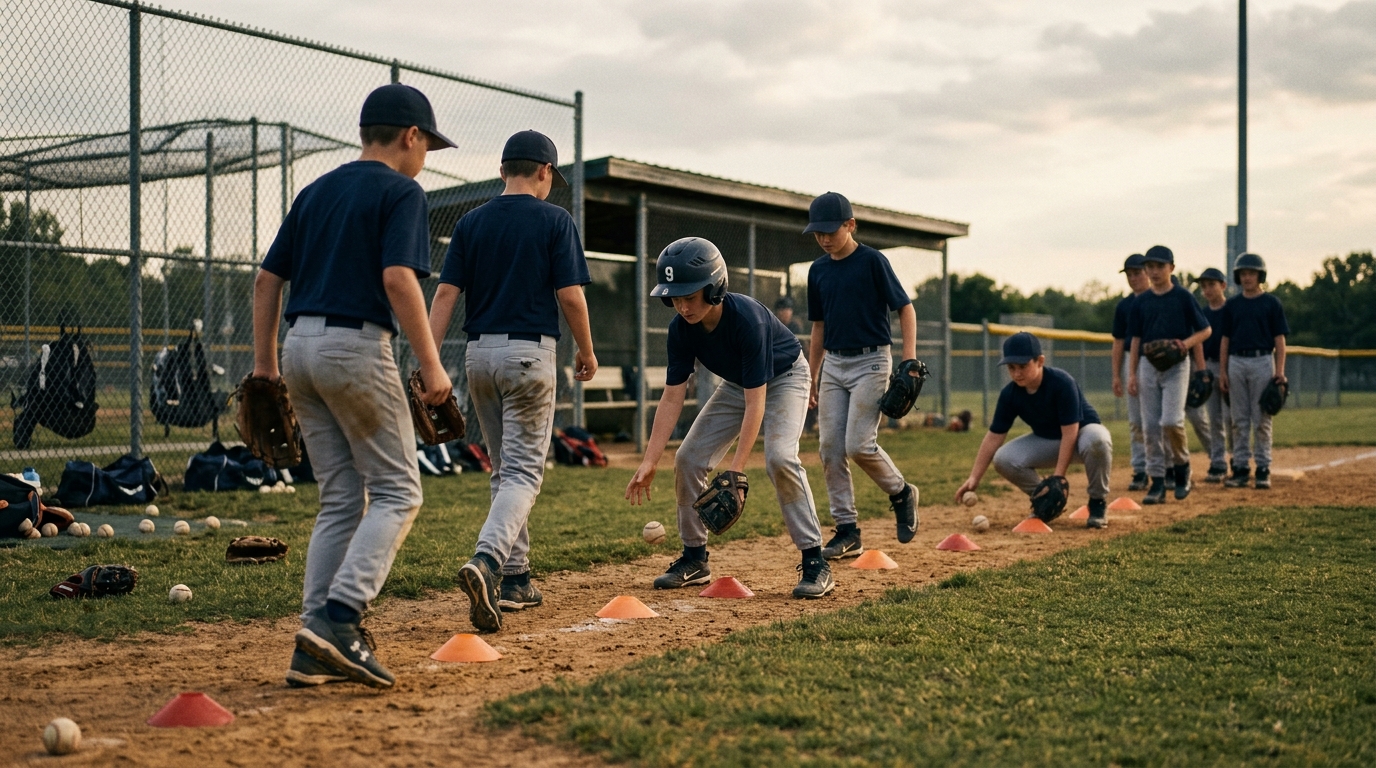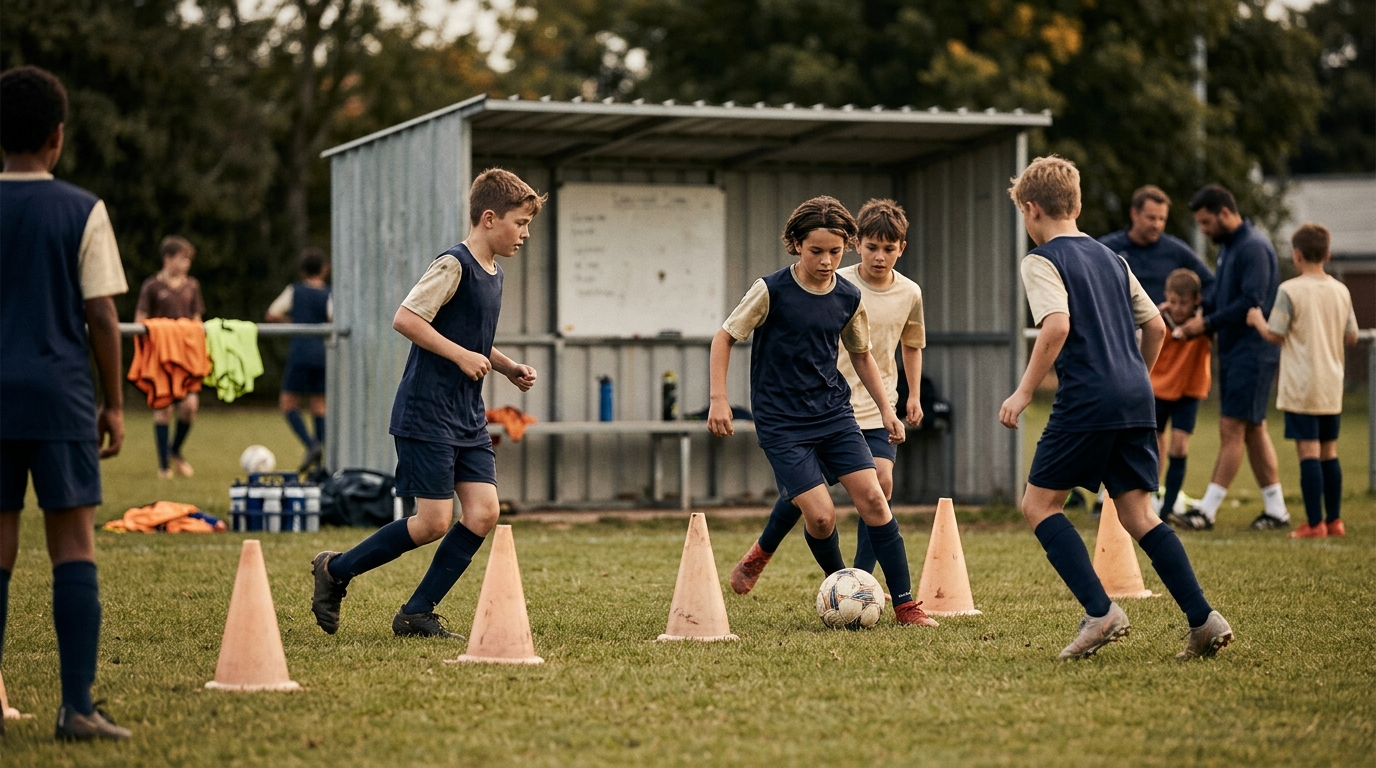
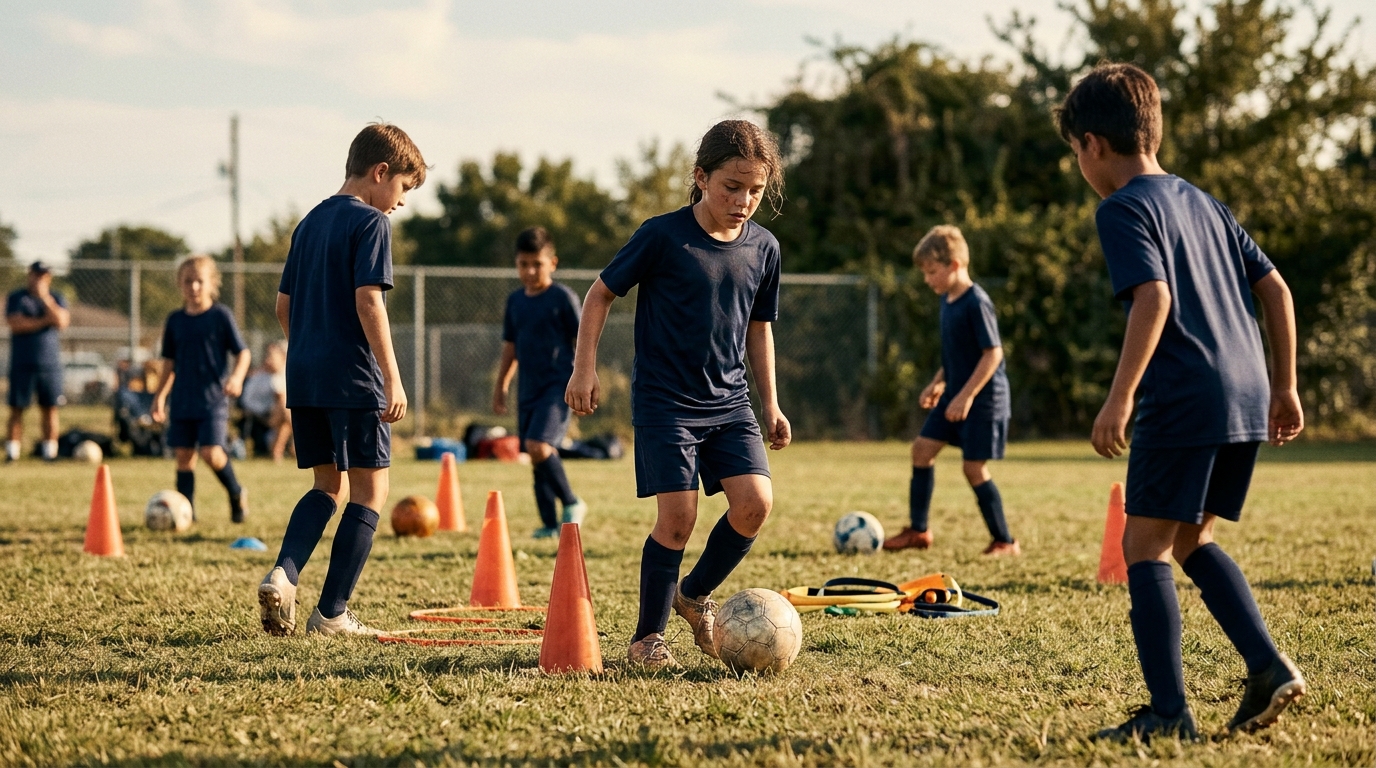
Third inning. Blue jersey untucked, one shin guard half-on, helmet missing, water bottle kicked under the bench, and a kid hopping on one foot because nobody knows where the other cleat went. Meanwhile the game is moving, the coach is looking for the next sub, and three parents are all pointing in different directions like that helps.
I’ve seen a lot of youth-game chaos that gets blamed on focus, effort, or “kids these days.” Most of the time it’s simpler than that. The bench is a mess, nobody has a system, and the team is trying to organize itself in real time while the game keeps rolling.
That’s why I like a 90-second bench check before first whistle, first pitch, or first faceoff. Not a speech. Not a clipboard seminar. Just a fast physical reset that tells kids where their stuff goes, what stays on, and what needs to be ready before their name gets called.
It sounds small until you’ve coached a game where a kid misses a clean sub window because they’re digging through three hoodies for a mouthguard.
What the bench check is
The bench check is a quick team routine done right before the game starts. Everybody stands at the bench area or team sideline space and goes through the same order every time.
- Helmet, pinnie, or game gear: on your body or in your assigned spot
- Water bottle: behind the bench or against the fence, not in the walking lane
- Bag: zipped and pushed all the way back
- Extra gear: one neat pile, not spread across three seats
- Shoes, guards, glove, stick, bat, or goggles: game-ready now, not “in a second”
You’re not inspecting for military precision. You’re clearing the trip hazards and the excuses.
How I run it
I learned a long time ago that kids usually don’t fail the moment. They fail the setup before the moment. If the bench looks like a yard sale, the game will feel like one too.
So I keep this simple and fast.
I call them in and say, “Bench check. Ninety seconds. Make your space playable.”
Then I walk the line and look for three things:
- Can kids sit down without sitting on gear?
- Can the next player get in without stepping over bags and bottles?
- Can each player find what they need in one move?
If the answer is no, we fix it right there.
Not with a lecture. With direct instructions.
“Bottle behind the bench.”
“Bag zipped.”
“Keep the glove on the hook, not the ground.”
“If you’re next two, your gear stays with you.”
That’s it. Short, clear, repeatable.
Why it works
On the sideline, little delays become big ones fast. One missing item turns into a late substitution. One late substitution turns into a coach rushing. One rushed coach starts talking sharp. One sharp moment changes the whole tone.
You can prevent a bunch of that with a routine that takes less time than most teams spend arguing about where the snacks go.
The bench check works because it gives kids an external job. Youth players do better when “be ready” gets translated into visible actions. Put your bottle here. Put your bag there. Keep this on. Hold this if you’re next.
Readiness is easier when kids can see it.
Best times to use it
- Right before warm-ups end and the team is transitioning to game mode
- After weather delays when gear has drifted everywhere
- At tournaments when players bring extra layers, snacks, and backup everything
- With younger teams who need the same routine every single game
- With shared bench space where clutter becomes everybody’s problem
If your team tends to unravel at the transition points, this helps more than another motivational talk.
What to assign by age
Younger players
Keep it basic. Give them one bench spot and one backup spot.
- Seat or standing area
- Water bottle location
- Bag location
If they’re the next sub, tell them exactly what stays with them.
Older players
Make them own more of it.
- Keep personal gear contained
- Help the player next to them stay clear
- Reset the bench after a scoring burst, inning change, or halftime
Older kids can handle shared responsibility, but only if you name it out loud first.
Common mistake coaches make
The biggest mistake is waiting until there’s a problem.
If the first time you address bench organization is when a kid can’t find a glove in the middle of play, now it feels personal. Now the kid feels called out. Now everybody’s stressed.
If you make the bench check routine, it’s not punishment. It’s just what the team does.
Systems feel calmer than corrections.
What parents can do without taking over
I’ve been around enough benches to know the temptation. Adults want to jump in and organize every item themselves. Usually that creates one organized game and ten dependent kids.
Better move: help your own kid learn the order before game day.
- Water here
- Bag zipped
- Gear together
- Nothing in the walking lane
That’s support. Rebuilding the whole bench while the team warms up is not.
The standard I’d keep
If a player gets called, they should be able to move in five seconds without a scramble.
That’s the standard.
Not perfect. Not pretty. Playable.
Because the middle of the game is a bad time to discover the bench is running the team instead of the coach.