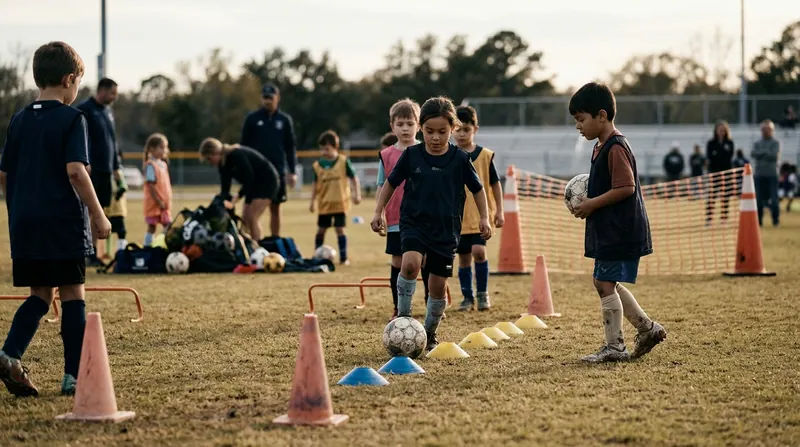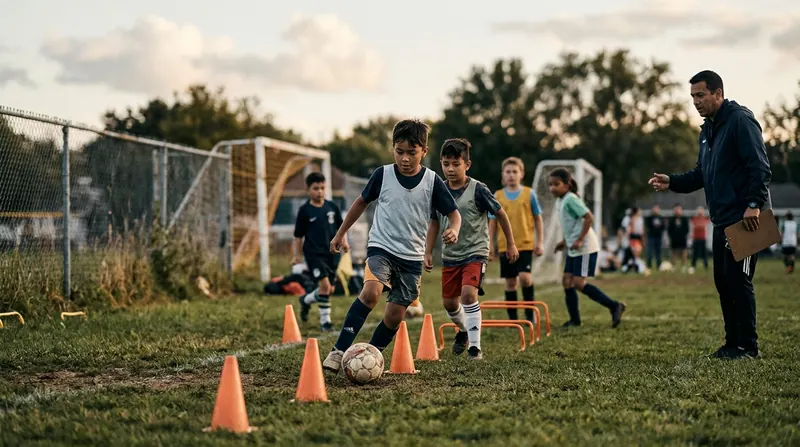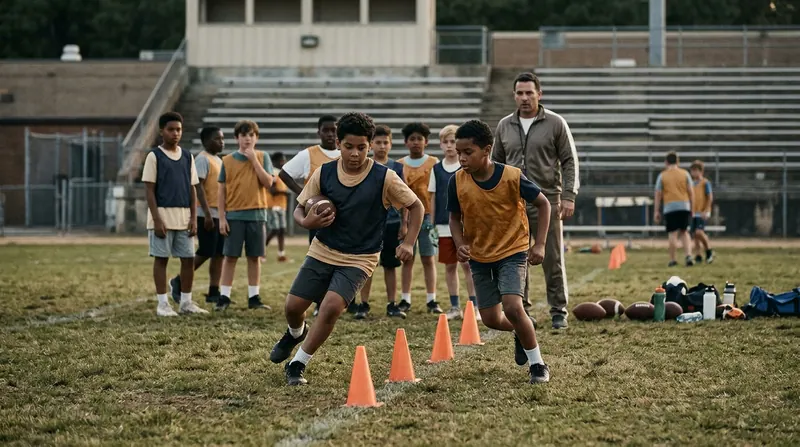
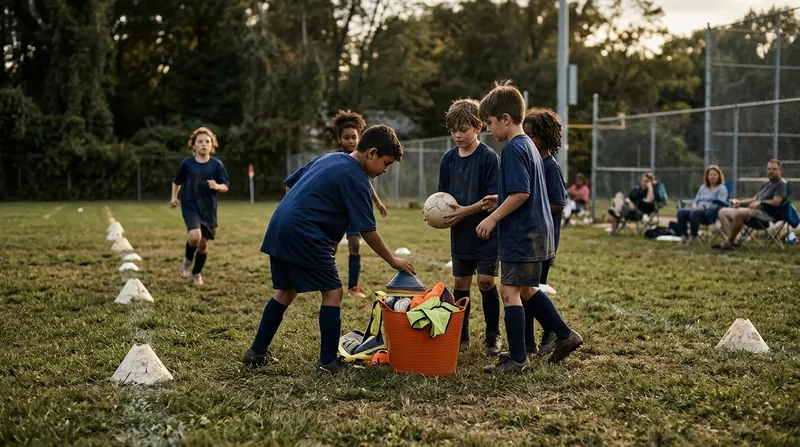
It was 7:58, the field permit ended at 8:00, and half the team was doing that end-of-practice shuffle kids do when their brains are already in the car. One catcher’s helmet was upside down by the fence. Two bats were still in the on-deck area. A jacket sat on the backstop like somebody planned to come claim it next Tuesday. Meanwhile, three kids were “helping” by all reaching for the same ball bucket and moving it about four feet. Practice was over, but nobody was actually done.
That last two minutes gets ignored by a lot of coaches. Then they wonder why gear disappears, parents wait, and the field looks like a rummage sale with chalk lines.
So here’s a simple fix: run a bucket relay cleanup every practice.
Not as punishment. Not as a lecture. As part of practice.
What the bucket relay is
You set one home base for equipment, divide the team into small jobs, and clean the field in a fast, visible order. Everybody knows their lane. Nobody freelances. The goal is to get from scattered practice mess to packed-and-accounted-for in about two minutes.
I started doing this after too many practices where cleanup felt like the worst kind of youth-sports ending: loud, vague, and somehow slower with more people involved.
Kids usually do fine with hard drills. What bogs them down is fuzzy jobs. “Everybody clean up” is a fuzzy job. “You two get balls, you two get cones, you three check fence line” is a real one.
How to set it up
Before practice starts, pick one clear equipment home base. That might be:
- the first-base dugout opening
- one sideline corner
- the back of the team bench
- a spot by your main gear bag
Tell the team early: “When I call bucket relay, everything comes back here.”
Then make four cleanup groups. Keep them the same for a few weeks if you can. Repetition helps.
Group 1: Ball crew
- Collect loose balls only
- One kid holds the bucket, the other(s) feed it
- No throwing balls into the bucket from 20 feet away because somebody always misses and creates three more loose balls
Group 2: Cone crew
- Stack cones by size or color if you use a lot of them
- Bring pinnies or markers with them if those were part of the station
Group 3: Fence-line check
- Walk the fence, bench, and gate area
- Pick up helmets, gloves, jackets, water bottles, resistance bands, or whatever your sport leaves behind in weird little pockets
Group 4: Big gear crew
- Tee, screens, rebounders, agility ladders, portable goals, catching gear
- This group should usually be your older or stronger kids, but make sure they know how to carry things the right way first
How to run it
With about three minutes left in practice, stop the final rep before attention is totally gone. Don’t wait until everybody is already halfway to their bag.
Bring them in and say the same thing every time. Mine is usually:
“Bucket relay. Ball crew, cones, fence, big gear. Everything to home base. Jog, don’t drift.”
That’s enough. You do not need a cleanup TED Talk.
Then stand at home base and direct traffic. This part matters. If the coach wanders off to unzip a bag or chat with a parent, cleanup turns back into random motion.
As gear comes in, do a quick out-loud inventory:
- “Balls are in.”
- “Cones are stacked.”
- “Who has the extra tee top?”
- “Fence check done?”
It keeps the finish visible. Kids move faster when they can hear the job getting close to complete.
Why it works
Because the end of practice is a drill too.
That sounds small, but it changes the whole feel. Instead of practice ending with adults scrambling and kids fading out, it ends with one last shared job. Clean, quick, predictable.
I’ve seen this especially help with younger groups where dismissal used to trigger instant amnesia. The second you said “great work today,” they heard “scatter and forget your sweatshirt.” The bucket relay gives that moment a shape.
It also helps assistant coaches. Now somebody can supervise pickups, somebody can manage the team bags, and nobody is guessing whether the batting gloves under the bench belong to your team or the one before you.
Common mistakes
Too many groups
Four is usually enough. Six groups just creates six kinds of confusion.
No home base
If gear is getting dropped in three different places, you are not cleaning up. You are relocating the mess.
Starting too late
If parents are already at the fence and players are mentally clocked out, cleanup gets sloppy fast.
Letting the fastest kid do everything
There’s always one kid who wants to be the entire cleanup department. Good energy, bad system. Slow them down and keep jobs shared.
A simple add-on that helps even more
When everything is back at home base, don’t dismiss right away. Take 20 seconds and make them look at the ground around them.
“Check your spot. If it’s yours, grab it.”
That one line catches the single glove, the unlabeled bottle, the sliding mitt, the headband, the notebook, the sock somebody swore they packed.
Little things matter because little things eat time.
And most practice problems are really transition problems wearing a different hat.
If the last two minutes always feel messy, don’t keep hoping kids will magically get sharper at the exact moment they’re most ready to leave. Give them a drill for the ending too.
Order beats reminders almost every time.