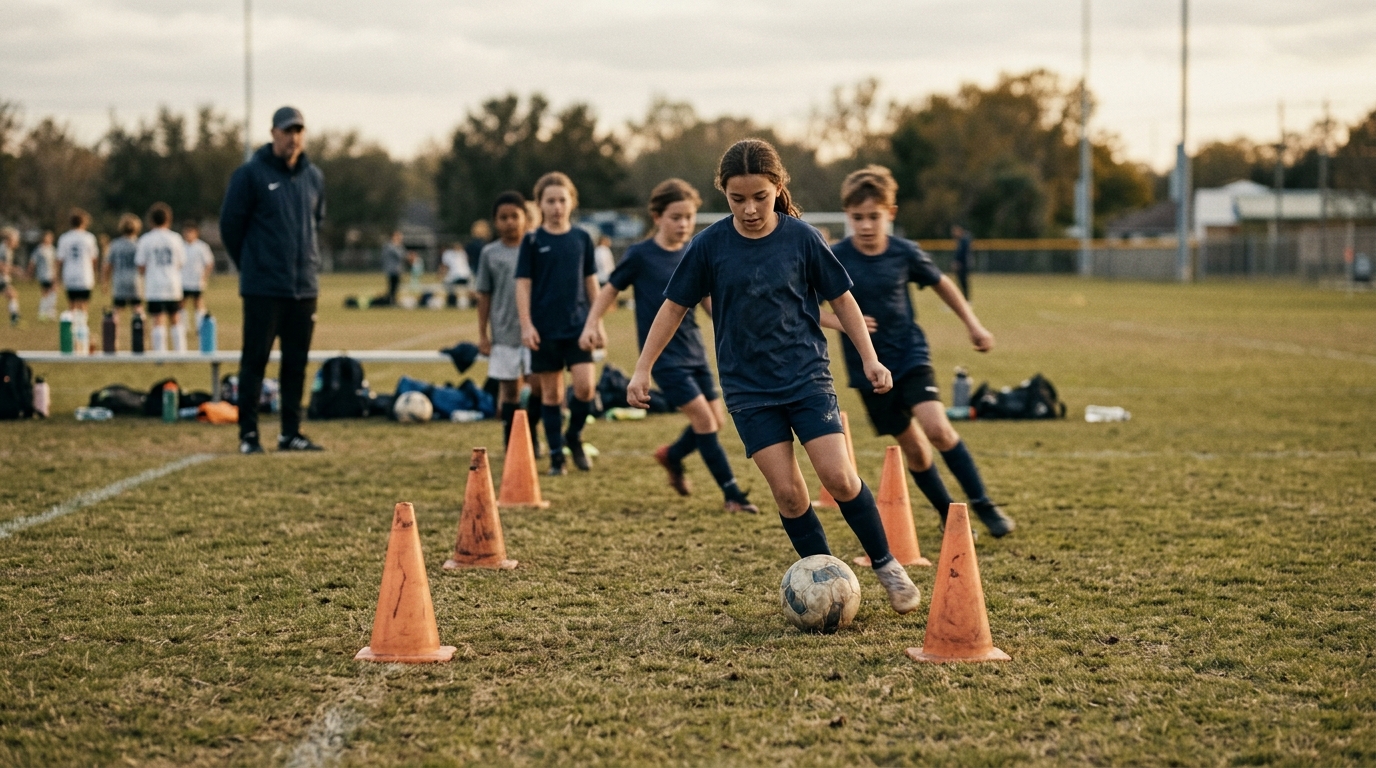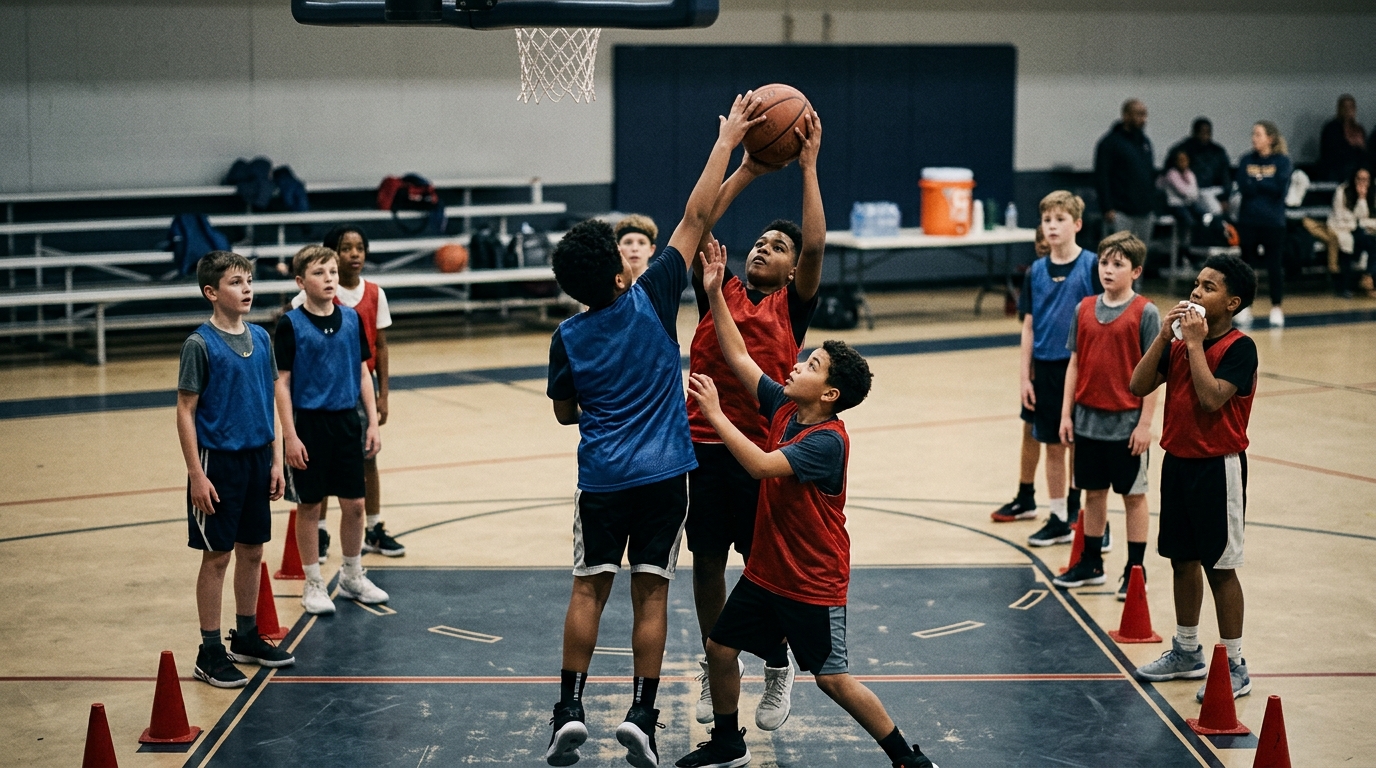
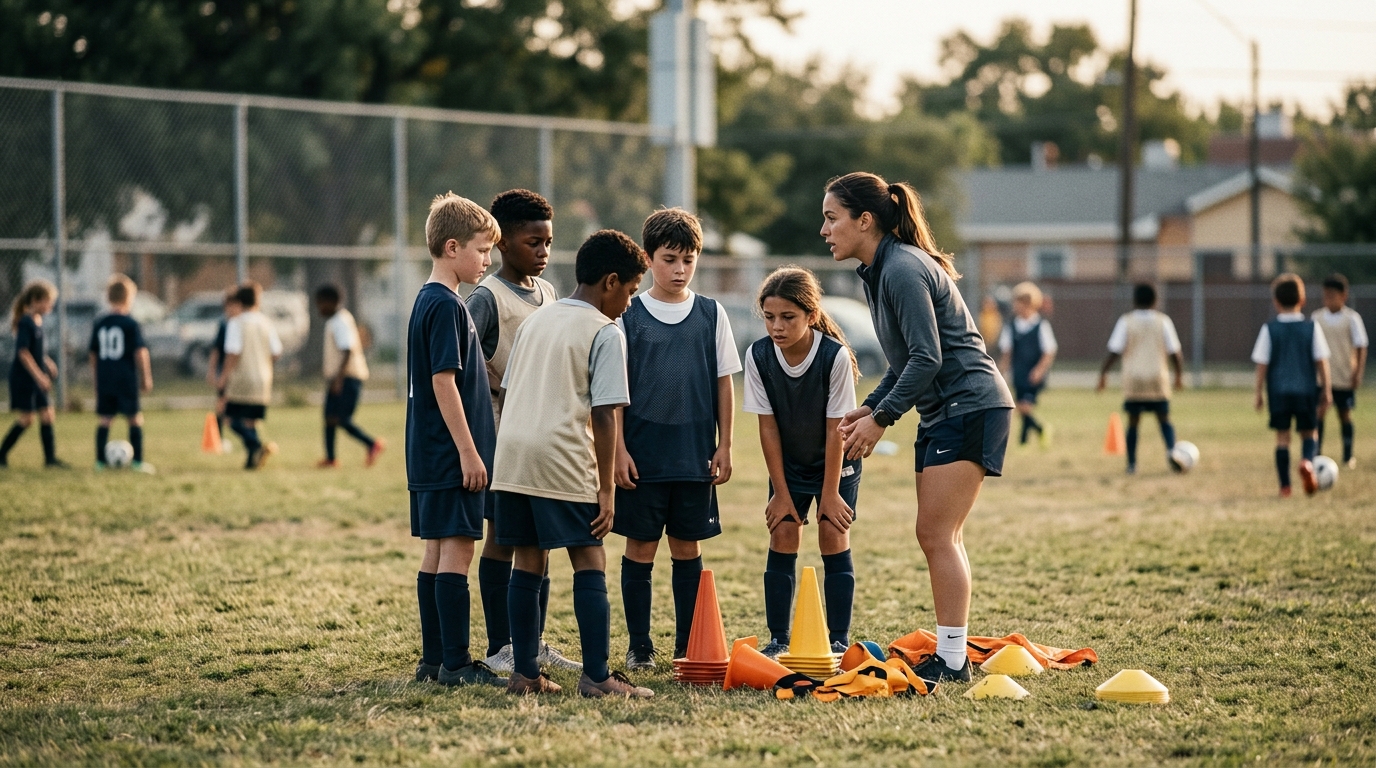
Five minutes before kickoff, one kid is still tying a shoe with gloves on, another is asking who’s starting, a parent is holding two water bottles and yelling, “Whose are these?”, and your left side of the field is somehow warming up on the right. I’ve seen good teams look disorganized right before the whistle, and it has nothing to do with talent. It’s usually because nobody paused the group long enough to get everybody on the same page.
That’s where the last-play huddle comes in.
Not a speech. Not a big emotional moment. Just a short, repeatable pregame huddle that happens after warm-ups and before the game starts. Same order. Same points. Every time.
I started doing this because I got tired of spending the first six minutes of games solving avoidable problems. Kids asking where to line up. Subs not knowing who they’re spelling. Players forgetting the one thing we talked about in the car, at practice, and again during warm-ups. You can coach around a lot. Confusion before the game is one of the dumbest problems to keep having.
The fix is simple: gather them for two minutes and close the loop.
What the last-play huddle is
It’s the final team huddle before the opening whistle or first pitch where you cover only the things players need immediately.
Not your season values. Not a long motivational talk. Not three corrections from the warm-up line.
Just the stuff that keeps the first stretch of the game clean.
Think of it like packing the dugout before you leave the house. If you do it right, the game starts smoother.
When to do it
After warm-ups are fully done. After captains, if your sport uses them. After equipment is settled. Before players scatter.
If you huddle too early, they forget half of it. If you wait too late, you’re yelling over game noise and kids are half-listening while looking at the field.
You want them standing still, breathing a little, and ready to hear what matters now.
The four things to cover
1. Starting group
Say who is beginning and where.
Don’t assume they know. Don’t assume their teammates know either.
“We’re opening with Maya and Tessa up front, Jordan in the middle, Liv and Reese wide, Ben at the back.”
This keeps the first shift from turning into finger-pointing and shoulder shrugs.
2. First sub pattern
Kids relax when they know the first change.
You do not need to announce the entire game plan. Just the first rotation or first wave.
“First change at four minutes: Sam for Jordan, Eli for Ben.”
I’ve coached enough benches to know this matters. A kid who knows when they’re likely going in watches the game differently. They’re more ready. They stop asking. Parents usually calm down too.
3. One team focus
One. Not four.
This is the reminder that connects practice to game day.
“First five minutes, we talk early on defense.”
“Today we sprint back to shape when we lose it.”
“First inning, we’re loud on every routine ball.”
If you give them too much, they keep none of it.
4. First reset if things go sideways
This is the underrated one.
Tell them what to do if the game starts messy.
“If we get scrambled, find your matchup and get compact.”
“If the inning gets loud, next play is simple: ball, base, backup.”
“If we rush, pull it out once and reset wide.”
Young players don’t just need instructions for the ideal version. They need a plan for the sloppy version too.
What to leave out
- No long speeches. They stop hearing you faster than you think.
- No last-second criticism. Pregame is not the moment for “you’ve got to stop dropping your shoulder.”
- No emotional guilt talk. Kids don’t need “want it more” right before the whistle.
- No parent logistics. Save snack line, pickup plan, and postgame details for another moment.
The huddle should make players feel clear, not heavy.
How long it should take
Ninety seconds to two minutes.
That’s it.
If you’re still talking at three minutes, you’re no longer sharpening the start. You’re filling air because silence feels awkward.
Coaches do that. I’ve done it too. Usually the extra minute is for us, not for them.
Why it works
Because kids play better when the first few decisions are already made.
The opening minutes of youth games are often a mess. Energy is high. Attention is split. Everyone’s trying to settle in. A clean huddle reduces the number of moving parts right when the game is most jumpy.
And from experience, this kind of structure helps every kind of player. Your confident kids get clarity. Your quieter kids get certainty. Your newer kids get a map.
It also makes you look calmer as a coach, which matters more than people admit. Teams borrow the emotional tone of the adult leading them. If your final huddle is rushed and chaotic, the game usually starts that way too.
A simple script
If you want it easy, use this:
- Starters: “Here’s our opening group.”
- First subs: “First change is…”
- Focus: “Our first job today is…”
- Reset: “If it gets messy, we…”
Then break it clean and let them go.
That’s the whole thing.
Not every team needs a better speech. A lot of teams just need fewer surprises in the first five minutes. The last-play huddle won’t make your team faster or stronger overnight. It will make game day cleaner, and that counts for a lot.
Sometimes the difference between a scattered start and a solid one is two calm minutes before the whistle.