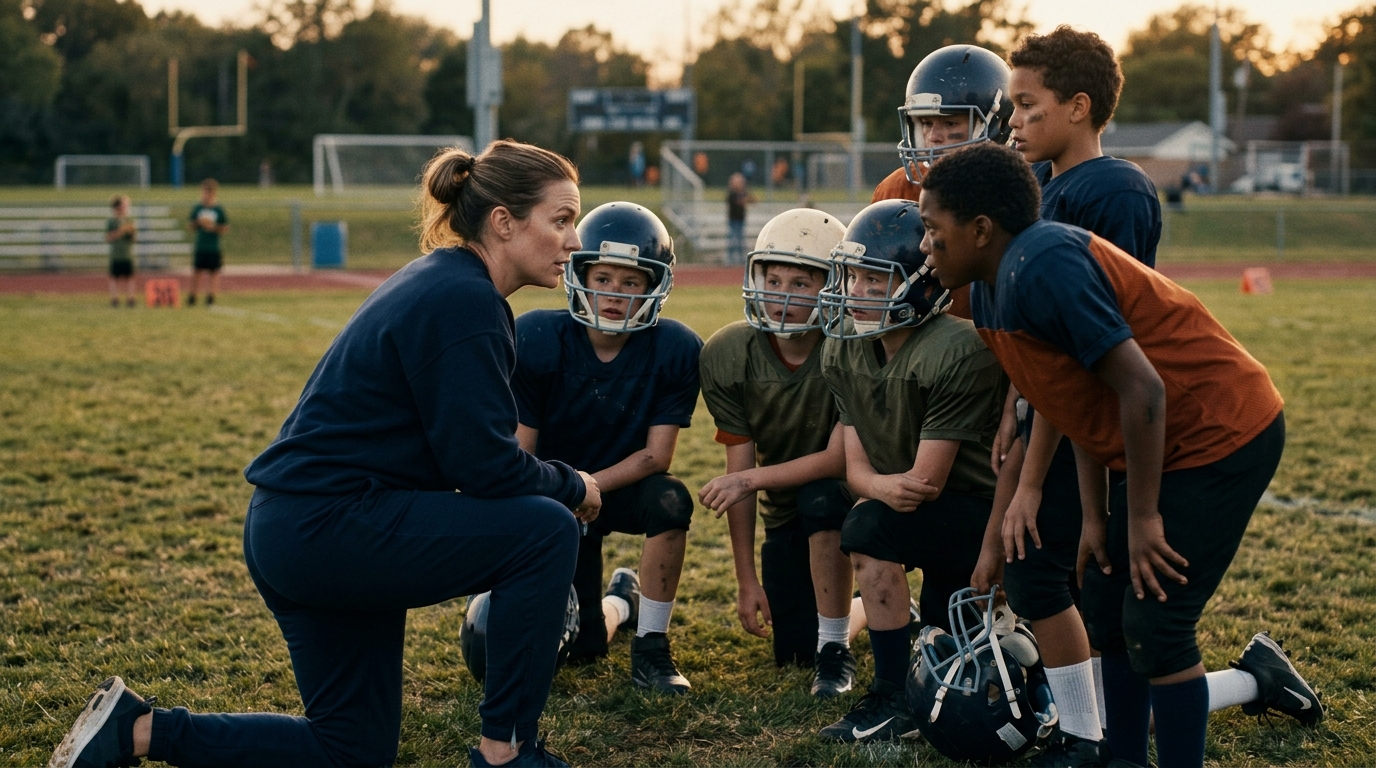

It was 6:07, and we were already losing practice.
Not on the scoreboard. On the field.
Three kids were still tying cleats. Two were wrestling over a bucket of balls. One was taking a lap to the water cooler like he was on a sightseeing tour. Meanwhile, the assistant coach was asking me what we wanted to do first.
That’s the kind of practice that feels busy and accomplishes almost nothing.
I’ve had those practices. Most coaches have. You show up with good intentions, a few drills in your head, and enough energy to sound organized for the first ten minutes. Then the transitions get sloppy, the lines get long, the talking drags on, and suddenly you’ve spent 75 minutes to get 30 minutes of actual work.
That’s when I learned this: kids don’t need a more creative practice nearly as much as they need a visible clock and a coach who actually uses it.
The problem usually isn’t effort
Most youth practices don’t go sideways because kids are lazy. They go sideways because the adults leave too much dead space.
Dead space is where behavior problems grow.
It shows up between drills. During overlong explanations. While one group waits for the coach to reset cones. While the same two kids keep getting all the reps and everybody else starts building a dirt fort in right field.
When players don’t know what they’re doing, where they’re going, or how long it’s supposed to last, practice starts feeling longer than it is. Once that happens, attention drops fast.
If you want better focus, shorten the wait time before you demand it.
Run practice in chunks, not in a blur
The simplest practice-management move I know is this: break the session into short blocks and tell players the time on each one.
Not vague coach-time. Real time.
“We’ve got 8 minutes here.”
“Two minutes for water, then straight to passing.”
“This station runs until 6:32.”
That one habit changes the feel of practice.
Kids settle down when the structure is obvious. Assistants coach better when they know the window. You make cleaner decisions because the clock forces you to stop dragging one drill past its usefulness.
I’m not talking about turning practice into a military operation. I’m talking about removing the mush.
Mush is what wears everybody out.
What the clock fixes
When I started coaching with time blocks, a few things improved almost immediately.
- Explanations got shorter. If you know the drill only has 7 minutes, you stop giving a 4-minute speech before it starts.
- Reps went up. You notice faster when a setup creates standing around, because the clock makes wasted minutes harder to ignore.
- Transitions got cleaner. Players moved with more urgency once they knew the next segment had already started.
- Energy stayed steadier. Short blocks keep kids from mentally checking out halfway through a long, stale activity.
- Correction got simpler. You don’t need to stop everything for every mistake. You know another teaching window is coming soon.
That last one matters.
A lot of coaches overcoach because practice feels uncontained. They act like if they don’t fix every detail right now, it’ll be gone forever. But when your practice has rhythm, you stop coaching from panic.
You can teach, let them try, circle back, and keep moving.
How I’d set up a 75-minute practice
Nothing fancy. Just clear blocks.
- 0:00–0:10 arrival activity kids can start without me
- 0:10–0:18 dynamic warm-up
- 0:18–0:30 skill station 1
- 0:30–0:42 skill station 2
- 0:42–0:50 competitive small-sided game
- 0:50–0:53 water
- 0:53–1:05 team concept or situational work
- 1:05–1:15 scrimmage or pressure reps
That doesn’t mean you can’t adjust. Of course you can. If something is working, you can stretch it a few minutes. If something is flat, you move on.
But now you’re adjusting from a plan instead of wandering around hoping good coaching happens.
Tell players what the clock means
One communication move helps a lot here: explain to the team why you run practice this way.
I’ll tell kids, “We move fast so everybody gets more turns.”
That lands.
They don’t hear it as punishment. They hear it as fairness.
And that’s really what a good practice clock creates. Fairness. More reps. Less waiting. Fewer lectures. Less chaos disguised as hustle.
Parents notice it too, even if they can’t quite name it. They see a team that starts on time, moves with purpose, and doesn’t spend half the evening standing in crooked lines while one kid takes all the ground balls.
The hidden culture lesson
Here’s the part coaches miss: using the clock is not just about efficiency. It teaches respect.
Respect for teammates’ time. Respect for assistants. Respect for the game.
When practice constantly runs late, drifts, or stalls out, kids learn that details don’t matter much. When practice has shape, they learn that how we work matters just as much as what we work on.
Players don’t become disciplined because you talk about discipline. They become disciplined inside repeated structure.
And no, this doesn’t require some giant coaching spreadsheet. A notepad works. The notes app works. A wristwatch works.
What matters is that you decide the practice before the practice starts.
Because at 6:07, when the balls are rolling, kids are drifting, and an assistant is asking what’s first, your team doesn’t need another speech.
It needs a clock, a plan, and a coach willing to keep both moving.