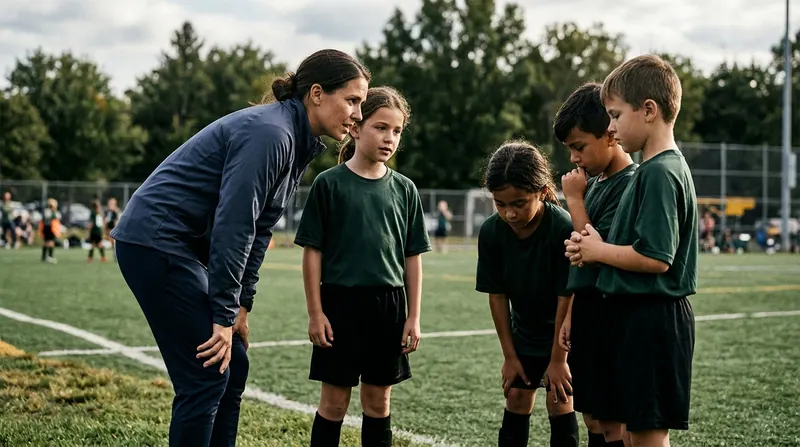
Halfway through practice, you can feel it slipping.
One kid is tying a shoe for the second time. Two are arguing about whose turn it is. A strong player is doing all the reps because their partner can’t get set fast enough. You blow the whistle, explain the drill again, and somehow the next round looks even messier than the first one.
That’s not always an effort problem. A lot of times it’s a pairing problem.
One of the simplest things a coach can do to clean up a practice is stop changing partners every five minutes just because it feels organized. Keep the same pairs together longer than you think you should.
I learned this the hard way. Early on, I thought good practices looked busy. New groups. Fast transitions. Constant movement. It felt sharp from the outside. But from the inside, it burned time. Kids kept having to figure out who they were with, who went first, where to stand, and how hard to go with somebody new. That is a lot of small decisions for a 60- or 75-minute practice.
Once I started using repeat pairings for whole blocks instead of single drills, the noise dropped. The waiting dropped. The coaching got better because I was correcting the skill, not managing the confusion around it.
Why repeat pairings work
Kids settle faster when they know who they’re with.
That matters more than coaches like to admit. The first rep with a new partner is usually a sorting-out rep. The second rep is better. By the third, they’re finally doing the drill instead of learning the setup. Then we blow it up and shuffle again.
Repeat pairings save those wasted first reps.
They also help with pace. A pair that stays together starts to understand its own rhythm. One retrieves while one works. One feeds balls while one finishes. One watches the count while one goes. You do not have to re-teach that teamwork every six minutes.
And here’s the part coaches really care about: you can actually see progress. When the same two players stay together across a block, they start adjusting in real time. The throw gets cleaner. The timing gets tighter. The communication gets shorter and better.
New partners create new confusion. Old partners create better reps.
How to use it without making practice stale
This is not “pick a buddy and coast.” You still choose the pairs.
Make them on purpose. Match by pace, size, skill need, or temperament, depending on the block. If a kid needs confidence, give them somebody steady. If two kids drift, do not pair them because it seems easier in the moment. If one kid dominates, put them with somebody who will make them listen, not just perform.
Then keep those pairs together for 20 to 30 minutes across multiple connected activities.
For example, if your team is working on receiving, footwork, and quick release, keep the same pairs through that whole section. Do not reshuffle just because the drill name changed. Same partner, new task. That one choice can save you several dead minutes and a pile of side conversations.
The kids also stop asking, “Who am I with now?” which might be the most repeated question in youth sports after “When is water?”
What to say
Keep the instruction plain:
- “You two are together for this whole block.”
- “If we change the drill, don’t change partners.”
- “Learn each other’s pace and help each other move.”
That last line matters. It turns a pairing into a job.
Where coaches miss it
We think variety automatically means engagement.
Sometimes variety just means interruption.
If your practice keeps bogging down at transitions, do not only look at cones, lines, and equipment. Look at the social reset you are forcing every few minutes. Young players spend real energy figuring each other out. Who talks a lot. Who gets frustrated. Who rushes. Who stands and waits to be told. Stable pairings lower that friction.
I’ve seen this especially help the middle group on a team. Not your strongest kids, who can survive chaos, and not your newest kids, who need obvious support. I mean the big middle. The kids who can do it once they get comfortable. Repeat pairings help them get comfortable faster.
It also helps assistant coaches. If the pairings stay put, your assistants can coach deeper instead of spending the whole practice redirecting traffic.
When to change pairs
Not every block. Not every mistake. Not every time two kids laugh once.
Change pairs when the purpose changes enough to require it. Change them if the energy is dragging the drill under. Change them if one player is carrying all the work and the structure is not fixing it. But do not shuffle just to prove you are running an active practice.
Some of the best youth practices look almost boring for ten minutes from the outside. Same pairs. Same area. Small corrections. Better reps.
That’s not boring. That’s development.
If you keep needing to restart the drill, the drill may not be the problem.
Coaches love a new setup. I do too. But kids usually do better with one less decision and one more clean rep.
So the next time practice feels drifty, resist the urge to add another explanation or another shuffle. Keep the pairs. Let them build a rhythm. You may find the practice gets sharper without getting louder.