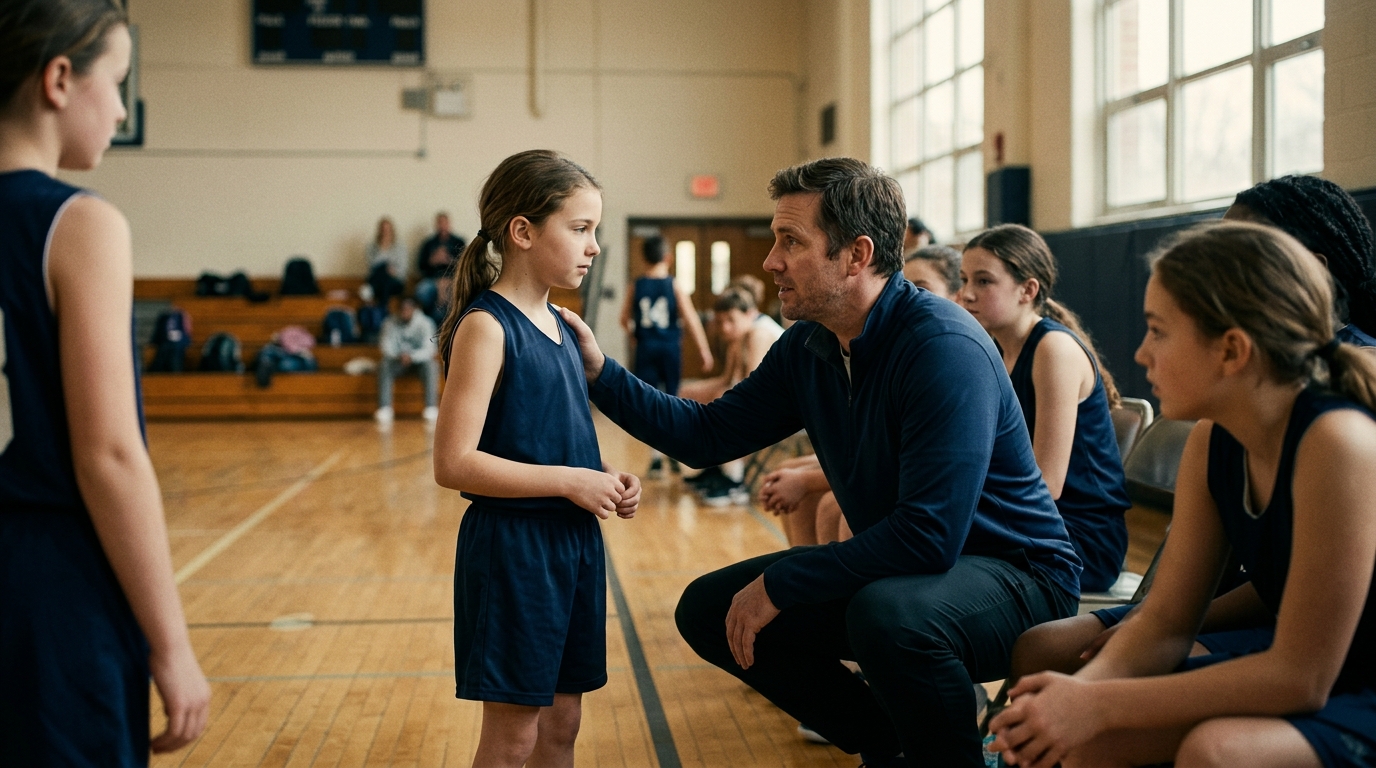
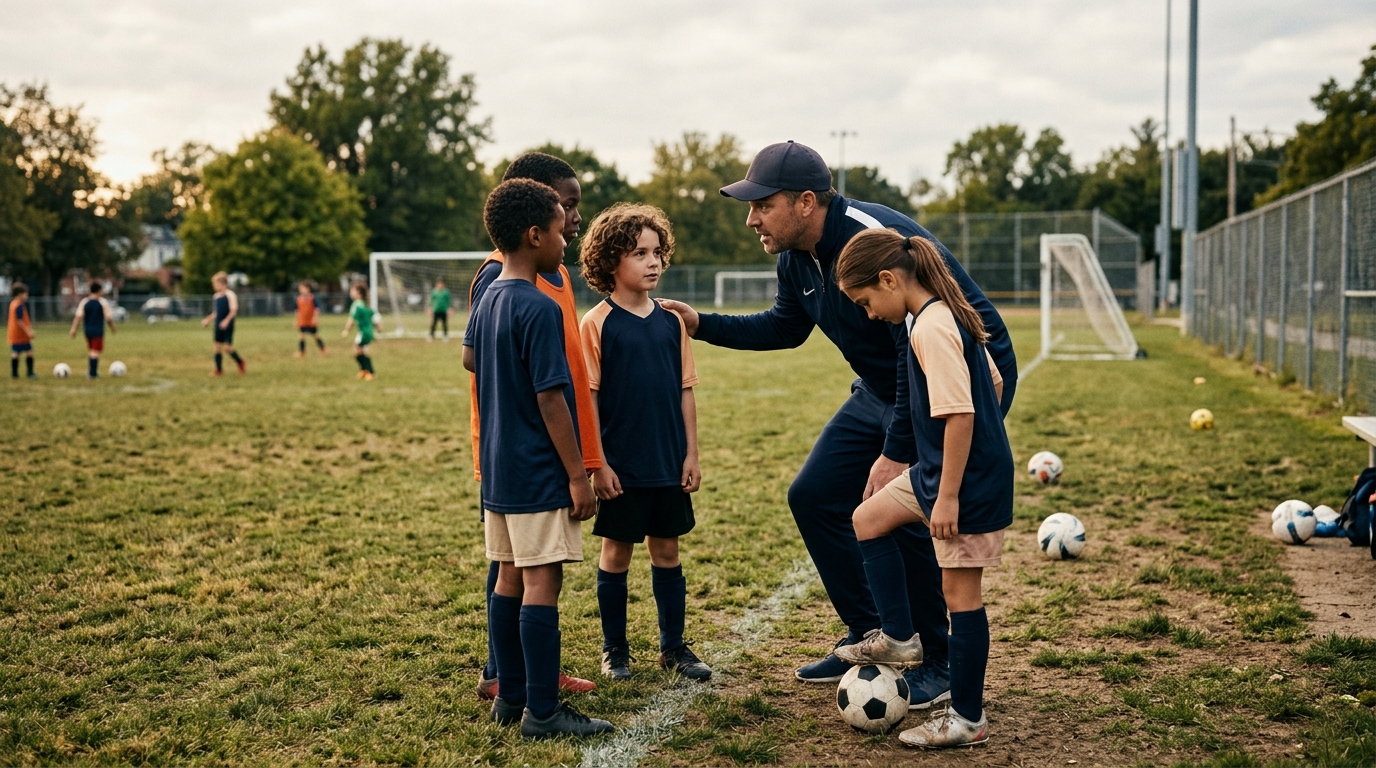
Halfway through practice, one kid kept jumping to the front of the line.
Not in a rude way. Just fast feet, high motor, eager to go again. Every rep, same thing. Ball rolls back, and he’s already there. Meanwhile, two quieter kids stayed a step behind the cone, hands on hips, doing that little half-bounce kids do when they want a turn but don’t want to fight for it.
You could feel what was coming next. The loud kid was about to get labeled as selfish. The quiet kids were about to disappear. And the coach was one more rep away from saying, “Guys, we’ve got to share,” for the sixth time.
That’s usually not a character problem. It’s a traffic problem.
One of the easiest fixes I’ve used over the years is adding a clear waiting spot to any drill where kids naturally crowd the action. Not just a line. A real, visible waiting spot. A cone, a dot, a stripe on the floor, a spot on the fence, whatever works. If you’re not the active player and you’re not the next player, you’re on the waiting spot.
That tiny change cleans up more than you’d think.
Kids do better when the rep order is visible
I’ve coached long enough to know that a lot of “behavior issues” are really just unclear spacing, unclear turns, or too much standing around near the fun part.
Put ten kids near a batting tee, a rebound line, a tackling pad, or a passing gate, and they’ll solve the problem in kid ways. The confident ones drift forward. The hesitant ones drift out. Then the coach starts managing fairness with their voice instead of their setup.
That’s tiring for everybody.
When you add a waiting spot, the drill starts telling the truth by itself. There’s the active spot. There’s the on-deck spot. There’s the waiting spot. Kids can see where they belong without you narrating every rep.
If a drill needs constant reminders to stay organized, the drill isn’t organized yet.
How I set it up
I keep it simple.
- One active spot: where the rep happens.
- One on-deck spot: next player ready with eyes up.
- One waiting spot: everybody else starts there until the line moves.
Then I say it the same way every time: “One player working, one player ready, everybody else parked.”
That word parked helps. Kids remember language that paints a picture.
In basketball, the waiting spot might be two steps off the lane line. In baseball, it might be helmets on and bats down by the fence until you’re on deck. In soccer, it might be behind a cone gate instead of creeping into the channel. In football, it might be a clear spot behind the bag so nobody crowds the footwork.
The sport changes. The principle doesn’t.
Why it works so well
First, it protects reps for quieter kids.
Not every kid is going to elbow their way into a turn. Some will wait forever if the path isn’t clear. A waiting spot gives them a fair runway into the drill. They don’t have to ask. They just move from waiting spot to on-deck spot to active spot.
Second, it settles your high-energy kids without shaming them.
I’ve coached plenty of kids who weren’t trying to take over. They just love moving. If the setup invites chaos, they’ll fill the space. Giving them a place to be doesn’t punish their energy. It directs it.
Third, it speeds practice up.
This sounds backward until you see it. Coaches think structure slows things down. Usually, unclear turns slow things down more. The rep itself might take five seconds. The confusion before it takes fifteen.
Clean traffic beats loud reminders every time.
Where coaches miss this
The mistake is thinking the line is enough.
A single line near the action often turns into a blob. The first three kids are basically in the drill already, the next three are talking, and the last two are picking grass or spinning a glove.
That’s when you start getting accidental double-turns, missed coaching points, and kids who mentally check out because they have no idea when they’re up.
A waiting spot creates distance. Distance creates order. Order creates attention.
And attention is what you were after in the first place.
What I say when I introduce it
I don’t make a big speech.
I’ll stop the drill, point to the cones, and say something like:
“Here’s the fix. Blue cone is working. Yellow cone is on deck. Red cone is waiting. If you’re not next, you’re not creeping. We’ll get more reps this way, and everybody will know their turn.”
That’s it.
Then when someone drifts, I don’t lecture. I just say, “Find your cone.”
Short correction. No heat. No speech about respect. Just back to the structure.
Good practice management sounds calm because the setup is doing half the coaching.
What happens after a week of this
You get fewer turn arguments. Fewer kids hovering in unsafe spots. Fewer loud reminders about sharing, waiting, or paying attention.
You also learn something useful as a coach. Once the traffic is cleaned up, you can finally see the actual issue. Maybe the drill is too long. Maybe the skill is too advanced. Maybe the pace is off. But at least now you’re fixing the real thing, not the chaos around it.
Some of the best coaching decisions aren’t big motivational talks or clever drills. Sometimes it’s just noticing that one kid keeps owning the front of the line and realizing the team doesn’t need a speech.
It needs a place to stand.