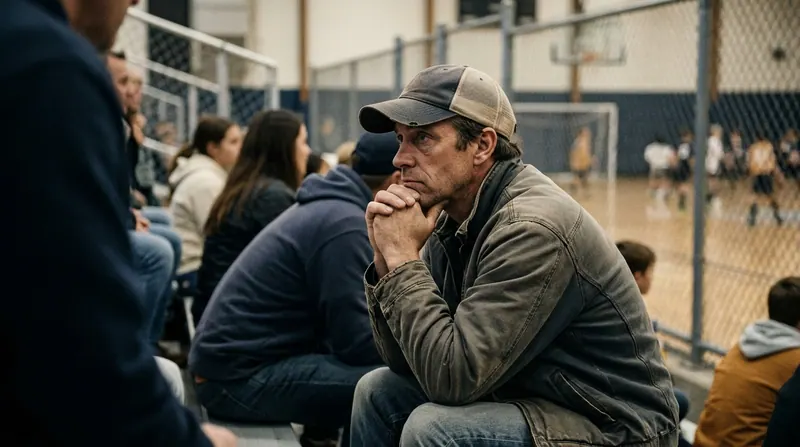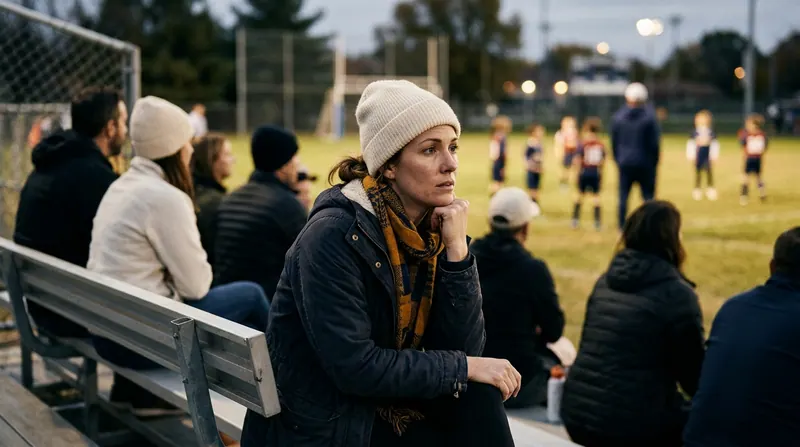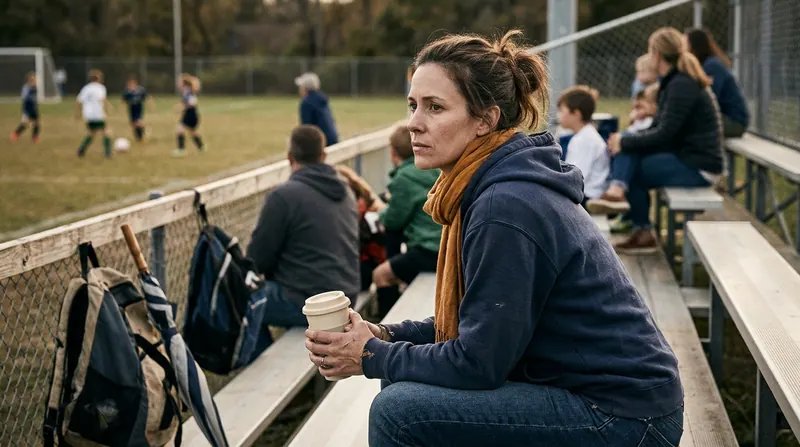
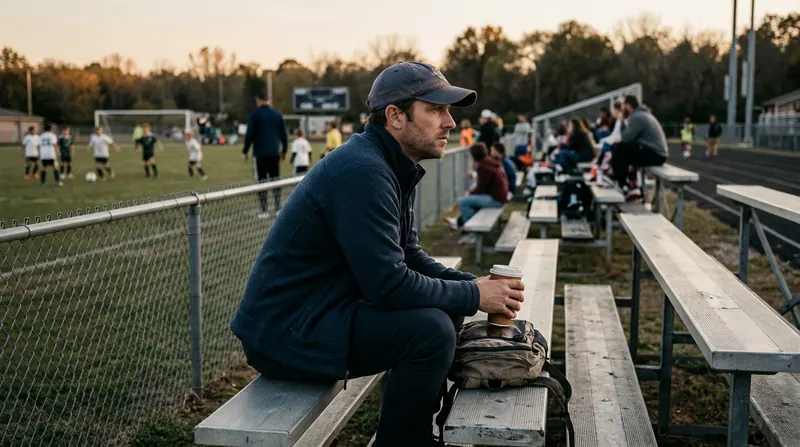
The whistle blows, the kids break, and before your player even gets to the water bottle, three adults are already talking at them.
You should’ve shot that. Pick your head up. Ask coach why you sat so long.
It happens in about 20 steps. From the bench to the gate, a kid can get a full postgame breakdown before they’ve even found their sweatshirt.
And most of the time, the parent giving the speech thinks they’re helping.
I’ve coached long enough to know this: a lot of kids are not upset about the game until the grown-ups make them relive it on the walk to the car.
That stretch matters. Not because it’s magical. Because it’s usually the first moment after a game when a parent decides what kind of support they’re going to be.
The walk to the car is not where you fix the game
Kids are coming off noise, adrenaline, frustration, excitement, confusion, embarrassment, pride—usually some mix of all of it. They are not stepping off the field in neat little bullet points.
Parents are usually just as wound up. You saw the missed call. You saw the rotation that made no sense to you. You saw your kid get a look they didn’t finish, or sit longer than you expected, or get corrected in a tone that rubbed you wrong.
So now everybody’s carrying something to the car.
That’s exactly why that moment needs less talking, not more.
I’ve seen good parents create bad conversations because they rushed in too early. Not with cruelty. With urgency. They wanted to make sense of it right away. They wanted their kid to know they noticed. They wanted to protect them. They wanted to teach.
But support that comes in too fast can feel a lot like pressure.
What kids hear when we unload too soon
Parents think they’re saying, I care.
Kids often hear, We need to deal with your performance immediately.
That is a very different message.
If the first 90 seconds after a game feel like a review session, most kids do one of three things:
- They shut down.
- They defend themselves.
- They say whatever ends the conversation fastest.
None of those responses give you anything useful.
Too many postgame talks fail because the kid is still in the game and the parent is already in analysis mode.
That gap is where the trouble starts.
Give the walk a job
If you struggle with saying too much too soon, don’t rely on willpower. Give that walk a simple purpose.
The job of the walk to the car is this: reconnect first.
That’s it.
Not review. Not investigate. Not sneak in one quick teaching point. Reconnect.
That can sound like:
- Glad I got to watch you today.
- You worked hard.
- Go grab your stuff.
- Need water?
- Tough one. I’m with you.
Short works. Normal works. Boring works.
You do not need a perfect line. You need a line that doesn’t turn your kid into a defendant.
What to do when you want to ask the coach something
Here’s where parents get themselves into trouble: your kid is walking over, you’re irritated about something, and now you’re tempted to solve both situations at once.
So you ask your player questions while scanning for the coach.
What happened there? Why were you out so long? Did coach tell you anything?
Now your child feels squeezed between your reaction and the coach’s decisions. That’s a bad spot for a kid.
If you think you need to talk to the coach, keep your kid out of the middle of it as much as possible. Don’t use the walk to the car to build your case. Don’t ask your child to explain adult decisions they didn’t make.
I’ve coached plenty of kids who got more stressed by the parent-coach triangle than by the game itself. They knew the ride home was going to turn into evidence gathering.
Your kid should not feel like the hallway between you and the coach.
Support does not mean pretending
This is not about acting like everything was great.
If your kid is upset, don’t fake cheerfulness. If they played badly, you don’t need to invent a masterpiece. If they want to talk, listen. If they don’t, don’t force it because we’re here now.
One of the most useful things a parent can say is:
If you want to talk later, we can. If not, that’s okay too.
That tells a kid two important things: I’m available, and I’m not coming after you.
That second part matters more than many parents realize.
A better postgame sequence
If you need something practical, use this:
At the field
- Greet your kid.
- Keep your first comment kind and brief.
- Handle bags, bottles, jackets, gear.
- Do not start with performance.
On the walk
- Let the silence breathe.
- If they bring something up, follow their lead.
- Ask one light question at most, like Need anything before we go?
If you’re upset
- Do not recruit your kid into your frustration.
- Do not talk to the coach while you’re still hot.
- Do not make your child explain the game to calm you down.
That last one gets missed a lot. Some parents aren’t really asking the kid questions for the kid’s sake. They’re asking because they’re trying to settle themselves.
Kids can feel that.
The goal is simple
After a game, your child does not need a reporter, a lawyer, and a second coach all at once.
They need a parent.
Sometimes that means saying the smart thing. Sometimes it means saying almost nothing. Sometimes it means putting your own opinions in your pocket until later because the next five minutes belong to the relationship, not the breakdown.
I’ve seen kids leave a rough game okay because the adult beside them stayed steady.
I’ve also seen a manageable game turn heavy by the time the car door shut.
The walk matters because tone travels.
If you make those 20 steps feel safe, the rest of the night usually has a better chance.