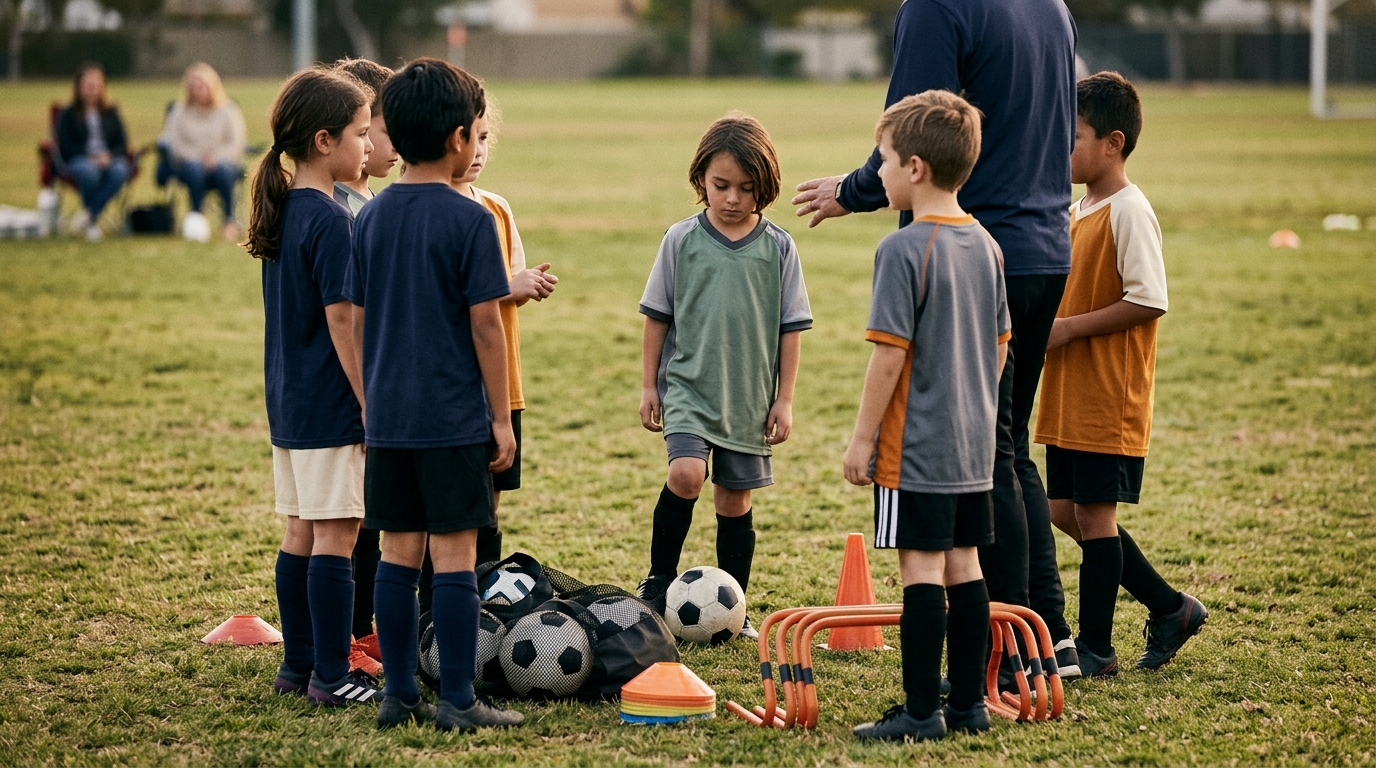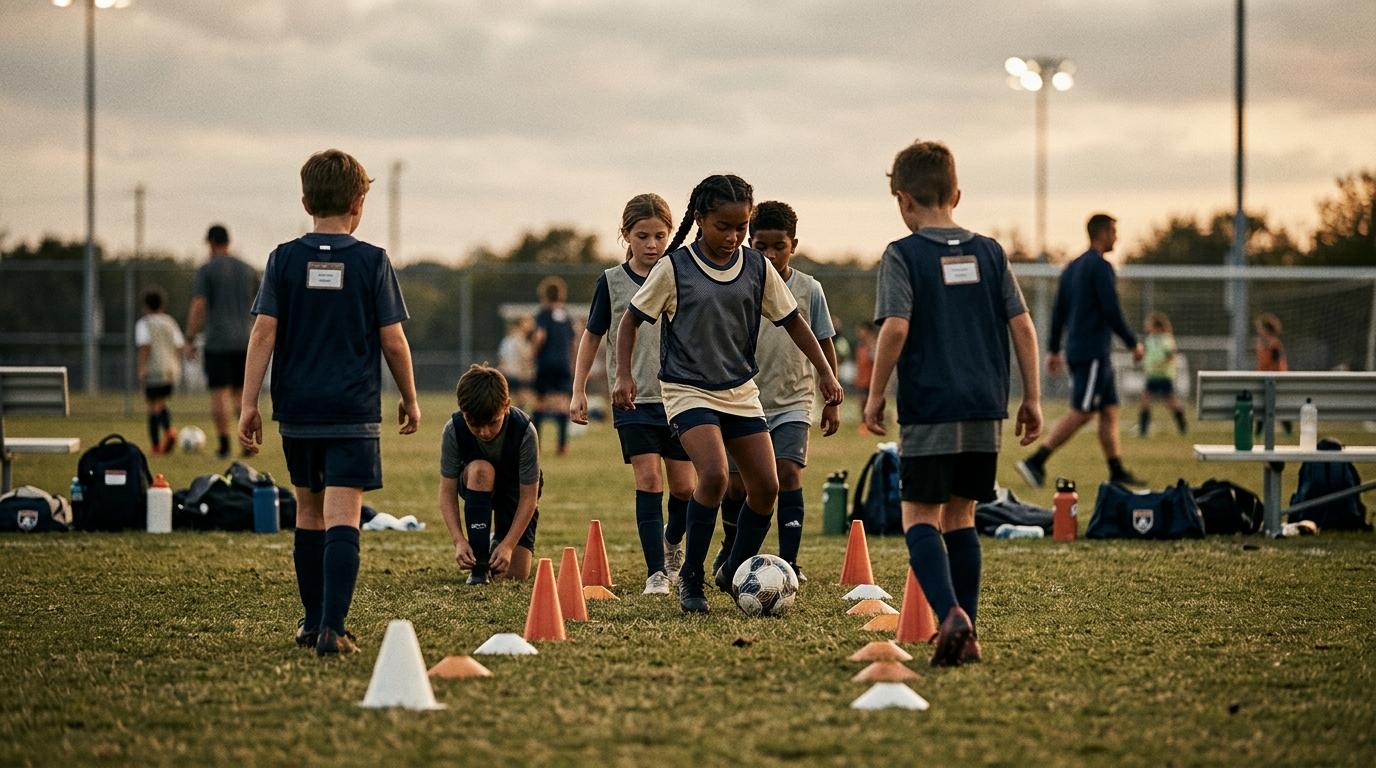

Confidence is one of those things you can spot from the sideline before a kid ever says a word. It shows up when they call for the ball. When they miss one shot and still want the next one. When they jog into the gym instead of dragging themselves in, worried about messing up again.
It also disappears fast. One error in front of teammates. One car ride that turns into a breakdown of everything they did wrong. One coach who only talks when something goes bad. That’s why confidence in young athletes doesn’t come from one big speech. It gets built in the everyday stuff: practice reps, adult tone, how mistakes are handled, and whether the kid feels safe enough to keep trying.
If you want confidence that lasts longer than one good game, you have to build it on something sturdier than praise after a win.
Why Confidence Matters in Youth Sports
Confident kids usually play freer. They take healthy risks. They recover faster after mistakes. They enjoy the game more, which matters more than most adults admit.
After years on benches, in practices, and in postgame conversations, here’s what holds up: confidence is not swagger, and it’s not loud. A quiet kid can be deeply confident. A talented kid can be hanging by a thread. Real confidence is the belief that, I can handle what happens next.
That matters on the field, but it matters off it too. School, friendships, hard conversations, setbacks. Sports just gives kids a very public place to practice it.
Confidence grows when kids feel capable, not when adults keep telling them they should feel capable.
7 Ways to Build Confidence in Young Athletes
1. Focus on effort, not just results
We’ve all seen it: a kid scores, and the sideline lights up. Same kid hustles for three straight shifts, tracks back on defense, communicates well, and nobody says a word. Kids notice that.
If the only thing that gets celebrated is the outcome, they learn fast that their value lives in stats, goals, points, and highlights. That kind of confidence is flimsy.
Try this instead:
- “I loved how hard you worked today.”
- “You’ve been practicing that, and it showed.”
- “Your attitude stayed steady even when it got tough.”
As a coach, I’ve found kids become more confident when they know exactly what they did well that they can control. Effort. Preparation. Body language. Recovery after mistakes. Those things travel from game to game.
2. Help them set realistic goals
“Play better” is not a useful goal for a 10-year-old. Neither is “score three goals” if they barely touch the ball yet. Kids need targets they can actually see and chase.
Good goals are simple:
- Specific: “I want to improve my passing accuracy.”
- Measurable: “I’ll hit 8 out of 10 passes in this drill.”
- Achievable: hard enough to matter, realistic enough to reach.
I like goals that pull a kid’s attention back to action. Not “be the best player.” More like “talk every defensive possession” or “attack the ball instead of waiting for it.” When they hit those marks, they start to believe, I can improve because I can do the work.
And if they don’t hit the goal? That’s useful too. It teaches them to adjust, not quit.
3. Let mistakes be learning moments
A lot of kids aren’t afraid of failure. They’re afraid of what comes after it. The look from the bench. The lecture in the car. The feeling that one mistake means the whole day is ruined.
That’s why adult response matters so much.
Instead of jumping straight to correction, slow it down:
- “What did you see there?”
- “What would you try next time?”
- “What did that rep teach you?”
Over time, kids who are allowed to learn from mistakes stop treating errors like proof they’re not good enough. They start treating them like information. That shift is huge.
If a kid thinks every mistake costs them love, playing time, or respect, confidence won’t stick.
4. Teach positive self-talk
You can hear negative self-talk on the bench if you know what to listen for. “I suck.” “I always mess this up.” “Coach is mad at me.” It doesn’t take long for that inner voice to become the loudest voice they hear.
Kids need help changing the script.
- Instead of “I’m terrible at this,” try “I’m still learning this.”
- Instead of “I always mess up,” try “I can reset and get the next one.”
- Instead of “I can’t do it,” try “I’m not there yet.”
This isn’t about fake positivity. Kids can smell that a mile away. It’s about giving them language that is honest and useful. The goal is not to pretend hard things feel easy. The goal is to help them become their own steady voice under pressure.
5. Highlight strengths
Some kids can list every mistake from a game before they’ve even taken off their shoes. Meanwhile, they forget the things they actually bring to a team.
Point out what’s real:
- a strong first step
- good field awareness
- team-first energy
- hustle that never drops
- the courage to keep showing up
I’ve coached plenty of athletes who were not the most naturally gifted, but they were reliable, coachable, and brave enough to stay with it. Those are strengths too.
You can even ask, “Give me three things you did well today.” At first, some kids struggle with that. That tells you a lot. It means they need practice seeing themselves clearly, not just critically.
6. Create a safe space to compete
Kids play differently when they know a mistake won’t turn into embarrassment. They try the pass. They take the shot. They compete instead of protect themselves.
That emotional safety starts with the adults around them.
- “I’m proud of how you competed.”
- “Mistakes are part of getting better.”
- “You don’t have to be perfect to keep going.”
From the bench, I’ve seen the difference instantly. Tight kids play scared. Safe kids play brave. Not reckless. Brave.
And no, a safe environment does not mean low standards. You can ask a lot from kids and still make it clear that their worth is not on the line every time they perform.
7. Build consistency with routines
Confidence gets a boost when a kid feels prepared. Routines help with that. They give athletes something familiar to hold onto when nerves start climbing.
It can be simple:
- a short warm-up sequence
- the same breathing pattern before a shift or at-bat
- a few cue words
- a playlist on the ride over
I’m a big believer in routines because they cut through chaos. Big game, loud gym, bad start, tough opponent—routine brings the athlete back to something they know. That sense of control matters.
When kids know what to do before pressure hits, pressure feels smaller.
Confidence Is a Journey, Not a Switch
Confidence is rarely a straight climb. A kid can look great one weekend and doubt themselves the next. That doesn’t mean the work isn’t working. It means they’re young, they’re learning, and confidence is still becoming part of who they are.
Like any skill, it needs repetition. Patience too. A lot of patience.
Some days your athlete will carry themselves like they belong. Some days they’ll need reminding. Both are normal.
Your Role in Their Confidence
Parents and coaches have more influence here than they realize. Not because we can hand kids confidence, but because we help shape the conditions where it grows.
Show up. Stay steady. Notice effort. Tell the truth kindly. Don’t make every ride home a review session. Don’t tie love, approval, or attention to performance.
That’s the stuff kids carry with them.
Wins fade. Stats get forgotten. But a kid who learns, I can mess up, adjust, and keep going has built something useful for sport and for life.
If you want to support their mental game even more, keep it simple. Use the language above. Build routines. Ask better questions. Be the adult who helps them feel seen beyond the scoreboard.
That belief you keep showing on the hard days? That might be the piece they remember most.