Five minutes before practice, one kid is hopping on one foot trying to tie a cleat. Another is asking where their mouthguard went. A third has a glove but no water, and somebody’s little brother is already rolling three soccer balls toward the parking lot. Coach is standing there wanting to teach, but the first seven minutes are getting chewed up by stuff that should’ve been handled before the first whistle.
That’s the kind of mess that feels small until it becomes your team’s normal. Then every practice starts late, kids walk in scattered, and you spend your voice on reminders instead of reps.
I learned a long time ago that young teams do better when the start is boring on purpose. Not stiff. Not military. Just clear. If the first routine is the same every time, kids settle faster, parents stop hovering longer, and coaches stop playing equipment detective.
One simple way to do it: start with a name-call gear circle.
What the gear circle is
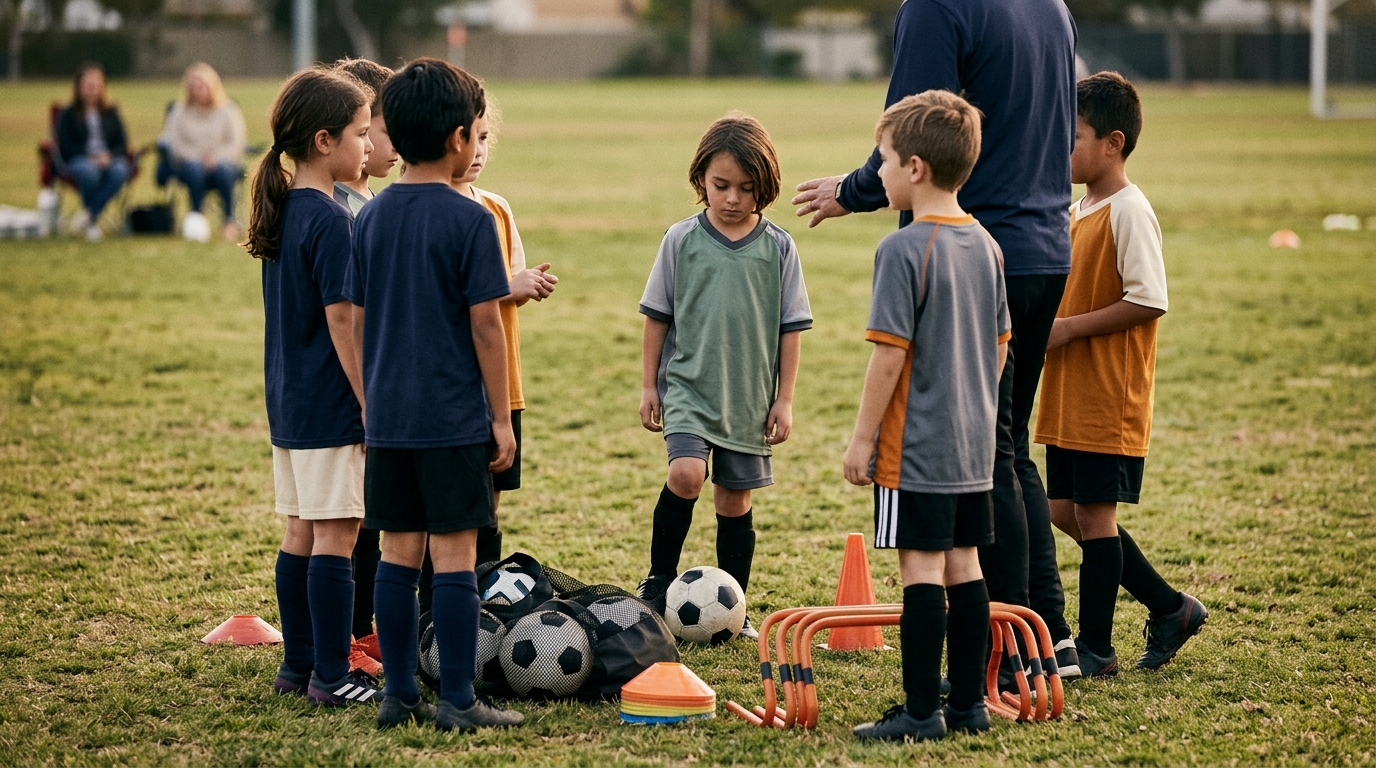
It’s a 90-second check before warm-up. Kids put their bags on the outside, step into a circle, and hold up what they need for that practice or game. You call names. They show the item. You move on.
That’s it.
No speech. No lecture about responsibility. Just a fast system that catches problems while there’s still time to fix them.
How to set it up
Pick one spot every time. Same sideline. Same patch of grass. Same corner of the gym. Consistency matters more than perfection here.
Tell the team the rule in one sentence: “Bags down, circle up, gear up when I call your name.”
Then decide the 3 to 5 items you actually need checked for that day.
Examples:
- Water bottle
- Mouthguard
- Glove
- Shin guards
- Jersey tucked or pinnie on
- Ball
Do not turn this into a full backpack inspection. If you check everything, you’ll lose the room. Keep it to the items that affect safety, pace, or the first drill.
What it sounds like
You call it quick and plain:
- “Maya — water, ball.”
- “Eli — mouthguard, cleats.”
- “Jo — glove, hat.”
If they have it, great. Keep moving.
If they don’t, don’t make it a show. Just send them to solve it.
- “Go get it. Rejoin at lap one.”
- “Borrow station is on the bag.”
- “Ask your grown-up now, not in 10 minutes.”
That last part matters. The gear circle only works if missing something has an immediate next step. Otherwise it becomes one more moment where everybody shrugs and practice starts half-ready anyway.
Why this helps more than you think
Kids don’t always walk into practice fully arrived. Their body might be there, but their stuff is still in the trunk, their bottle is under the seat, and their focus is somewhere between school and snack. A quick gear check gives them a clean doorway into practice.
It also helps coaches see patterns fast. Same kid missing water every week? That’s useful. Half the team never has a mouthguard until game day? Also useful. You can solve recurring problems once instead of being surprised by them every Tuesday.
And for parents, it quietly clears up one of the most common sideline frictions: the late scramble. Most parents are not trying to be disorganized. They’re usually just carrying six things at once and hoping nothing got left at home. A visible routine helps them know what “ready” actually means.
Clear beats intense at the start of practice.
How to keep it from dragging
The danger with any routine is letting it get too long.
Here’s how to keep the gear circle useful:
- Stand up, don’t sit down. Sitting turns a check into a meeting.
- Check only today’s essentials. Not everything they own.
- Use the same order. Left to right, alphabetical, or jersey number.
- Start on time anyway. Late arrivals join the check when they arrive.
- Assign one borrow spot. Pinnies, extra mouthguards, tape, hair ties, whatever your sport needs.
One of the easiest traps in coaching is spending too much emotion on a small fix. You do not need to sound annoyed for this to work. The routine does the work for you.
Best ages for it
This is gold for younger teams, but it still works with older kids if you don’t baby it. With middle school or high school groups, keep it sharper and faster. More like a preflight check than a kindergarten circle.
Older athletes usually don’t need help remembering every item. They do need help respecting the standard when the day feels rushed. That’s different.
When to use it
This works especially well:
- First two weeks of a season
- Before away games
- On days with extra gear
- With teams that arrive in waves
- Any time your first drill keeps getting delayed by missing stuff
If your practices already start clean, great. You may not need this every day. But if the opening minutes are sloppy, don’t overthink a big culture reset. Sometimes the fix is just giving the chaos a place to go.
I’ve been around enough teams to know this: the first calm minute of practice usually gets built before the first drill starts. Not with a big speech. Not with a harder whistle. Just with a simple routine kids can learn and adults can trust.
Bags down. Circle up. Show what you need. Then get to work.