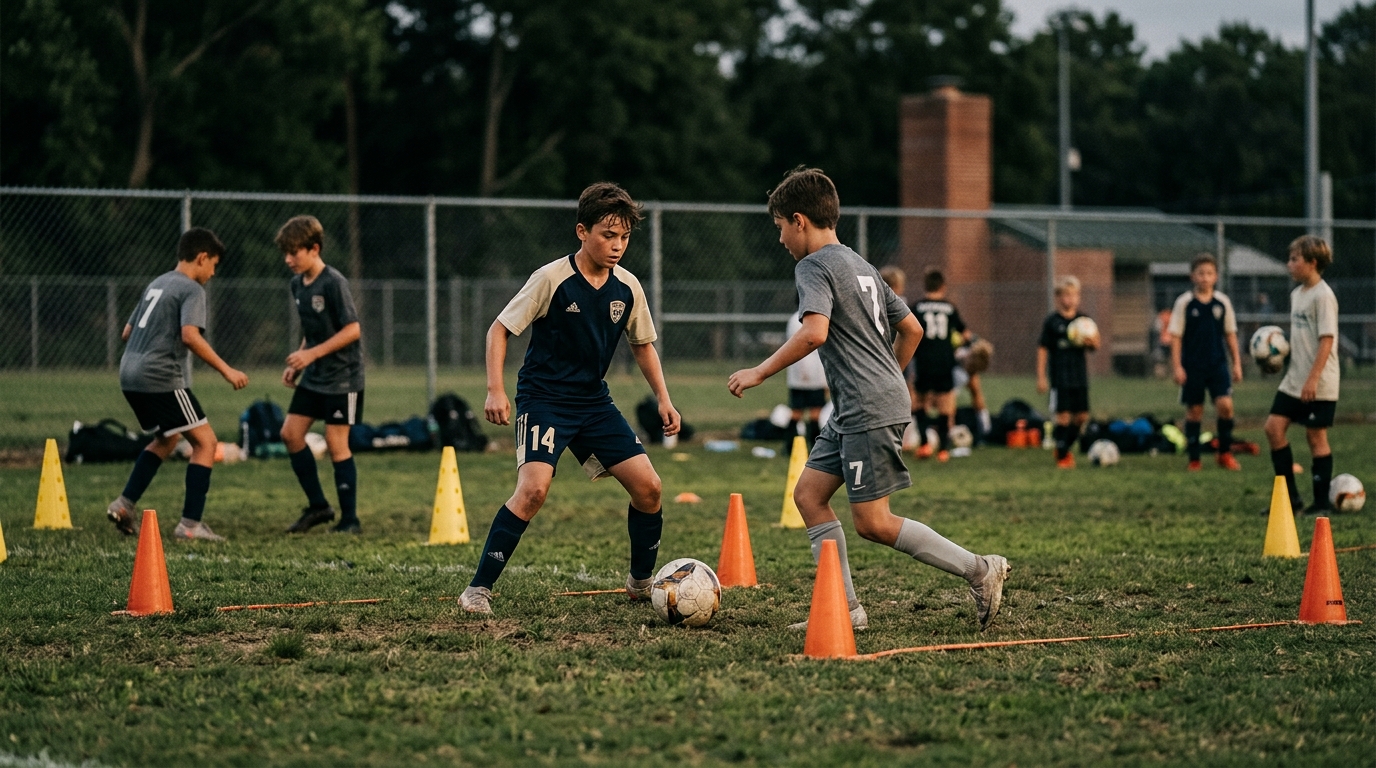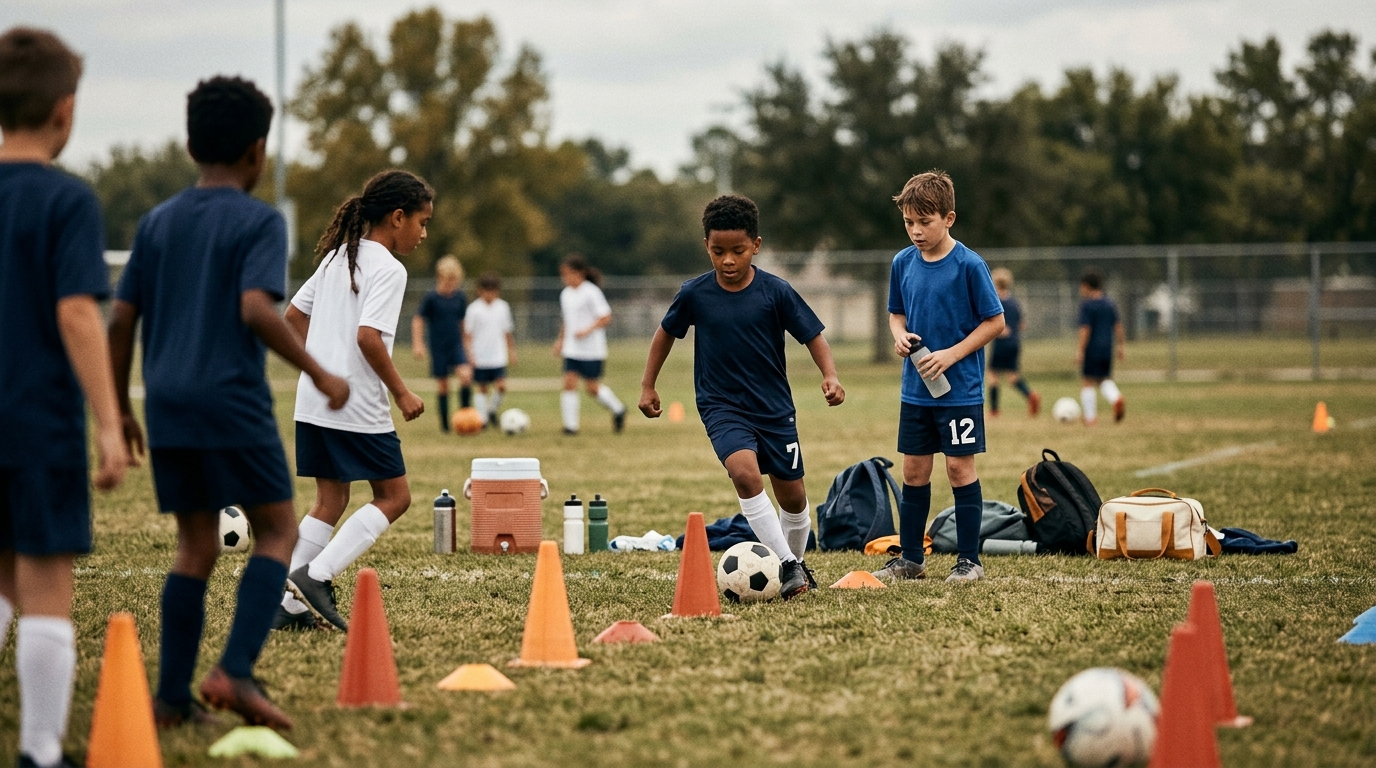

You can feel a practice go sideways during the first transition.
One group is jogging in. One kid is still tying a shoe. Two are asking where to stand. A ball rolls through the middle because the last drill never really ended. The assistant is resetting cones while you’re trying to explain the next thing over the noise. Nothing dramatic happened. It just got loose. And once practice gets loose, everything takes longer than it should.
I’ve had plenty of those practices. Usually not because the plan was bad. Because the changeover was bad.
That’s why I like a simple tape line drill.
All you need is a strip of field paint, gym tape, or even a row of flat markers if you’re outside and can’t tape. Put one straight line on the ground near the middle of your working space. That line becomes home base for every transition in practice.
Not for punishment. Not for conditioning. For organization.
What the tape line does
Kids do better when they know exactly where their body goes next.
That sounds obvious, but coaches skip it all the time. We explain the next drill, but we don’t anchor the movement between drills. So kids drift. They wander to the ball bag. They chase a last rep. They talk to a friend. Then we call them in three times and act surprised that the group feels scattered.
The tape line solves that by making every reset look the same.
When a drill ends, everybody gets to the line. Balls down. Eyes up. Quick instruction. Split to the next station.
It’s not fancy. That’s the point.
How to set it up
- Make the line long enough for your whole group to fit shoulder-to-shoulder with a little space.
- Put it in a central spot that doesn’t interfere with active play.
- Tell them what it means: when you hear “line,” you move there right away, quiet your hands, and face the coach.
- Practice it once on purpose before the real session gets going.
I mean actually rehearse it. Blow the whistle, call “line,” and show them what good looks like. Then send them back out. If you don’t teach the reset, don’t expect the reset.
How to run it in practice
Use the tape line between every major segment:
- warm-up to skill work
- skill work to small-sided play
- stations to team drill
- team drill to conditioning or finish game
The rhythm is simple:
- End the drill clearly.
- Call “line.”
- Wait until everyone is physically there.
- Give one short instruction block.
- Send them with a clear first action.
That last part matters. Don’t just say, “Okay, go to the next one.” Say, “Blue group to the left station, first two on a ball. White group to the far net, one defender in first.”
Specific beats loud every time.
Why it works better than shouting across space
Because kids hear less than coaches think they hear.
That’s not disrespect. That’s just a gym, a field, a court, a bunch of moving bodies, and attention that’s already half on the next fun thing.
I learned a long time ago that if I’m explaining while they’re still roaming, I’m wasting words. The more words I waste, the sloppier my tone gets. Then it sounds like I’m frustrated when what I really am is unorganized.
The tape line cleans that up. It gives instruction a place to land.
If you keep needing to repeat the transition, the transition is the drill that needs coaching.
What to correct
Don’t nitpick every little thing. Just coach these three habits:
- Get there fast — no detours for extra balls or side conversations.
- Bring stillness — hands off equipment unless told otherwise.
- Face one way — eyes where the instruction is coming from.
If the line gets sloppy, reset it once and do it again. Calmly. This is one of those places where standards save time later.
I’ve seen teams shave ten messy minutes off a practice just by getting decent at regrouping.
Best ages for it
Honestly, almost all of them.
Younger kids need the physical landmark. Older kids need the pace. The middle school group might roll their eyes the first time, right up until practice starts moving faster and they spend less time waiting around for somebody else to get organized.
Even varsity teams benefit from a visible reset point. Older players don’t need babying. They do need clarity.
When not to use it
Don’t drag everybody to the line for every tiny correction. That kills flow.
Use it for transitions, new instructions, and moments when the group needs to come back together. If two players just need a quick tweak, keep it local and keep the rest moving.
The goal isn’t to stop practice more. It’s to stop the bad wandering that already stops practice.
The real payoff
The best part of the tape line isn’t that it looks organized. It’s that kids stop wasting energy figuring out where they belong.
And when kids don’t have to solve that over and over, they play better. They listen better. The session feels steadier. You sound calmer because you are calmer.
That’s a useful trade in youth sports: less noise, less drift, more reps.
Sometimes the thing that fixes practice isn’t a new drill at all. It’s giving the space between drills somewhere to go.