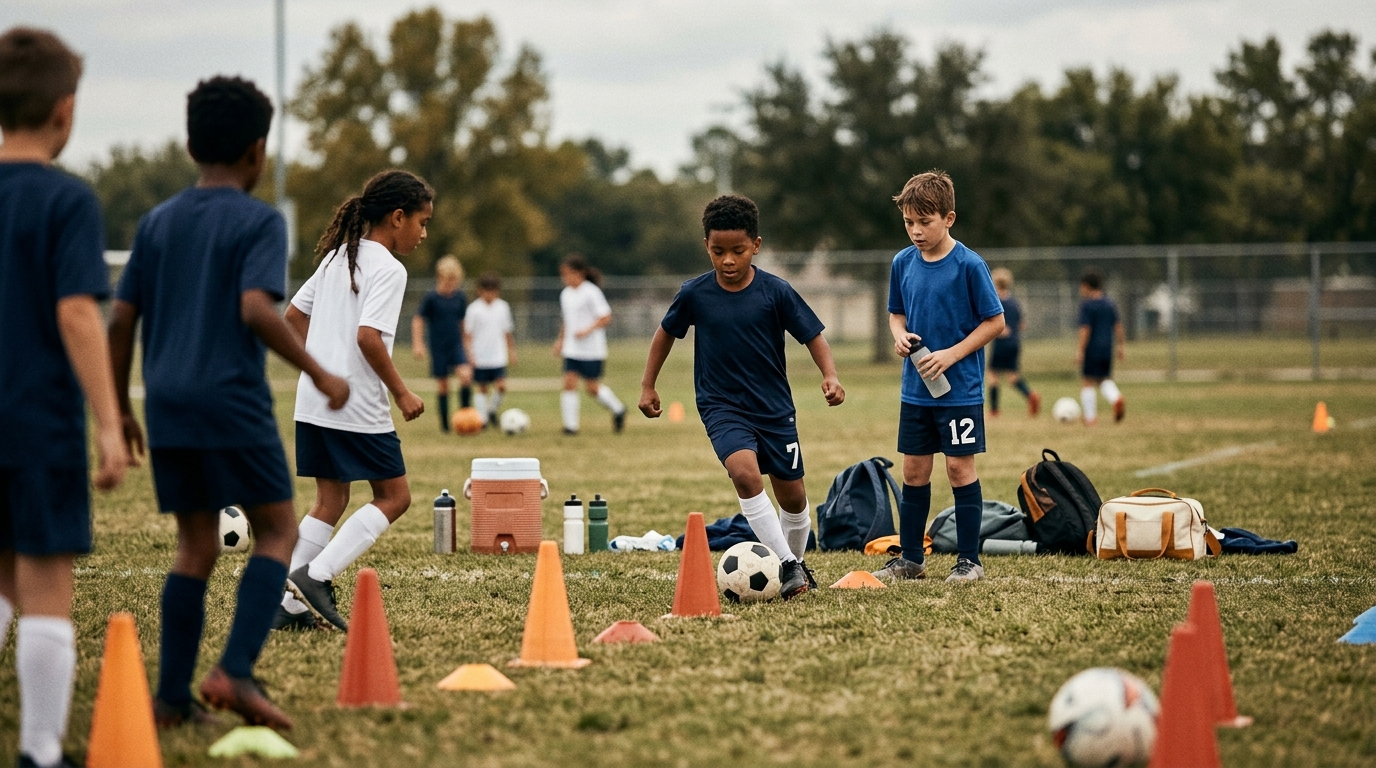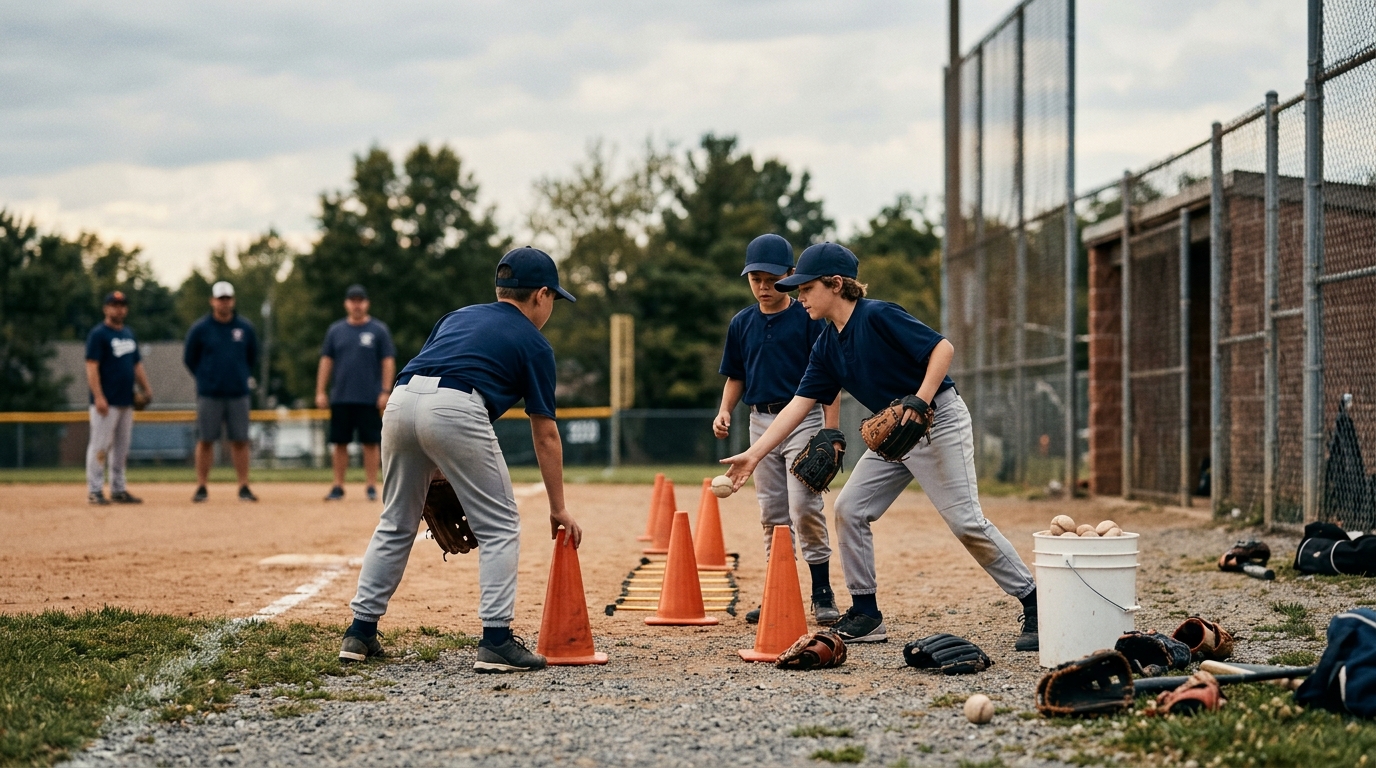
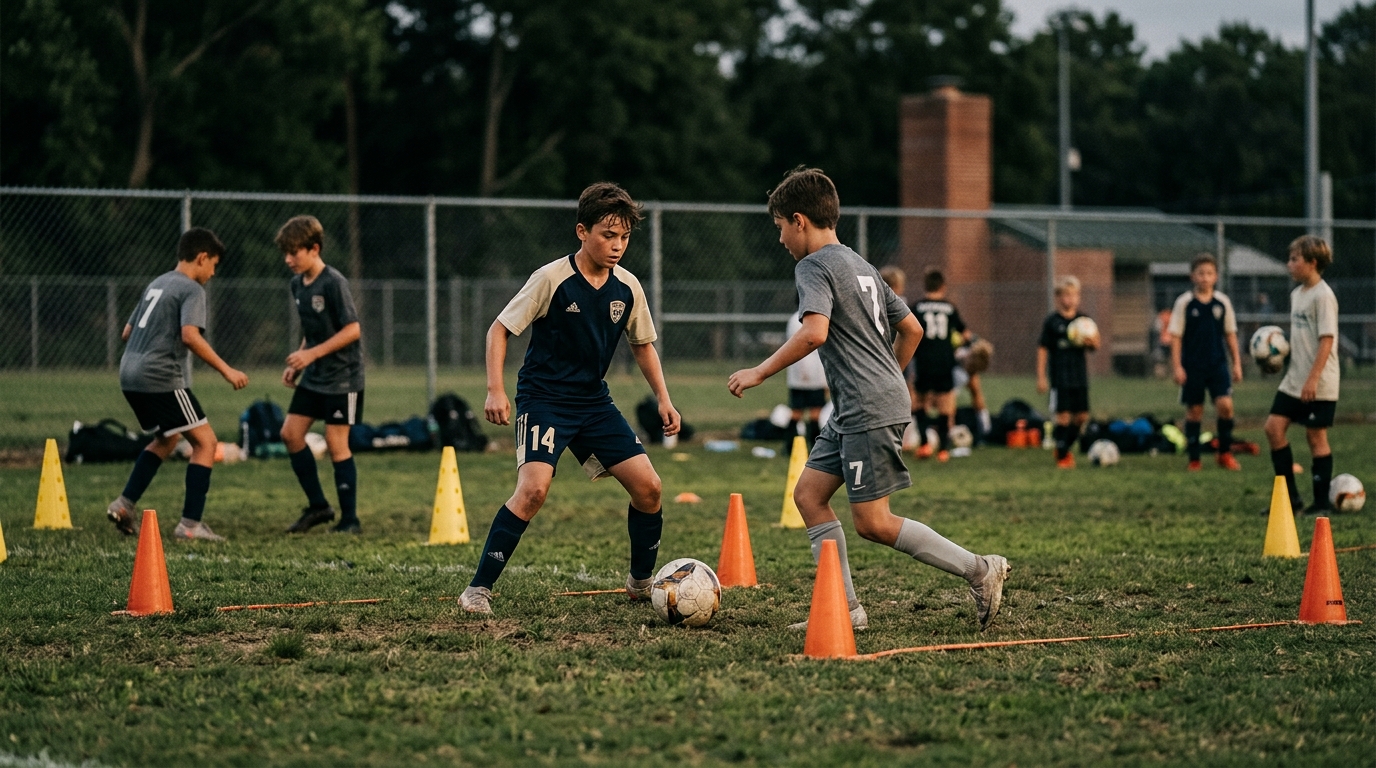
Three minutes into warm-ups, one kid is firing a ball at his teammate’s ankles, another is windmilling his arm like he’s trying to impress a scout who isn’t there, and two more are talking while the ball rolls behind them toward another team’s space. Meanwhile, a parent on the sideline is already asking, “Did practice start yet?” That’s the kind of warm-up that looks busy and does almost nothing.
I’ve seen this in every sport that uses a ball and a partner. The problem usually isn’t effort. It’s that “go warm up” is too loose. Kids hear freedom and turn it into wandering. Coaches assume the basic stuff will take care of itself. It usually doesn’t.
When I want practice to settle down fast and actually build something useful, I use a 12-minute partner passing circuit. It works for soccer, basketball, lacrosse, softball throws, baseball catch play, handball, even simple reaction work for younger teams. The goal is simple: give the first 12 minutes structure, pace, and enough repetition to clean up focus before the real practice starts.
Warm-ups should lower the chaos, not just raise the body temperature.
How the circuit works
Pair players by similar age, size, or skill when you can. Give each pair one ball and a clear lane of space. Then run four 3-minute blocks. Keep the explanation short. Demonstrate once. Start the clock.
Block 1: Clean feet, clean hands
Players stand at a short distance and make crisp, easy passes back and forth. The rule is that both partners have to move their feet before every catch or receive. No statues. No reaching. No lazy stabs.
- Focus on ready position before the pass arrives
- Catch or receive first, then return under control
- If a pass is off target, players go get it fast and reset without commentary
This first block tells you a lot. You’ll spot the kids who rush, the kids who drift, and the kids who are half-awake. Good. Better to see it here than 20 minutes later in your main drill.
Block 2: Step back, keep the quality
Now each pair takes two or three big steps farther apart. Same idea, same standards. The distance changes, but the mechanics should not fall apart.
- Passes should still be catchable
- Receivers should still move to the ball, not wait on it
- Partners should work at a pace that feels athletic, not frantic
This is where kids usually try to show off. One hard throw, one wild ball, one extra-fast rep, and now the whole thing gets sloppy. Stop that early. Remind them that harder is not the same as better.
Most bad warm-ups are just unstructured competitions to see who can get messy first.
Block 3: Move after the pass
Now add a simple movement rule. After every pass, each player takes two shuffle steps left or right, then gets set for the return. You can also have them backpedal one step and come forward again depending on the sport.
- Pass
- Move
- Set
- Receive
This is the block that wakes practice up. It forces communication, body control, and small adjustments. It also kills that flat-footed habit a lot of young players carry into every drill.
I like this block because it looks more like actual sport. In games, the ball rarely comes back to you while you stand perfectly still in a nice square stance with no pressure and no movement. Kids need that reminder early.
Block 4: Challenge round
Last three minutes: set a target number of clean exchanges in a row. Pick a number that fits the age group. Younger teams might go for 8. Older, sharper groups can chase 15 or 20.
- If the ball drops, count restarts
- If a pass is off line, it does not count
- If they hit the number, they hold it up quietly and keep working
This gives the circuit a finish without turning it into a circus. Kids like having a mark to chase. Coaches like finally getting concentration without a speech.
What coaches should watch for
Don’t spend the whole 12 minutes correcting every little thing. Watch for patterns.
- Who rushes when the distance increases?
- Who stops moving their feet when they get tired?
- Which pairs communicate clearly?
- Who retrieves misses quickly and who turns every bad rep into a complaint?
That information matters. I’ve coached long enough to know the first few minutes of practice usually preview the next hour. Sloppy starts tend to stay sloppy unless you interrupt them with something organized.
Why this works
It gives kids an immediate job. It builds touches without dead time. It creates standards without making the whole opening of practice feel like a lecture. And maybe most important, it lets you start coaching from something real instead of from a line of kids who are technically “warming up” while doing almost nothing useful.
If you want a better middle of practice, build a better first 12 minutes.
Simple structure settles teams down. Not because structure is fancy. Because kids are usually better when they know exactly what the first job is.