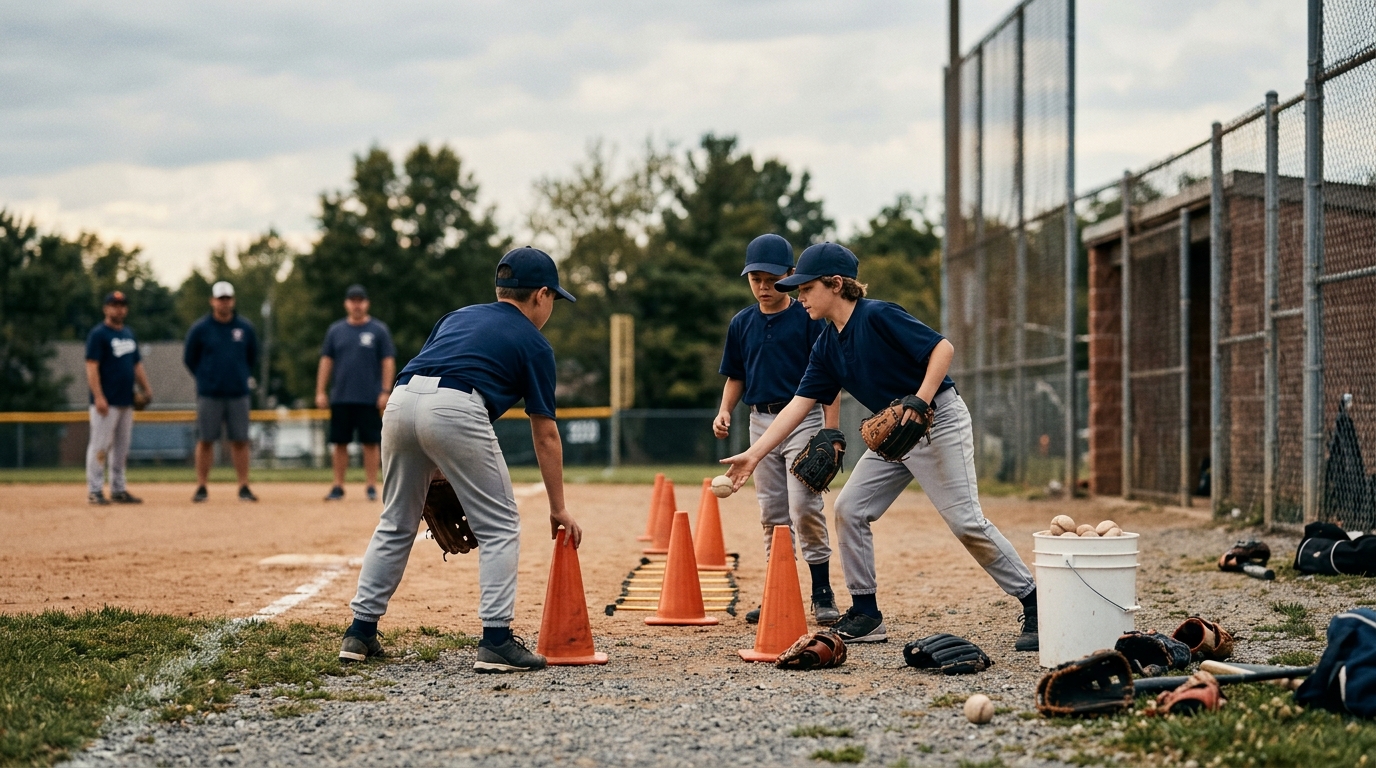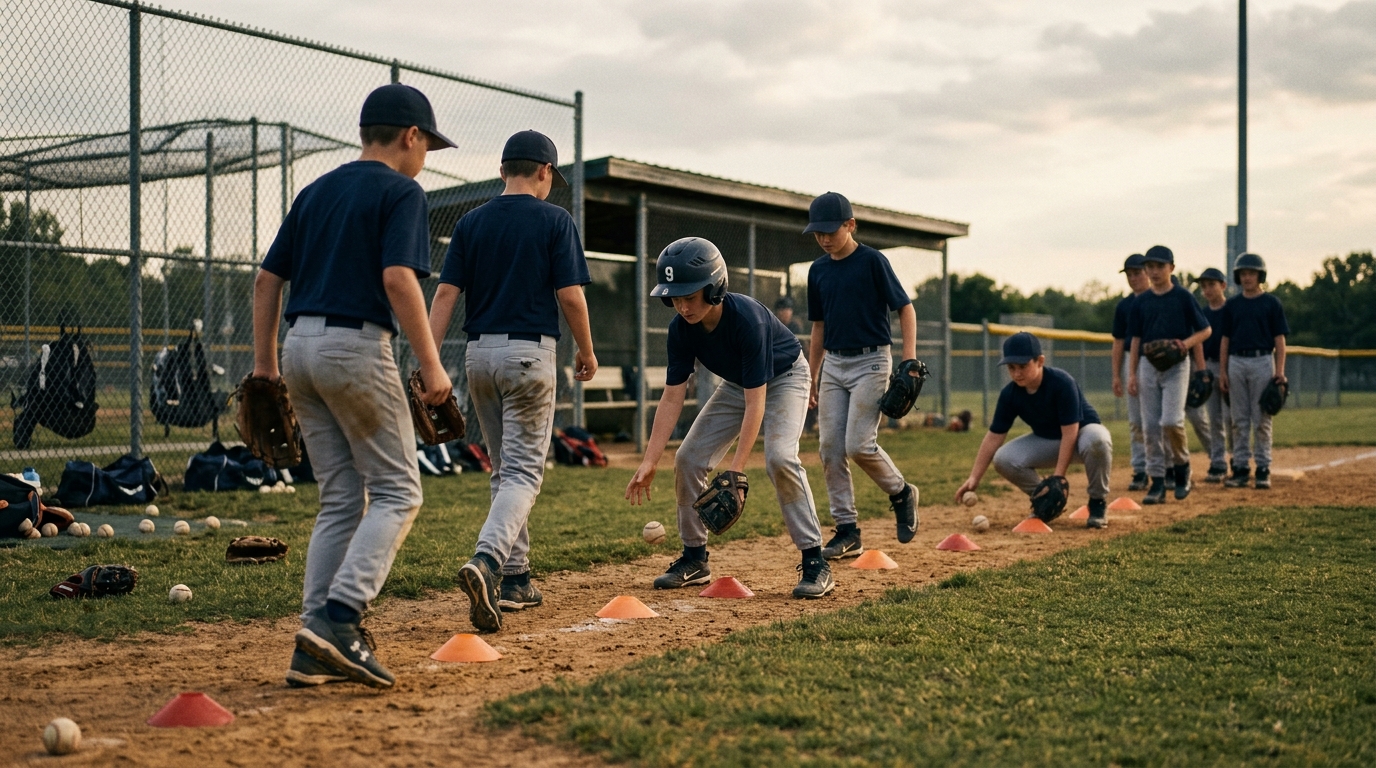
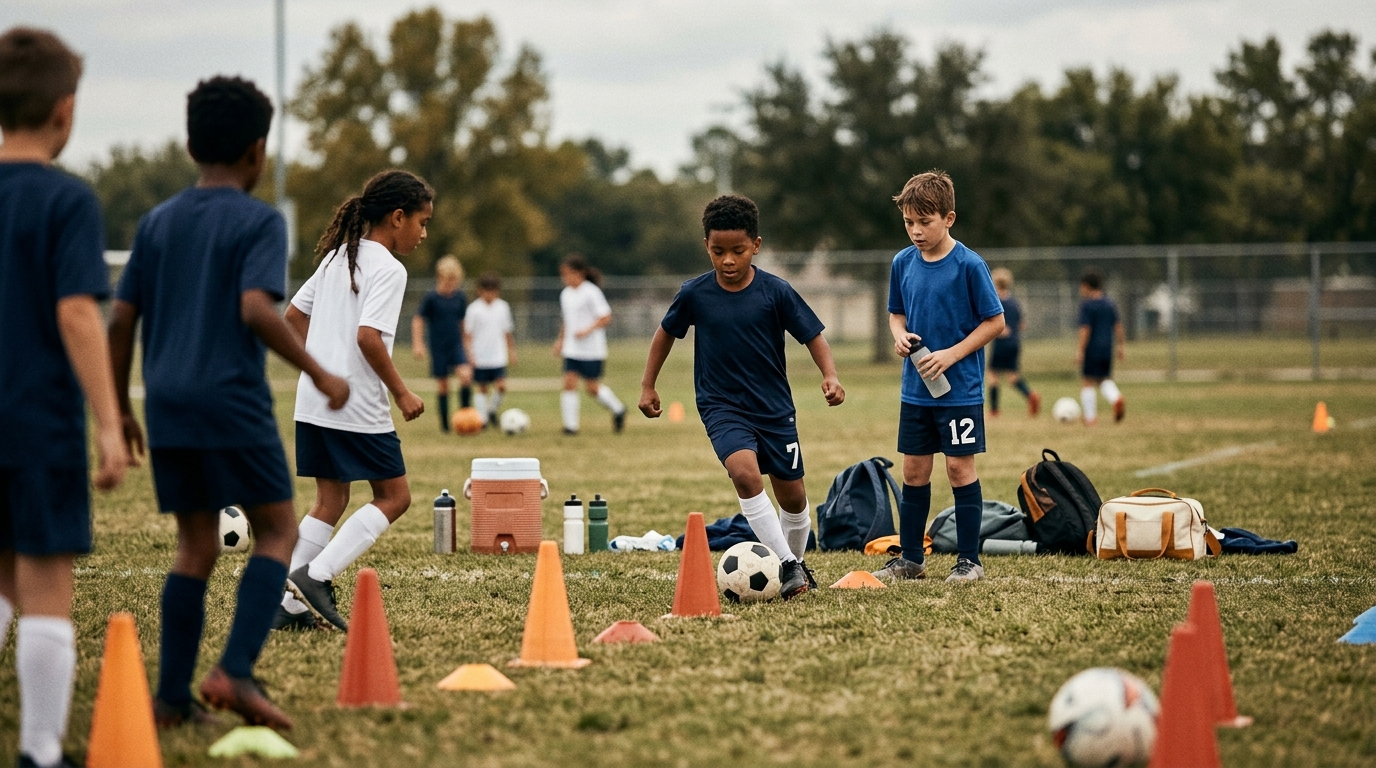
Three kids are lined up at one bottle. One can’t find theirs. Another is squeezing the nozzle straight into their mouth like they’ve crossed a desert. A fourth kid is already back on the field because they guessed water break was over. Meanwhile, you’re holding a pinnie, a ball bag, and the practice plan is leaking minutes.
That’s not a hydration problem. That’s a setup problem.
I’ve seen a lot of practices get blamed on focus, effort, or “kids these days” when the real issue was simpler: the sideline had no system. When water breaks are messy, everything after them gets messy too. Kids wander. Coaches repeat themselves. Parents step in. Practice loses its edge.
You do not need a lecture about responsibility. You need a better water setup.
Build one water spot and make it boring
The goal is not to make water break exciting. The goal is to make it automatic.
Pick one sideline location for bottles every single practice and every single game. Same side. Same general order. If possible, keep it just outside the main traffic area so kids aren’t tripping over bottles during drills or running through them chasing a ball.
Then give it three simple rules:
- Bottles go down before the first instruction.
- Bottles stay in one line or one tight cluster, not scattered.
- Kids return to the same spot every time.
It sounds small. It is small. Small is good. Small is repeatable.
When kids know exactly where to drop their bottle, they stop carrying it around, leaving it at random cones, or asking every seven minutes, “Coach, where should I put this?”
Label like you mean it
If you coach kids, especially younger ones, assume two things: somebody brought the same bottle as somebody else, and somebody’s name has rubbed off.
Permanent marker helps. Athletic tape helps more. Big last names are better than tiny first initials. If you’ve got a team where half the bottles look identical, tell families up front: make the bottle easy to spot from ten feet away.
I’m not saying turn it into arts and crafts. I’m saying a strip of bright tape can save you four interruptions.
Micro thought: If kids have to solve a mystery to drink water, practice is already off track.
Use a release line, not a swarm
The ugliest water breaks happen when twelve kids hear “grab water” and sprint like the drill is over forever.
Instead, release by row, by jersey color in practice vests, by station, or by nearest group. Anything is better than a full-team pileup.
For example:
- “Blue pennies, water and back.”
- “Defense first, then offense.”
- “This line goes, that line holds.”
That one tweak keeps kids from colliding, grabbing the wrong bottle, or turning a 30-second break into a two-minute reset.
Coaching long enough teaches you this: transitions are where practice either stays sharp or starts to leak. Water breaks are transitions. Treat them that way.
Pair the break with one clear return job
Don’t just send them to water. Send them to water and back to something specific.
Good examples:
- “Water, then take a knee on the sideline stripe.”
- “Water, then find your partner and one ball.”
- “Water, then return to your same station.”
- “Water, then line up on the baseline, silent.”
Kids handle transitions better when the return point is obvious. Otherwise they drift, chat, jog halfway back, or stand waiting for the next command like the break erased their memory.
That’s not a character flaw. That’s youth sports. Clarity wins.
Keep coaches out of bottle duty
If you are the one constantly hunting down lost bottles, unscrewing lids, or sorting out whose drink is whose, you are spending coaching energy in the wrong place.
Set the expectation early:
- Each player puts their own bottle in the team water spot.
- Each player grabs their own bottle.
- Each player puts it back before rejoining.
If you’ve got very young players, make one assistant or one parent helper the water spot watcher before practice starts. One person. One job. Not five adults freelancing around the pile.
That keeps the field from getting crowded with grown-ups doing things kids can learn to do themselves.
Use a quick bottle check before games
Game days are worse because everybody arrives with more stuff and less attention. Bags, hoodies, batting gloves, extra layers, pregame nerves. That’s how bottles end up under chairs, in the dugout doorway, or back in the car.
Before warm-ups begin, do a five-second scan:
- “Bottles out.”
- “Put them on the fence line.”
- “Find yours now, not later.”
That check matters most right before the game starts, not at the first dead ball when three kids suddenly need a drink and nobody knows where anything is.
I’ve coached enough games to know the little sideline scramble always shows up at the worst time.
Micro thought: The team that looks organized usually drank water on purpose, not by accident.
What this really fixes
Yes, it helps with water. But what it really fixes is practice drag.
It cuts down on repeat questions. It shortens breaks. It reduces sideline clutter. It gives kids one more routine they can manage without a speech. And routines like that matter because they free you up to coach the actual sport.
Not every problem needs a new drill. Sometimes the better move is cleaning up the small moment between drills.
The sideline tells you a lot about a team. If the water area looks like a yard sale, the practice usually feels the same way. If the water area runs clean, kids get a little more independent, coaches get a little less frantic, and the whole session moves better.
That’s a boring fix.
Boring fixes win a lot of days.