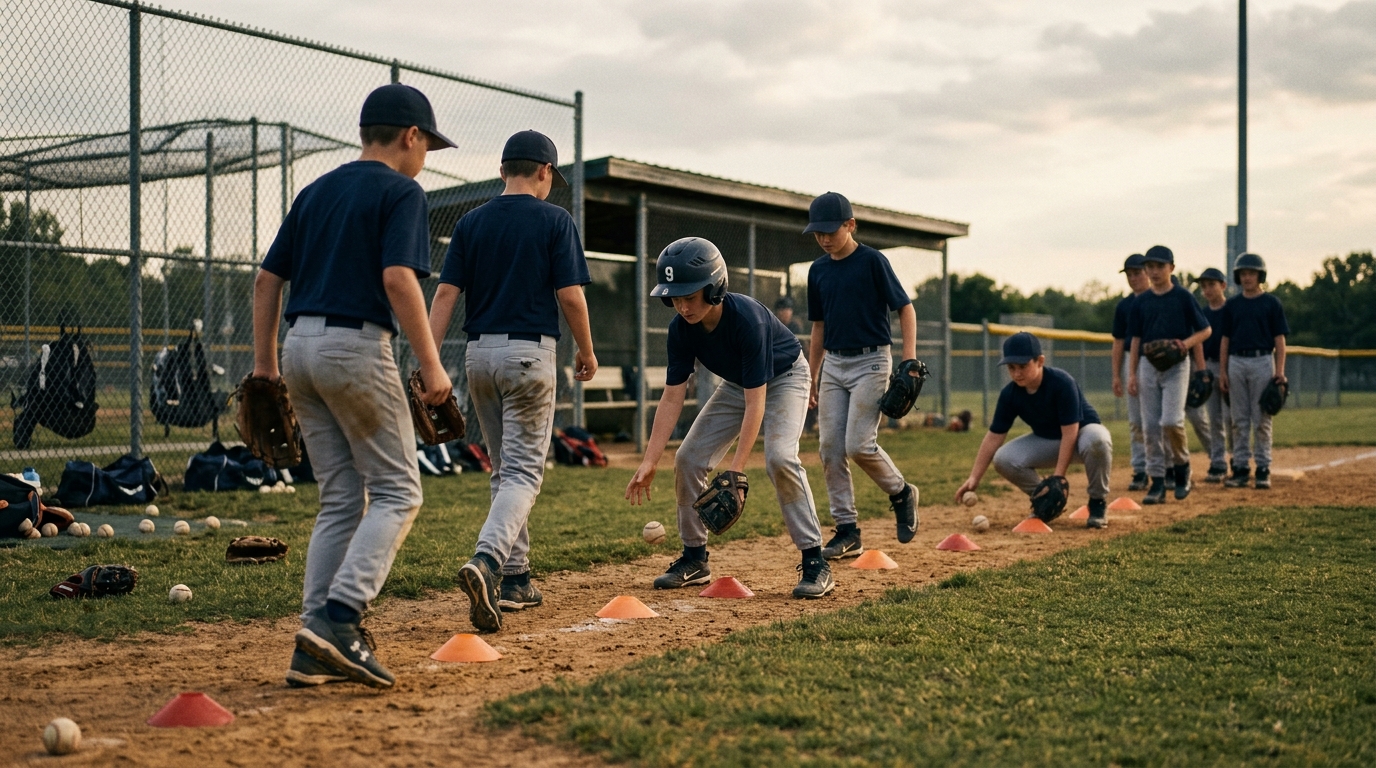
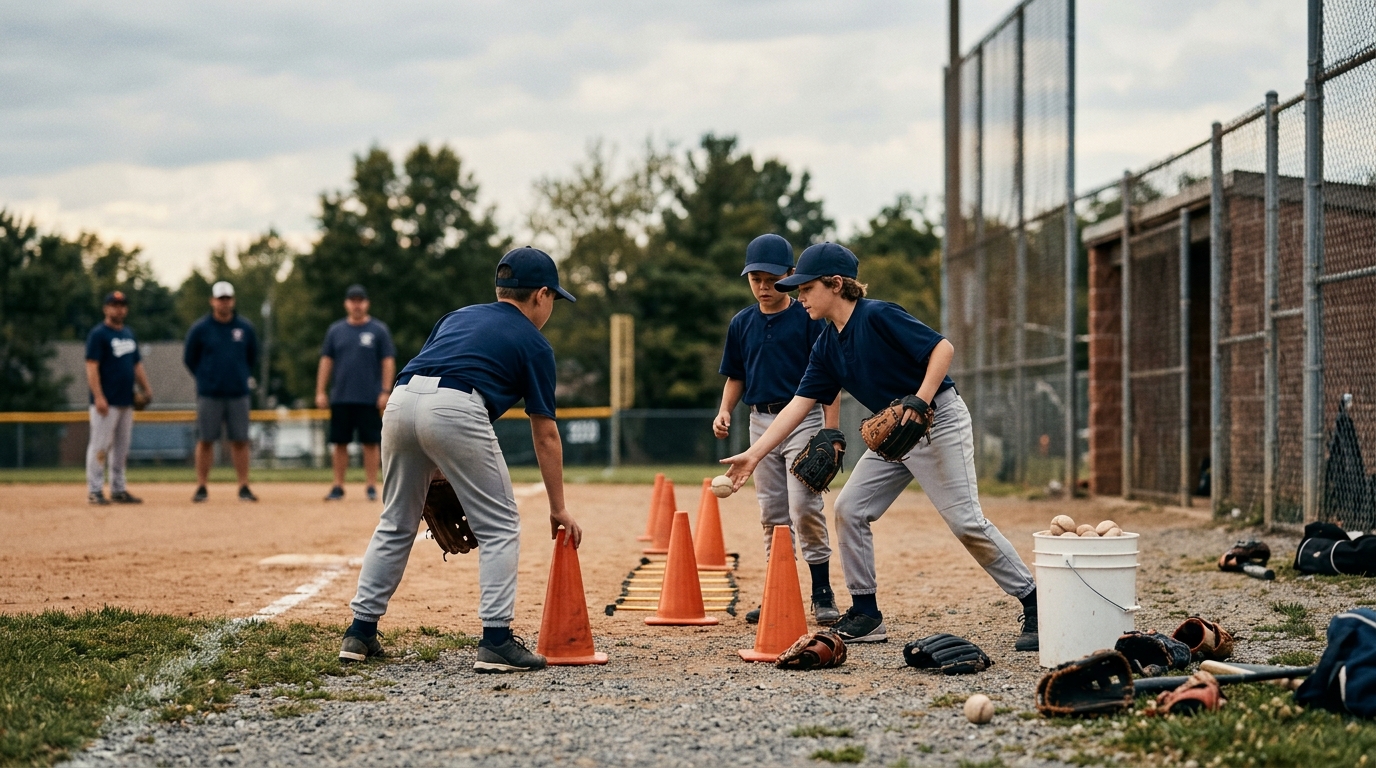
Three minutes into warm-ups, you can usually spot the problem. One kid is firing seeds from fifteen feet because they’re trying to impress somebody. Another is short-hopping every other throw because their feet never stop moving. Two more are having a full conversation while the ball skips past their gloves. Meanwhile, coach is already thinking, Why does simple catch look so hard every single week?
Because most teams don’t actually warm up throwing. They just start throwing.
I’ve seen this at every level of youth sports. Kids grab a partner, back up too fast, and turn catch into a distance contest. Then everybody acts surprised when infield work looks messy or the first game throw sails over a head. Bad throwing lines usually don’t start in the game. They start in warm-up when nobody gives catch a structure.
That’s why I like a simple 6-rep throwing ladder. It gives kids a job, gives coaches a sequence, and cleans up a part of practice that too often gets treated like dead time.
What the 6-rep ladder is
Partners stay at one distance long enough to make six good throws each before they back up. Not six total tosses with three jokes, two air-mails, and one decent rep. Six good throws.
The goal is not arm strength. The goal is repeatable movement:
- ready hands
- feet under control
- step toward the target
- throw through the partner, not around them
- finish balanced
When kids earn the next distance instead of wandering into it, catch gets cleaner fast.
How to set it up
Pair players by reasonable throwing ability, not just by who stood next to who. If one player is much stronger, both kids usually get a worse warm-up.
Start everybody close. Closer than they want.
Distance 1: 10-12 feet
Six clean throws each. Quick catch-and-throw rhythm, but not rushed. Focus on four-seam grip if that matters in your sport, eyes up, and stepping at the target.
Distance 2: 15-20 feet
Same deal. Six good throws each before backing up.
Distance 3: 25-30 feet
Now you can ask for a little more carry on the ball. Still no crow-hop circus. Just solid catch play.
Distance 4: 35-45 feet
This is plenty for a lot of youth teams early in practice. Older or more advanced players can continue backing up in small jumps, but only if the quality stays there.
If the throws start tailing, bouncing, or pulling the partner off line, they don’t back up. They stay put until they clean it up.
Catch is not recess. It’s your first throwing drill.
The coaching points that actually matter
You do not need twelve cues here. You need a few that players can remember.
- Catch it first. Too many kids rush the transfer before they secure the ball.
- Move your feet before your arm. Bad throws usually start from lazy feet.
- Front shoulder to target. This one cleans up a lot.
- Finish balanced. If they’re falling off to the side, the throw usually tells on them.
I learned a long time ago that catch play falls apart when coaches talk through every rep. Let them throw a few. Watch for the common miss. Correct one thing. Then let them go again.
If you coach kids, you already know this: the line between focused and overloaded is thin. Say less, but say it on time.
How long it takes
Usually 6 to 10 minutes, depending on age and how many distances you use.
That’s short enough to fit into any practice and long enough to matter. It also gives late arrivals a clearer entry point. They can join at the current distance instead of jogging into random chaos while everyone else is launching balls.
What to do when a pair gets sloppy
Don’t stop the whole team unless it’s widespread. Just freeze that pair and reset them.
I’ll usually say something simple like, “You’re backing up faster than you’re throwing well. Earn the space.”
Kids get that. Especially when they realize the players throwing the best are not always the ones standing farthest apart.
Easy variations
For younger teams
- Use only two or three distances
- Require a clean catch before the next throw
- Count the reps out loud together
For older teams
- Add one shuffle before the throw at middle distances
- Mix in glove-side and throwing-side targets
- Finish with four long throws and four bring-it-down throws on a line
For crowded spaces
- Run the ladder along one sideline or foul line
- Stagger pairs so nobody is directly behind another group
- Cap the farthest distance before safety becomes an issue
Why this works
It gives structure to the most unstructured part of practice.
And kids need that more than adults think. Not because they can’t handle freedom, but because most youth athletes are still learning what “ready” actually looks like. If you leave catch wide open, the loudest energy usually wins. If you give it a ladder, the best habits have a chance.
I’ve watched teams go from sloppy, wandering throw-around groups to looking organized in under a week just by putting numbers on the warm-up. Six good reps. Then move. Nothing fancy.
That’s the sweet spot for youth practice a lot of the time. Not complicated. Just clear.
When catch looks better, everything after it usually does too.