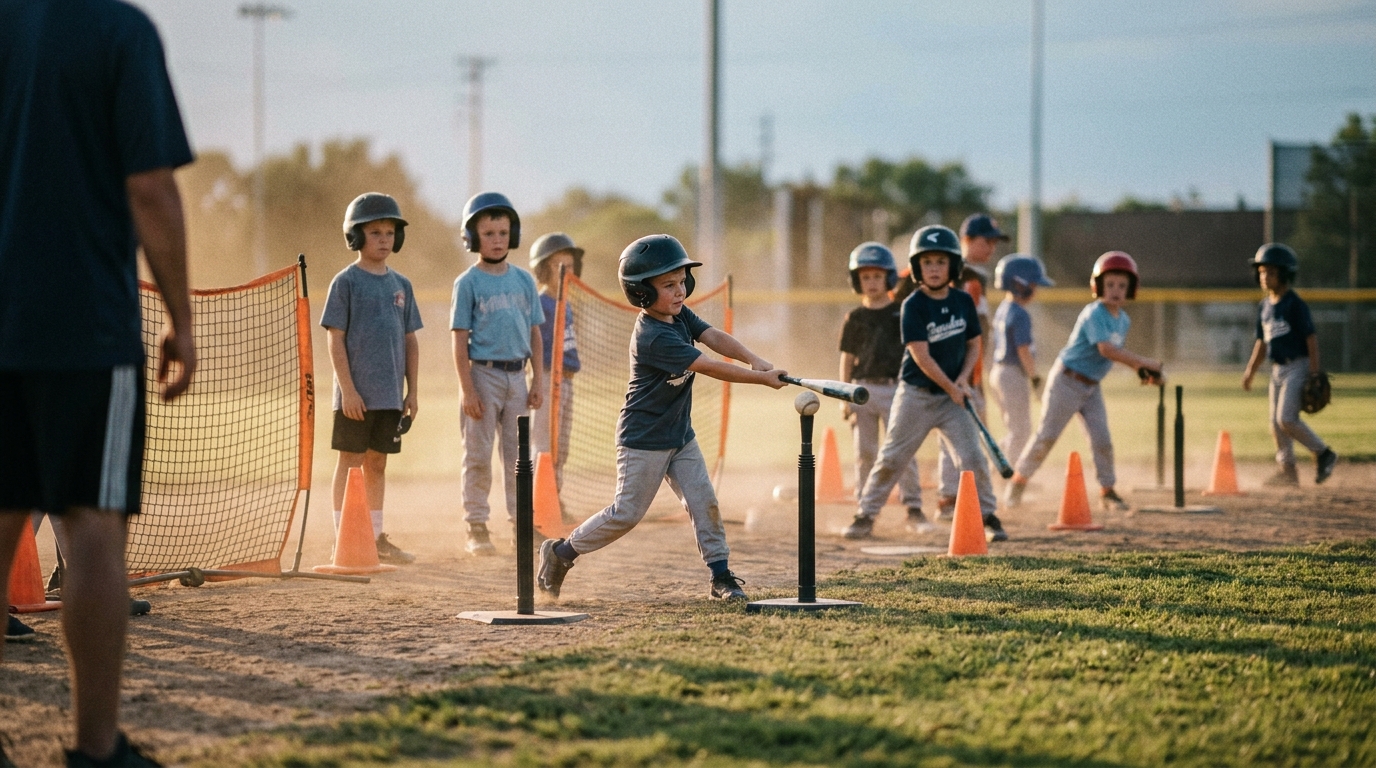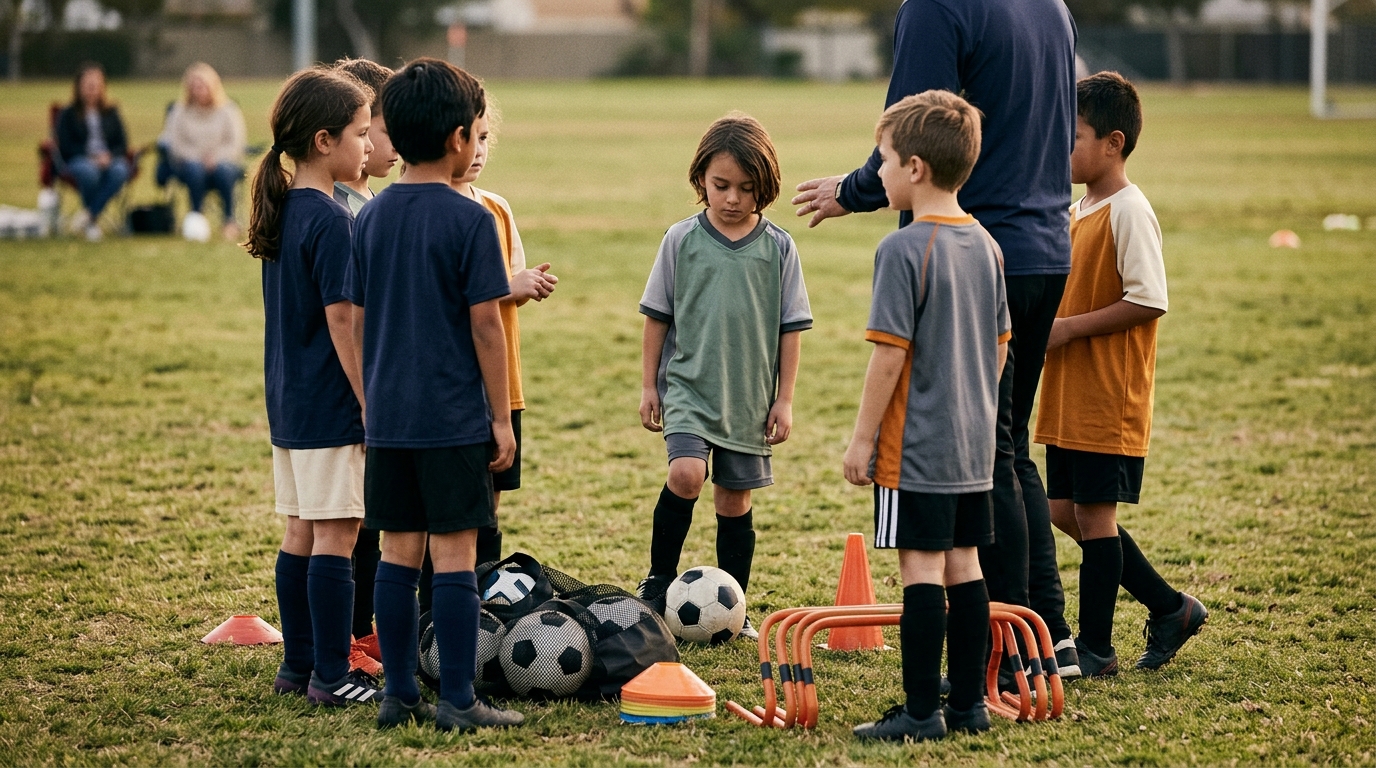
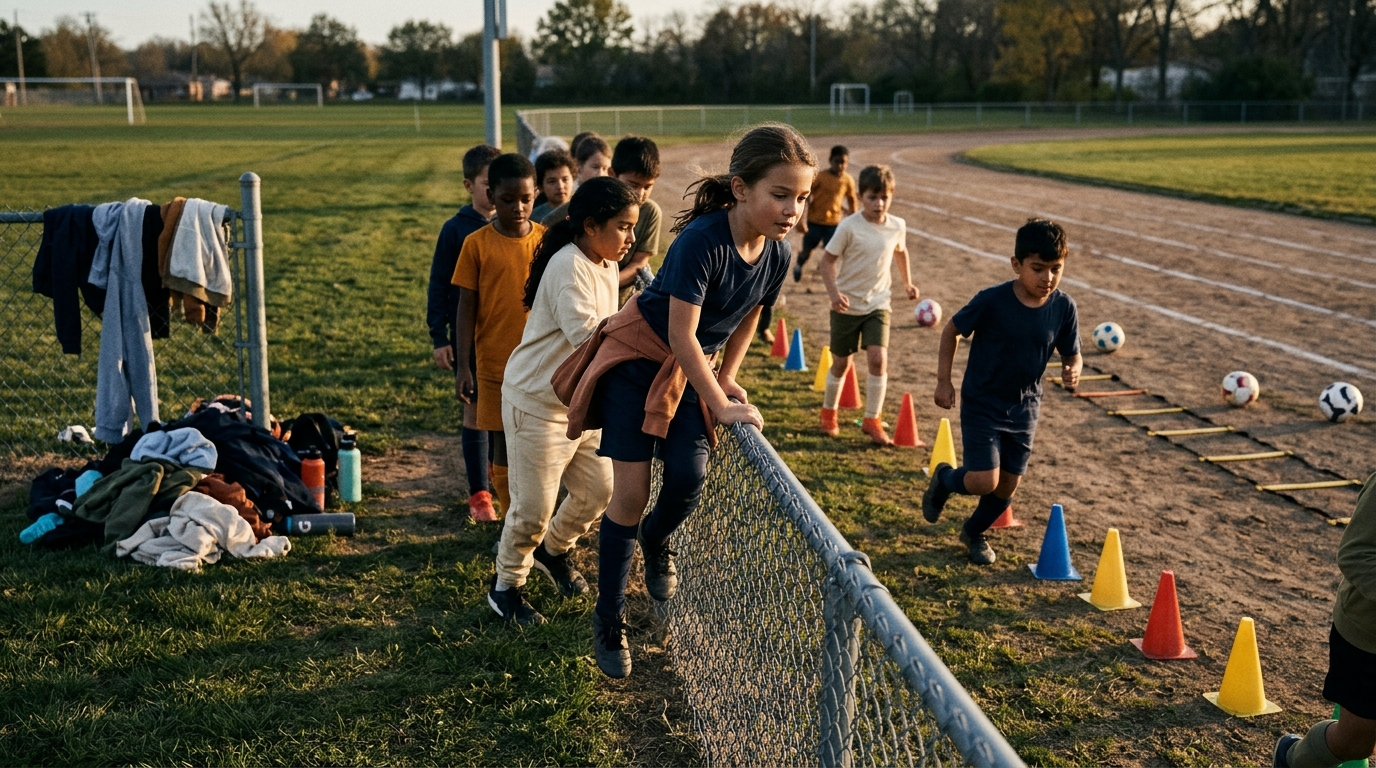
Three minutes before practice starts, the first ball is already out, two kids are still tying cleats, somebody’s hoodie is under a bucket of baseballs, and a parent is holding up a water bottle like a lost-and-found volunteer at a county fair. None of that feels like a big deal until it happens every single practice. Then your first 10 minutes are gone, and the team starts the day looking exactly how they play it: scattered.
I’ve seen this at rec level, travel level, and with good teams that should know better. Coaches love to talk about energy and focus, but a lot of “focus problems” are really setup problems. Kids don’t magically become organized because the whistle blew. If you want a cleaner start, give them a cleaner start.
One of the easiest fixes is what I call the Fence-Flip Warm-Up. It’s not fancy. It’s just a repeatable first three minutes that gets gear off the ground, water in one place, and bodies moving before the actual drill work begins.
How it works
As players arrive at the practice area, they do three things in the same order every time:
- Flip gear to the fence — bag on the fence or lined against it, not dropped in a pile.
- Bottle to the line — every water bottle goes in one straight row at the same sideline or fence spot.
- Jog the boundary — one easy lap or one down-and-back around the practice edge before joining the group.
That’s it. No speech. No scavenger hunt for gloves. No jackets spread across the warm-up space like laundry day.
The key is the order. Gear first. Water second. Movement third. If you let kids wander in and stretch wherever they feel like it, the field starts looking like a garage sale.
What it looks like in real life
I’d mark one side of the space as the team home base. Not “somewhere near the bench.” One exact side. One exact fence section if you’ve got one. If there’s no fence, use a sideline stripe, a tree line, or a cone lane. Same place every time.
When players show up, don’t ask, “Can you put your stuff somewhere over there?” That’s how you end up with 14 different interpretations of “over there.” Say it plain: “Bag on the fence, bottle on the line, one lap, then join.”
After two or three practices, most kids won’t need the reminder. And the ones who do will start copying the group because the pattern is obvious.
Kids are better at following a routine than decoding a vague instruction.
Why this helps more than people think
The obvious win is cleaner space. Fewer stepped-on gloves. Fewer missing sweatshirts. Fewer water bottles rolling into drill lanes.
But the bigger win is pace.
When every arrival has a job, the team starts warming up before you formally “start practice.” Late arrivals don’t hijack the whole group because they already know the entry routine. They don’t need a special welcome ceremony. They just flip gear, set the bottle, move their feet, and join in.
That matters, especially with youth teams, because dead time is where nonsense grows. If you give kids empty space and no first task, you’ll get wrestling, wandering, and 11 questions you didn’t need.
I learned a long time ago that the beginning of practice is usually telling on the rest of practice. If the first five minutes are a mess, you spend the next 45 trying to catch up.
How to teach it in one day
Step 1: Show it, don’t explain it forever
Walk to the spot. Hang one bag or place one bag. Set one bottle. Jog the route. Then send them.
You do not need a TED Talk on organization.
Step 2: Correct the location, not the kid
If a player drops gear in the middle, just point and reset it. “Not there. Fence.” Keep it neutral. This is habit-building, not courtroom cross-examination.
Step 3: Keep the standard even when you’re in a hurry
The routine only works if it still counts on rushed days. The day you let the pile happen because you’re behind is the day the pile comes back.
Best times to use it
- Mixed-age teams where younger players copy whatever they see
- Shared field spaces where gear gets spread everywhere
- Early-season practices when routines are still loose
- Teams with lots of late arrivals trickling in
- Cold-weather practices with extra jackets, batting gloves, and layers
This is especially useful in sports where players bring more stuff than they can keep track of. If there are helmets, pinnies, hoodies, catcher’s gear, extra layers, and three mystery drink containers per family, you need a system before you need a speech.
One simple add-on
If your group is really young, assign one player or assistant to do a quick fence scan before practice ends. Just walk the line and check for leftover hoodies, gloves, and bottles. It takes 20 seconds and saves the usual text chain later.
Not every good practice idea has to be a drill with cones and reps. Sometimes the best thing you can teach is where the stuff goes and what happens first.
Because once the gear pile starts, the day feels sloppy before anybody even touches a ball. And once the day feels sloppy, now you’re coaching uphill.
Clean edge. Clear routine. Better start.