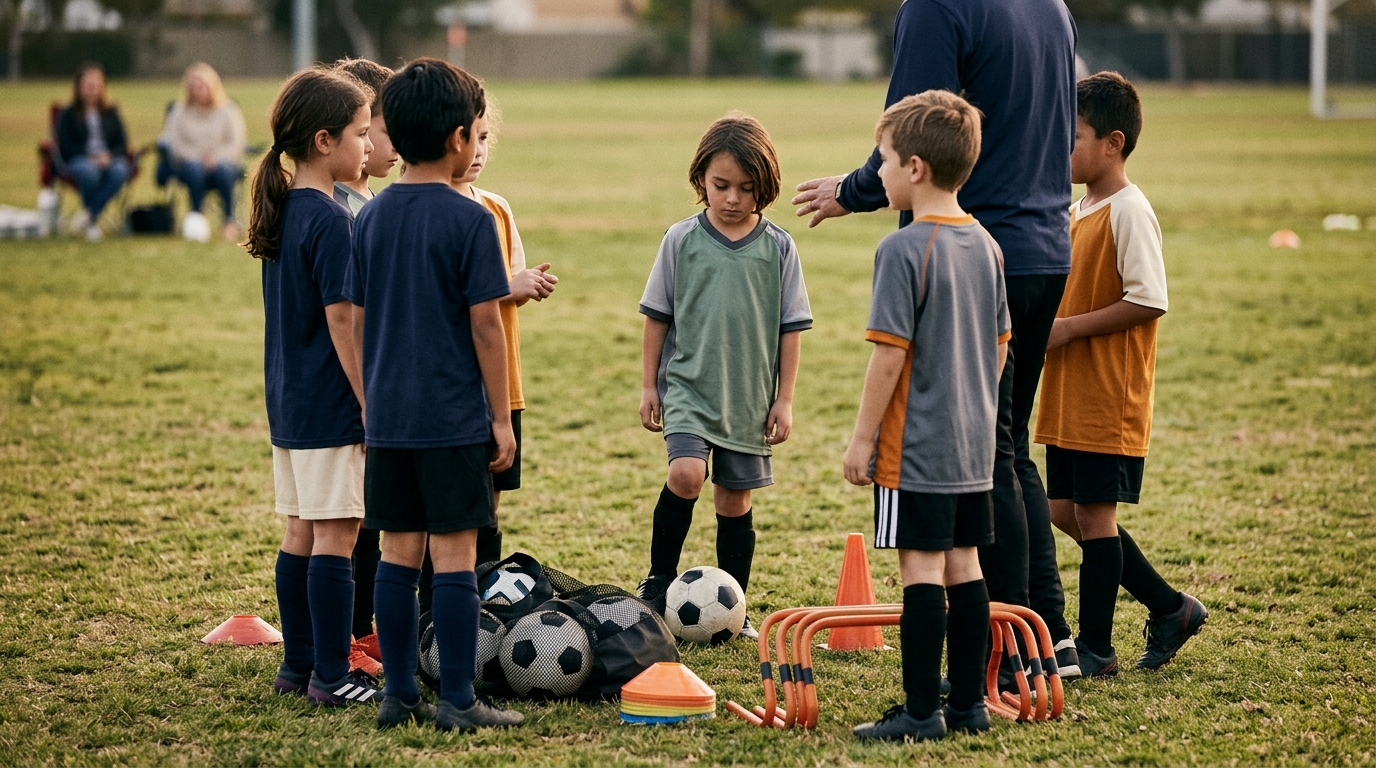

It’s 5:28, first whistle is at 5:30, and one kid is on one knee digging through a backpack like it’s a yard sale bin. Mouthguard is missing. Left shoe is untied. Water bottle rolled under the bench. Another kid is already asking if we’re starting late. Meanwhile, the kids who were actually ready are doing that slow-motion wandering that turns a good start into a mushy one.
That part of practice gets blamed on “kids being kids.” Most of the time, it’s not that. It’s that nobody built a start.
I learned this the long way. For years, I thought being organized meant I had a practice plan on paper. Cones set. Drill order ready. Good energy. But if the first three minutes were loose, the whole session paid for it. You spend the next 20 minutes repeating instructions, chasing missing gear, and trying to get the room back.
What fixed it for me was simple: give bags a home, give kids a check, and make the start look the same every time.
The four-corner bag check
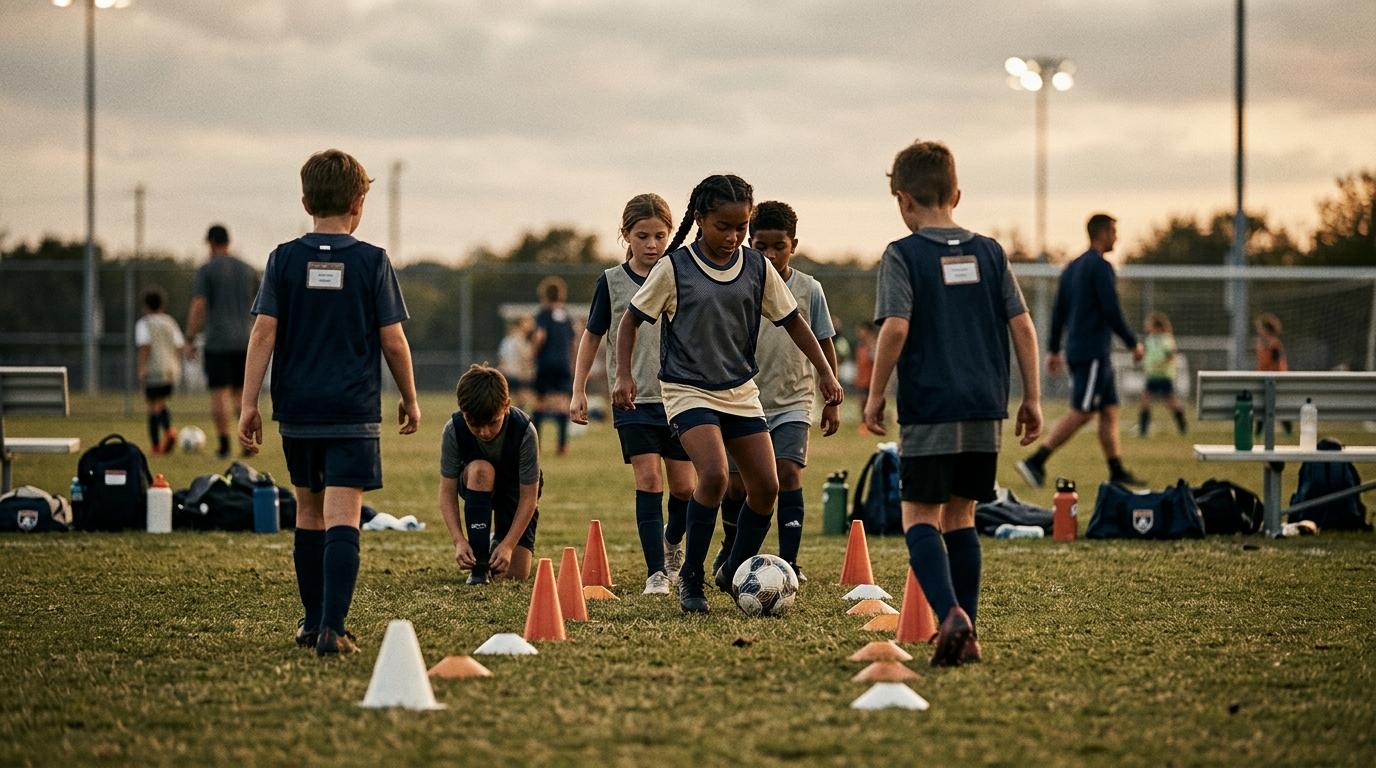
As kids arrive, have them put their gear in one of four marked corners or zones near the practice area. It doesn’t matter if it’s a gym, a field fence, or the edge of the court. The point is that bags don’t get dropped in a messy pile. They go to a spot.
Before anybody touches a ball, every player does the same four-item check:
- Water out and placed where they can get it fast
- Safety gear on or in hand if your sport uses it
- One loose item secured: glove, pinnie, mouthguard case, hair tie, whatever tends to disappear
- Bag zipped and left in the corner
That’s it. Not a speech. Not a team meeting. Just a routine.
Why this works better than yelling “let’s go”
Kids are slowest when the first expectation is vague. “Get ready” means ten different things to ten different players. One kid starts jogging. One takes a sip of water. One starts talking. One realizes shin guards are still in the car.
Specific beats loud.
When they know exactly what “ready” looks like, you cut out the drift. You also cut down on the little equipment emergencies that eat practice alive. Most missing-item problems are not true missing-item problems. They’re bad start problems.
Clean starts save more practice than clever drills do.
How to set it up in under two minutes
1. Mark the four corners
Use cones, field markers, tape, or landmarks that already exist. If you’ve got age groups or squads, you can assign each one a corner. If not, any open corner works.
2. Teach the check once, then keep the wording the same
Mine is usually: “Water out, gear on, one loose item secured, bag zipped.” Short enough to remember. Clear enough to see.
3. Put one player in charge of the visual
Not a captain speech. Just one kid who looks down the line and checks: are bags in corners, not in the lane? Are water bottles where they belong? Is anybody still halfway unpacked?
Quiet jobs like this are great for kids who are dependable but not naturally loud.
4. Don’t start the warm-up until the space looks right
This matters. If you begin while bags are still scattered, you just taught them the routine is optional. You only need to hold the line a couple times before the team gets it.
What it looks like by age group
Younger kids: Walk them through it every practice for a while. Point to the water. Point to the zipped bag. Keep it visual.
Middle ages: Turn it into a race against the clock, but only if they can still do it neatly. Fast and sloppy defeats the whole thing.
Older players: Keep it matter-of-fact. They don’t need a game. They need a standard.
Common mistakes
- Too many items on the checklist. If you make it eight things, nobody remembers it. Keep it to four.
- Changing the routine every week. Same words. Same order. Same spots.
- Letting bags creep back into the sideline lane. That’s how bottles get kicked, straps get tangled, and practice gets interrupted.
- Talking through the check for three minutes. This is a doing routine, not a listening routine.
I’ve seen practices improve just because the first view kids get is calm instead of clutter. That sounds small until you coach for a while. Small things decide whether the group feels settled or scattered.
And parents notice it too. Not because they care where the backpacks go, but because they can feel the difference between a team that arrives into chaos and a team that arrives into structure.
Where this helps most
This is especially useful when:
- Players come straight from school and arrive mentally all over the place
- You share space with another team and sideline clutter becomes a problem fast
- You coach younger groups who lose gear every other practice
- You keep starting late because the first five minutes vanish
The best practice plans are not always the fanciest ones. Sometimes they’re the ones that stop the dumb delays before they start.
Because once the bags are down, the bottles are set, and the loose stuff is handled, you can coach. And the kids can move. Which is the whole point.