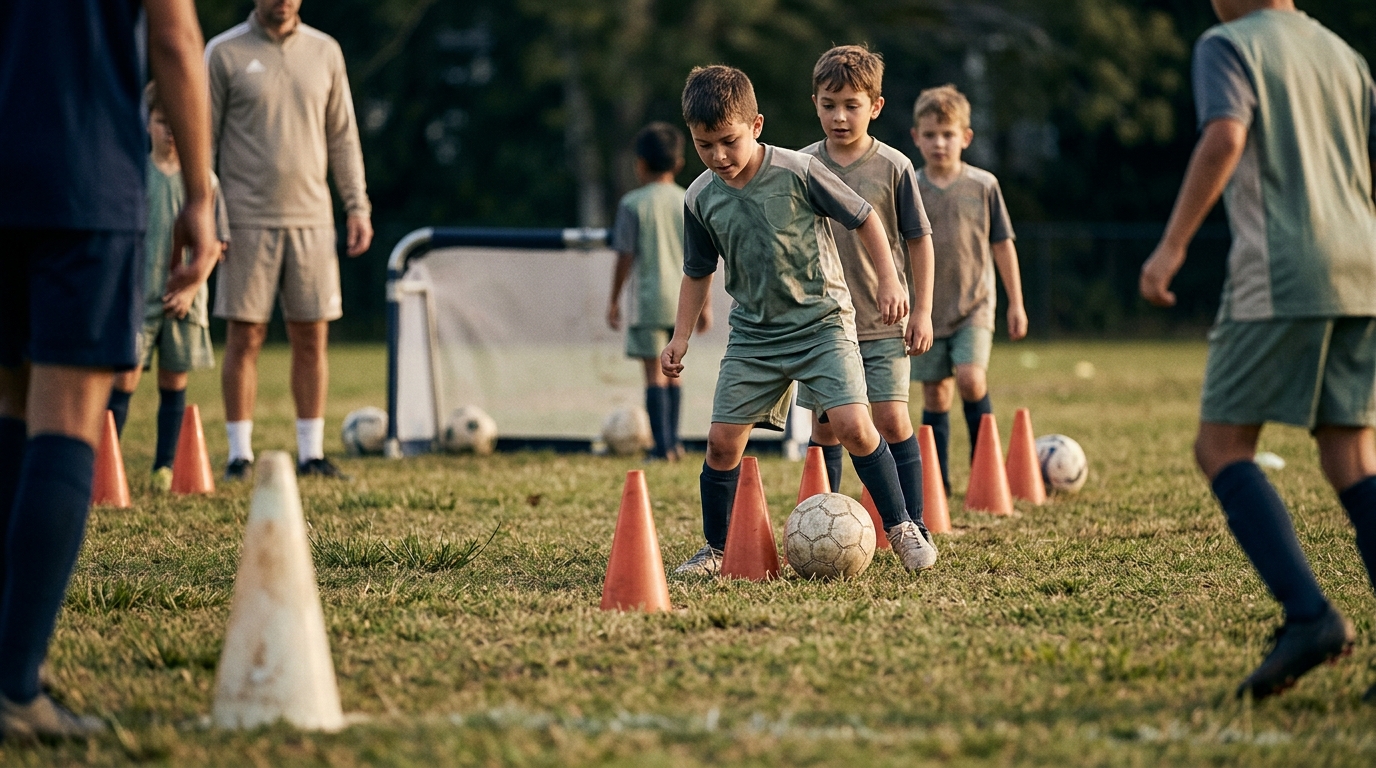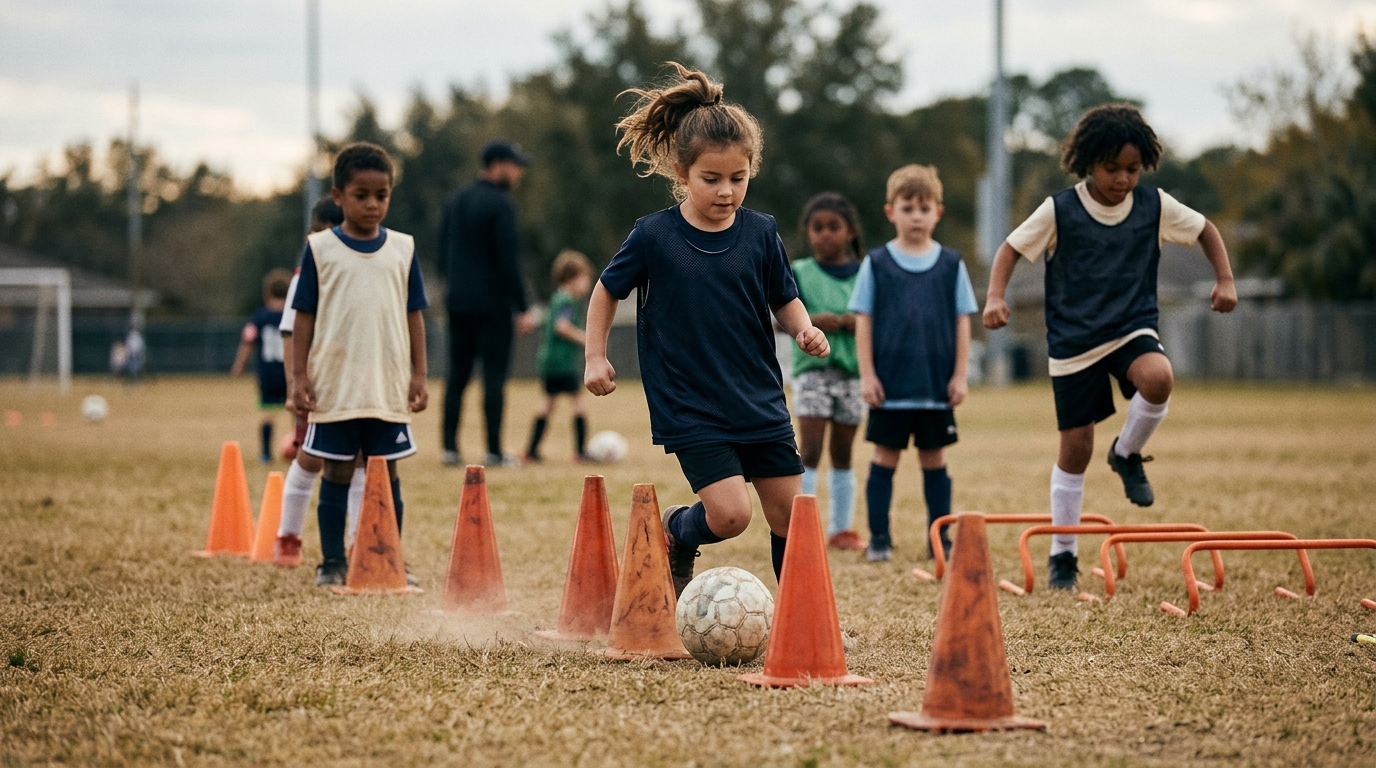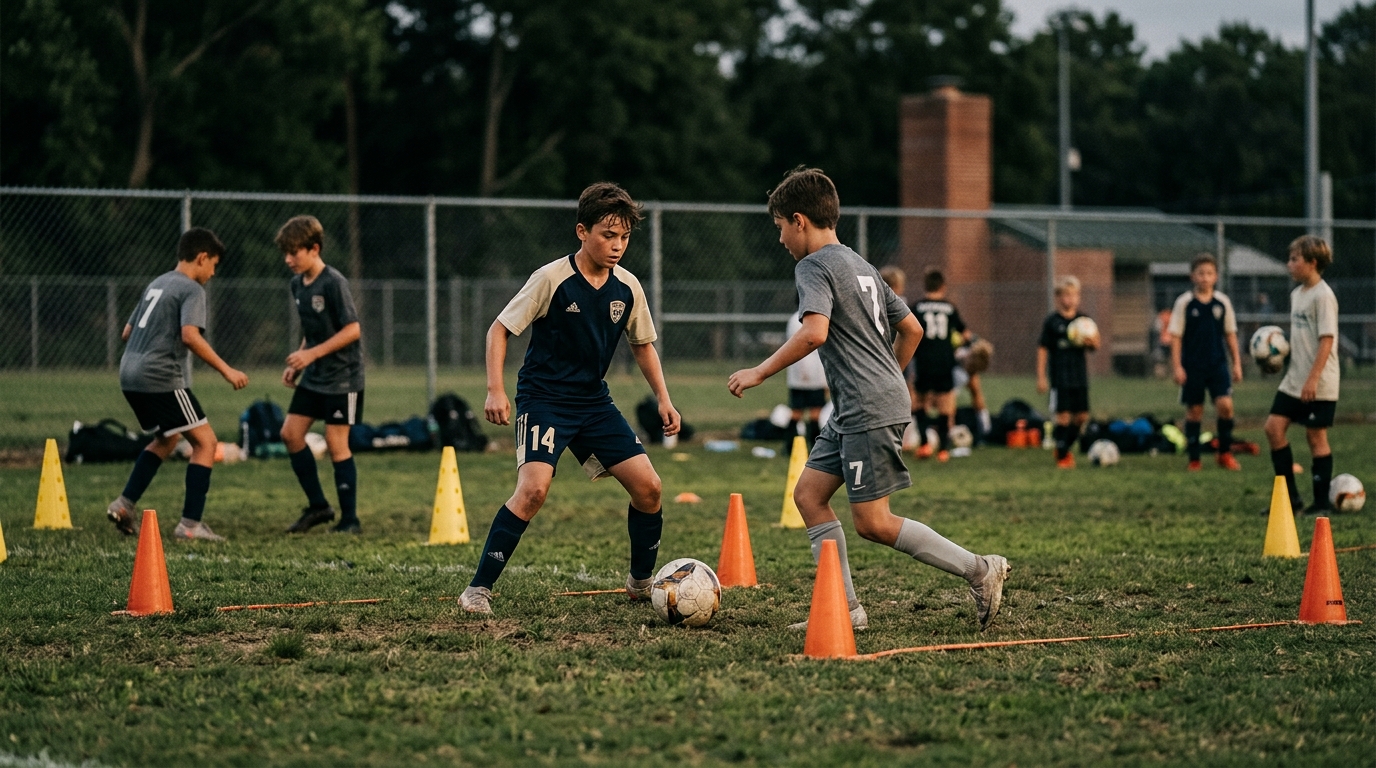
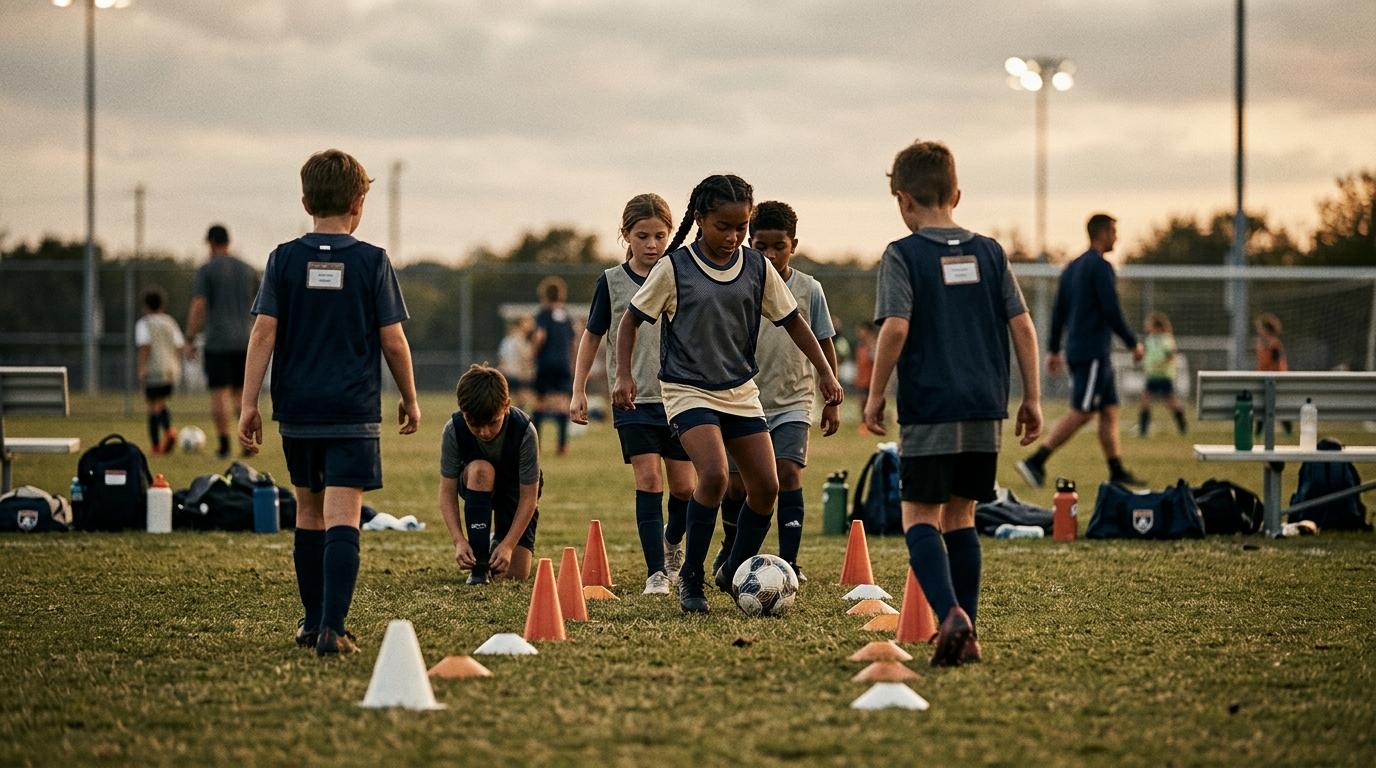
It was 8:11, lights were off on one side of the field, and a kid was halfway to the parking lot in one cleat, carrying somebody else’s helmet, yelling back, “Coach, where’s my glove?” That’s not a talent problem. That’s an exit problem.
Most teams spend all their structure on the front end. Arrival routine. Warm-up lines. First drill. Then practice ends, everybody loosens up at once, and the last five minutes turn into a yard sale with bats.
I’ve coached enough seasons to know this part matters more than adults think. Lost water bottles become late starts next time. Missing hoodies become parent texts. A forgotten catcher’s bag becomes tomorrow’s mood before tomorrow even starts. You do not need a bigger speech. You need a cleaner exit.
The fix is simple: a bag-tag exit check.
What the bag-tag exit check is
Before practice starts, every player puts their bag, helmet, glove, water, and any extra gear in one clearly marked team spot along the fence, wall, or sideline. At the end of practice, nobody leaves that spot until they do a fast five-item check in the same order every time.
Not a scavenger hunt. Not “make sure you got your stuff.” A real order.
- Bag
- Helmet or headgear
- Glove or stick or primary equipment
- Water bottle
- Jacket, batting gloves, sliders, or extras
Then they tap the bag or tag with their hand and go.
That hand tap matters. Kids remember physical cues better than another adult reminder floating in the air.
How to set it up in under two minutes
Pick one gear zone. Keep it boring and obvious. Fence line. Dugout wall. Baseline corner. Gym wall. If the gear spot moves every practice, the system dies fast.
Then give them one instruction at the start:
“Your stuff lives here. If it’s not here, it’s lost already.”
That sounds a little hard. Good. Gear systems should be clear enough that tired kids can still follow them.
If you coach younger players, put bags in a line and helmets on top of bags. If you coach older players, let them organize their own pile, but the items still need to be in one personal zone.
If you have numbers, cubbies, hooks, or taped spots, great. If not, you do not need to overbuild it. This is not a storage renovation. It is a habit.
How to run the exit without turning it into a lecture
When practice ends, do your wrap-up first. Keep it short. Then send them straight to the gear zone.
Use one cue:
“Bag. Helmet. Glove. Water. Extras. Tap and go.”
That’s it.
Do not add three more reminders while they’re checking. The whole point is to stop being the only brain in the operation.
I learned this the hard way. Early on, I did what a lot of coaches do. I stood there pointing at stray gear like an airport worker on the runway. Whose sweatshirt? Whose sliding mitt? Who left the team bucket open? By then, half the kids were gone mentally, and the other half were waiting for me to rescue them from their own routine.
Once the check became theirs, practices ended cleaner and the next practice started better. That’s the part people miss. Exit habits roll forward.
Who checks what
If you have assistants, assign one adult to scan the gear zone, not chase kids into the parking lot. They’re looking for leftovers, open bags, team equipment mixed into player equipment, and the one item every group somehow forgets week after week.
If you coach older kids, make one player the last-look captain for the week. Not a big honor. Just a job. Their role is to stand at the gear zone for 30 seconds after the group leaves and hold up anything left behind.
Kids usually respond better to one teammate calling out, “Blue bottle!” than to a fifth adult warning of the day.
Where this helps most
- Baseball and softball: gloves, helmets, batting gloves, cups, sleeves, catcher’s gear pieces
- Soccer: shin guards, slides, water bottles, keeper gloves, extra layers
- Basketball: hoodies, braces, shooting shirts, home shoes swapped for slides
- Lacrosse and field hockey: goggles, mouthguards, pinnies, sticks leaning on the wrong fence
The more movable pieces a sport has, the more this matters.
What to do when kids still forget things
Expect that at first. Systems need reps too.
If someone forgets something, do not turn it into a team sermon. Just walk it back to the routine.
“You skipped your extras check. Get the whole list next time.”
Short. Specific. Done.
If the same players keep missing gear, move them closer to the gear zone at wrap-up or pair them with a teammate who is naturally organized. Some kids need one extra season of structure before it becomes automatic. That’s normal.
And parents, this is one of those spots where helping too fast actually slows the habit down. If a kid can carry it to practice, they can learn to check for it before they leave.
Why this works
Because the end of practice is when attention drops and movement rises. Everybody is tired. Parents are arriving. Siblings are wandering. Someone is asking about Saturday. Someone else has one cleat on and one sock off. That is not the moment for broad instructions.
It is the moment for a repeatable sequence.
Clean exits are not about being neat for neatness’ sake. They protect the next practice from starting with avoidable nonsense.
And in youth sports, avoiding avoidable nonsense is half the job.
If your team keeps leaving things behind, the answer usually isn’t more reminding. It’s one routine simple enough to survive the tired part.