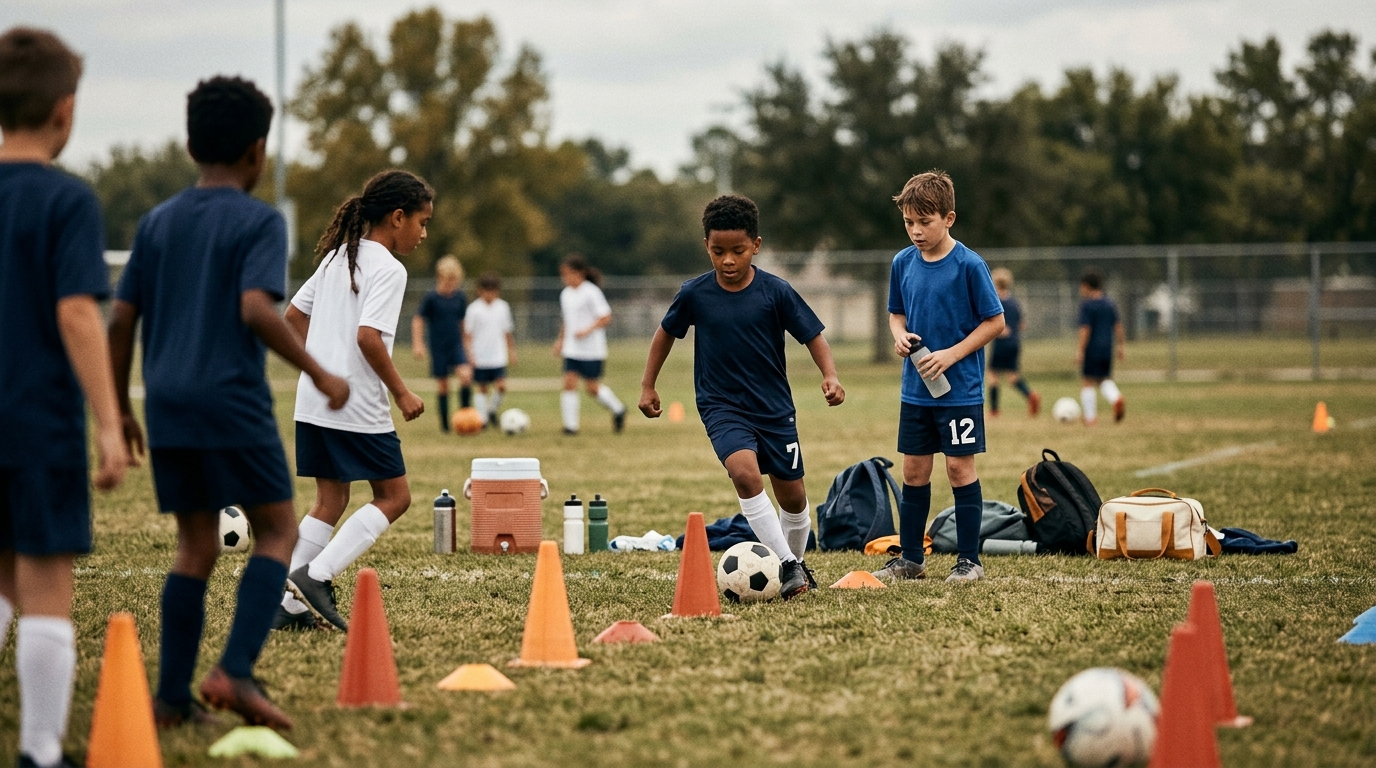

You can feel a bad warm-up coming about two minutes after the bags hit the fence.
One kid is tying a cleat with a glove still on. Two are firing full-speed throws before anybody’s shoulders are awake. Somebody is asking where to put the helmets. A parent is holding three water bottles and looking like unpaid event staff. Then the game starts, and everyone acts surprised the first inning looks messy.
I’ve seen this a lot. Not because kids are lazy. Not because coaches do not care. Mostly because pregame turns into a pile instead of a plan.
The fix is simple: build three stations and run them in order every single game day.
Not fancy. Not loud. Just clear.
Why this works
Kids do better when the first 10 minutes are obvious. Coaches do better too. If the warm-up has a shape, you do not waste your voice chasing basics. You are not solving ten small problems at once. You are just moving the group through a routine that gets bodies ready and heads in the right place.
I like this setup because it works across a lot of youth sports with small tweaks. It gives movement first, skill second, speed last. That order matters.
Pregame should feel like a ramp, not a fire alarm.
The three stations
1. Move
First station is body prep. No balls yet. No long speeches. Just get them moving.
- Jog out and back
- High knees
- Butt kicks
- Side shuffle both ways
- Open and close the gate
- Arm circles forward and backward
- Quick skips or pogo hops
Keep this to 3 or 4 minutes. The point is not to smoke them. The point is to wake them up.
Young players love to skip this part and jump right to the “fun” stuff. Then they throw cold, sprint cold, and wonder why the first few reps look stiff. Do not negotiate with that. Movement comes first.
2. Handle
Second station is controlled skill work. This is where you want clean, repeatable reps at a calm pace.
What this looks like depends on the sport:
- Baseball/softball: short catch, glove work, soft hands, easy exchanges
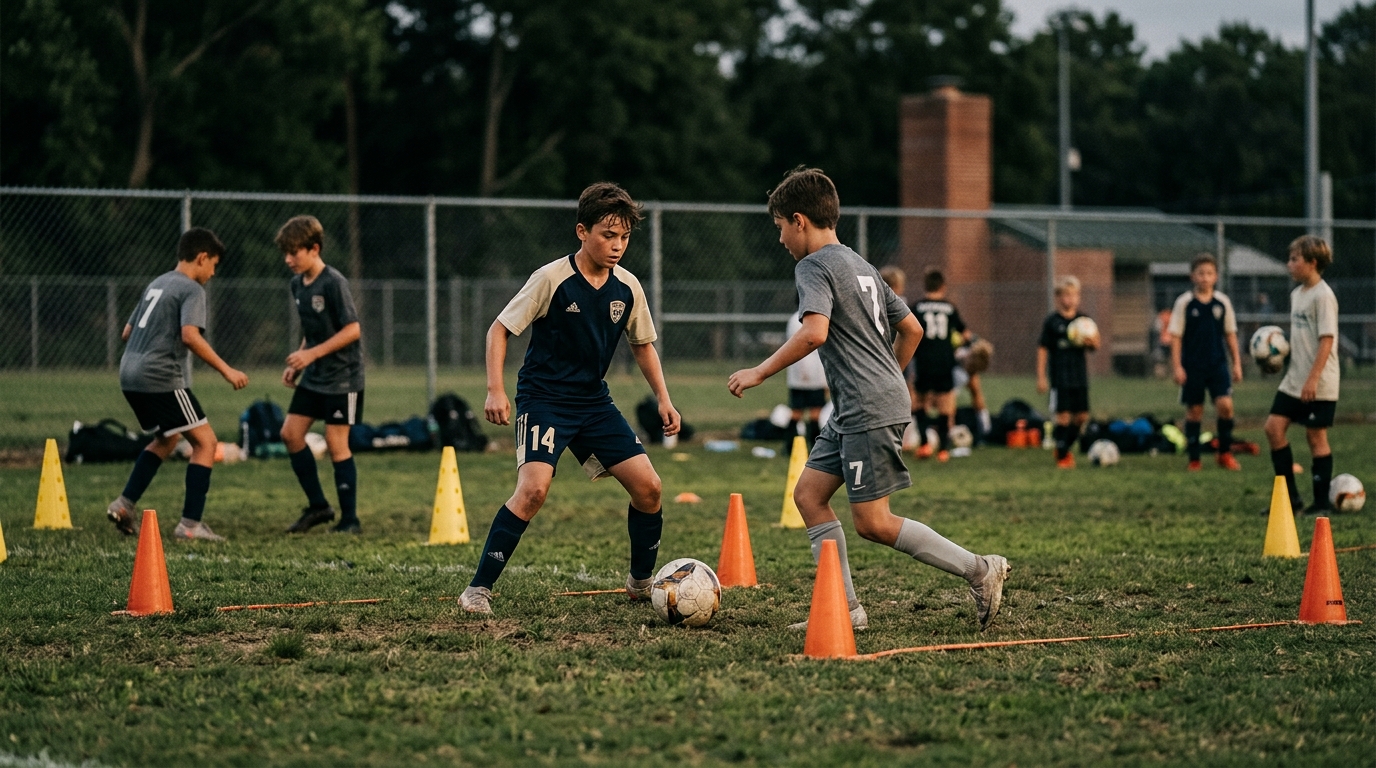
- Soccer: partner passing, first touch, inside-inside rhythm
- Basketball: form passing, ball-handling, short finishing footwork
- Lacrosse: short sticks, quick catches, easy ground-ball pickups
The key word here is controlled. Not rushed. Not max effort. This is where kids find timing again.
I’ve coached enough games to know the danger zone: one player decides warm-up is their personal showcase, and now the whole line speeds up for no reason. Suddenly easy reps turn sloppy. Bring it back down.
Tell them this: smooth first, fast later.
3. Go
Third station is game-speed prep. Short bursts. Competitive tempo. Something that makes the first live moment of the game feel familiar instead of shocking.
Again, sport decides the details:
- Baseball/softball: first-step grounders, short fly-ball reads, home-to-first burst
- Soccer: closeout steps, short 1v1 channel, quick finishing reps
- Basketball: defensive slide to sprint, layup off a pass, rebound-and-outlet sequence
- Lacrosse: dodge and pass, defensive recoveries, transition footwork
This station should be the shortest and sharpest. Think 2 to 4 minutes. You are not cramming in a whole practice. You are just flipping the switch from “arriving” to “competing.”
A simple timeline
If you have 12 minutes, here is a clean version:
- 4 minutes: Move
- 4 minutes: Handle
- 3 minutes: Go
- 1 minute: quick team reminder and water
If you have 20 minutes, stretch each section a bit and leave room for position-specific reps.
If you have 8 minutes because the schedule is running behind and somebody parked at the wrong field, keep the order the same. Shorter is fine. Scrambled is not.
What coaches usually get wrong
The biggest mistake is trying to do everything. Too many balls out. Too many instructions. Too many kids waiting for one rep.
The second mistake is opening with intensity before attention is there. If the first thing kids hear is three corrections and a demand to move faster, you’ve already lost half the group.
Start simple. Build from there.
The third mistake is letting equipment decide the plan. If cones are missing or one assistant is late, coaches start freelancing. That is how warm-ups drift. This setup survives that. You can run it with almost nothing.
A good pregame routine should still work on a weird day.
What parents can do without getting in the way
This part matters too. Parents help best by making sure kids arrive ready for the first station, not still halfway through getting organized.
- Cleats on
- Water filled
- Hair tied back if needed
- Guard, glove, stick, or ball easy to grab
- Bathroom trip handled before the team starts
That sounds basic because it is basic. But basic is what falls apart first on game day.
I’ve watched strong teams look disorganized simply because the first few minutes were wasted on little things nobody claimed. Once the clock starts, little things get loud fast.
The real benefit
This is not just about muscles getting warm. It is about the group settling into something known. Kids stop asking what is next. Coaches stop repeating themselves. The first whistle does not feel like the start of chaos.
And usually, when the first inning or first shift looks steadier, everybody relaxes a little.
That is the goal.
Not a perfect warm-up. Just one that makes the game easier to enter.
Clear beats impressive before the game starts.