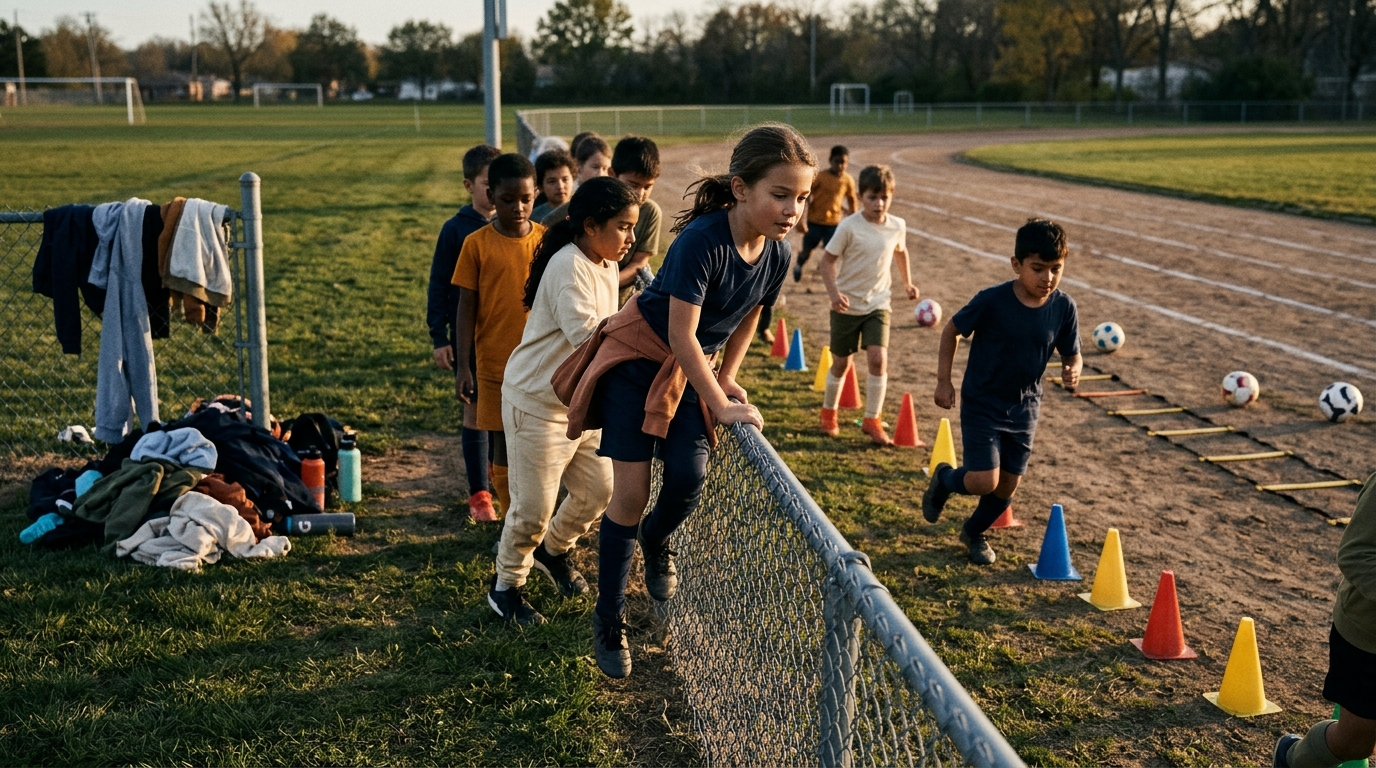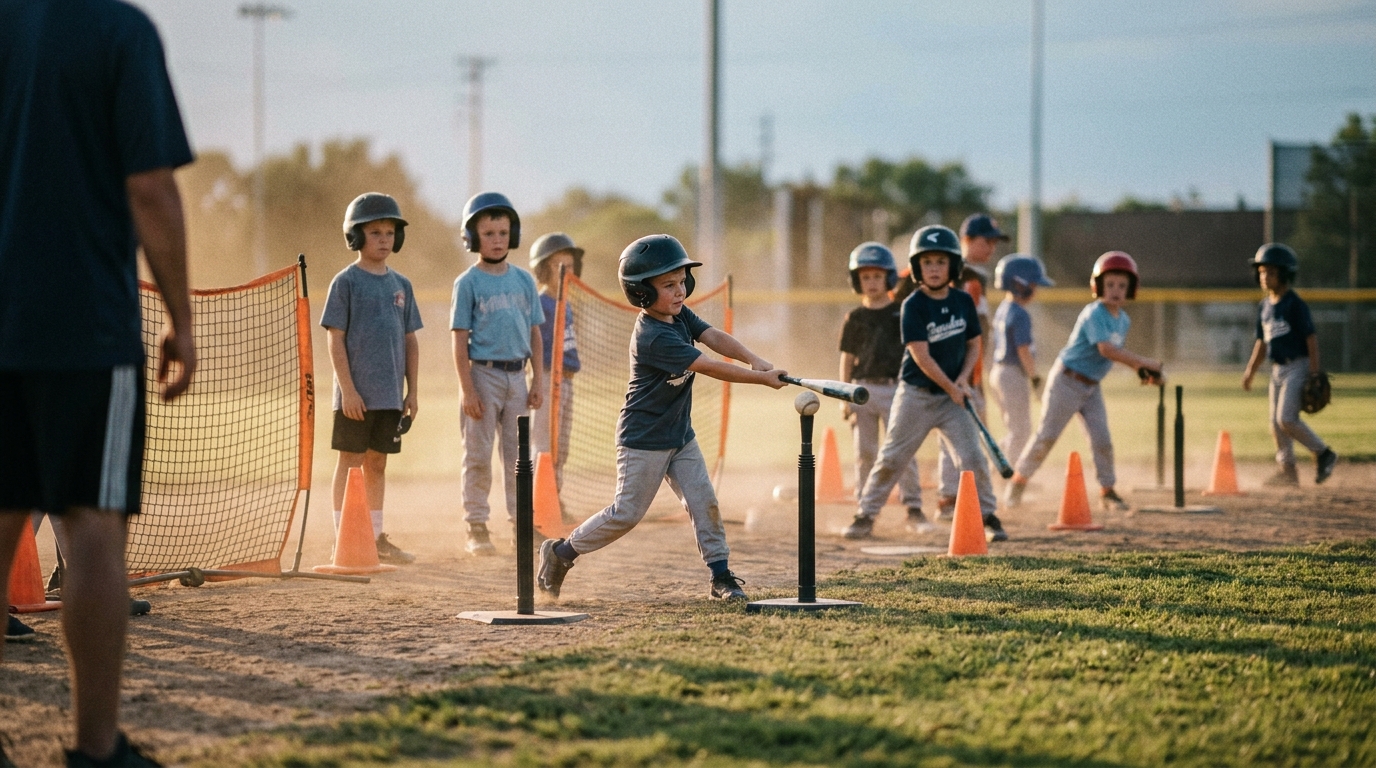
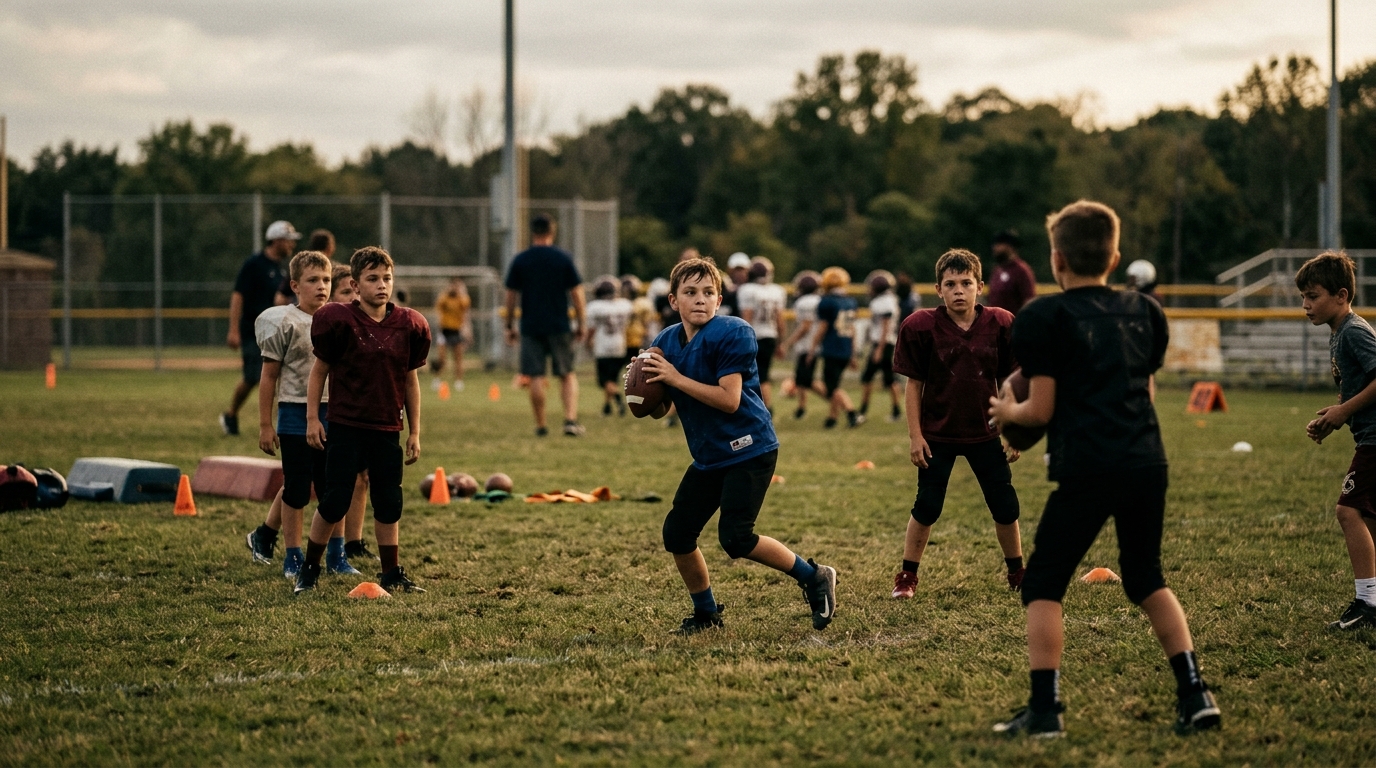
You can see it before the first whistle.
One kid is trying to stretch with a glove on. Two are air-mailing throws because they came in hot from the parking lot. One is still tying a cleat while the line somehow already started. Coach is calling for catch play, and half the group looks like they just met their own bodies five minutes ago.
That is not a talent problem. That is an arrival problem.
I’ve coached enough practices to know the first bad throws of the day usually don’t belong to the worst players. They belong to the kids who got asked to jump straight from walking in to “go be sharp.” That gap matters. If you want cleaner catch play, fewer noodle-arm throws, and less standing around at the start, build a simple arrival routine that every kid can do the same way.
The one I like takes seven minutes. No speech. No clinic. Just a repeatable runway into practice.
How the 7-minute arrival throw routine works
This is for the first players who arrive and the last ones who trickle in. That matters. A good warm-up should not fall apart because three families hit a red light.
Set one throwing lane per pair if you can. If space is tight, stack the lanes side by side and keep everybody on the same progression.
Minute 1: Walk and loosen
Partners walk about 10 steps apart with the ball in hand. As they walk, they do three simple movements:
- Arm circles forward and backward
- High knees or marching knee lifts
- Easy torso turns
No ball yet. Just get the shoulders and trunk awake. Kids do not need a lecture here. They need motion.
Minutes 2-3: Short flips
Now they stop and face each other at close distance, around 15 feet. Ten easy flips each. I want the ball coming out clean, feet under them, glove up, eyes on target.
This is where you clean up the lazy start. Not by yelling “focus,” but by giving them a distance where success is easy and repeatable.
Minutes 4-5: Step-behind throws
Partners back up to a medium distance. Now each player makes 8-10 throws with a simple step-behind. Nothing max effort. Just rhythm.
This is the spot where I usually see arms and feet finally sync up. The kid who sailed the first one chest-high over a teammate’s head suddenly looks normal again. Good. That means the routine is doing its job.
Minute 6: Quick exchange reps
Bring them back in a little. Five reps each of:
- Catch to transfer
- Transfer to throwing position
- Easy throw back
It is not a full infield drill. It is just connecting glove work to throwing work before you ask for speed.
Minute 7: Final long toss at game-speed intent
One partner backs up to their farthest clean distance for the day. Not “show me your arm.” Just far enough that the throw needs intent. Each player makes 4-6 good ones, then comes back in.
Now practice can start.
Why this works better than “just go play catch”
“Go play catch” sounds simple. In real life, it turns into 14 different versions of warm-up quality. One pair is locked in. One pair is talking. One pair started too far apart. One kid decides every throw needs to impress somebody.
Structure fixes that without making it heavy.
I learned a long time ago that kids handle routines better than reminders. If the first seven minutes are always the same, you spend less time correcting dumb stuff later. Fewer wild throws. Fewer sore-looking arms. Less waiting for the late arrivals to “get loose.”
Clean practice starts usually come from clean transitions, not louder coaching.
What coaches should watch for
You do not need to roam around giving a TED Talk. Just look for three things:
- Distance discipline — if the throw is bad, they are probably too far apart too soon
- Body speed — warm-up throws should build, not spike
- Hands working early — don’t wait until infield to discover their transfers are asleep
If you correct anything, keep it short. “Come in five steps.” “Slow your arm down.” “Catch it first, then move it.” That’s enough.
What parents can help with without turning into a second coach
The best parent help here usually happens before the first throw.
Get there with enough margin that your kid is not jogging from the car already behind. Make sure the glove, water, and cleats are handled before they hit the field. If your team uses this routine, help your kid know the order so they do not need to be individually walked through it every practice.
That is not over-involvement. That is respecting the start time.
And if your kid says, “We’re just playing catch,” don’t buy that. Early catch play is practice. It sets the quality for the next hour.
If you have younger kids, trim it down
For younger groups, make it five minutes instead of seven. Keep the same idea:
- Move first
- Throw short second
- Back up gradually
- Finish with a few throws that have intent
You do not need perfect mechanics to get value from this. You just need the kids to stop starting cold.
That’s the whole point.
Because when practice begins with three overthrows, a loose helmet, and a kid still shrugging on a sweatshirt, coaches tend to think the team is unfocused.
Most of the time, the team is not unfocused.
Most of the time, nobody built them a runway.