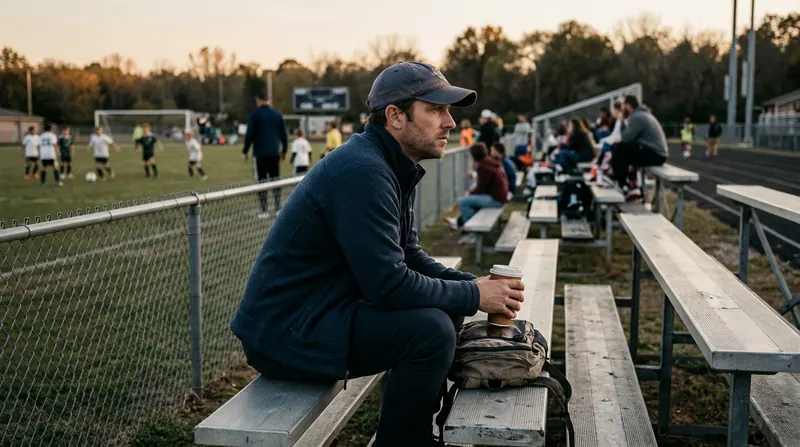
The game ended three minutes ago, and you can already see it forming.
Kids are dragging bags toward the parking lot. One parent is digging for keys. Another is calling, “Water bottle?” without looking up. Your kid is half out of one cleat, sweaty, quiet, and trying to figure out whether the day is over or still somehow being graded.
And there you are, standing near the fence, waiting for the coach.
Not because you want a fight. Usually it is the opposite. You just want “one quick thing.” Maybe about where your kid played. Maybe about the batting order. Maybe about why they looked upset on the bench. Maybe about something that felt small in the moment but has been getting bigger in your head for two innings.
Here is the problem: the fence line is a terrible place for a useful conversation.
I have coached enough games to know that almost nobody brings their best self into a postgame sideline chat. Coaches are still unwinding. Parents are still interpreting. Kids are absolutely still listening, even when they look busy tying a shoe that does not need tying.
What feels like a calm adult conversation to you often lands like a public performance to your kid.
The moment your kid notices everything
Parents sometimes think, I am talking to the coach, not to my child. But kids know exactly when a conversation is about them. They can feel it from twenty feet away.
They notice your face. They notice your tone. They notice whether you walked up fast. They notice if you pointed back toward the field. They notice if the coach crossed their arms, glanced at the dugout, or gave the short version instead of the real one.
And then they get in the car carrying not just the game, but your reaction to the game.
That is a lot to hand a kid before they have even had a drink of water.
Not every question is a bad question. Bad timing turns a fair question into a bad scene.
What to do instead
If you have something you truly need to ask the coach, get your kid out of earshot first. Not fake out-of-earshot. Real out-of-earshot.
That may mean you do not ask it there at all.
Sometimes the best move is simple: pack up, head to the car, and let the field be done for the day. If the issue still matters tomorrow, it is probably worth asking. If it cools off overnight, that tells you something too.
This is not about being passive. It is about being steady.
A lot of youth-sports problems get worse because adults try to solve them while still hot from watching them happen.
A better parent sequence after the game
- Find your kid first. Before you find the coach, find your child.
- Handle the basic stuff. Water, gear, cleats, jacket, bag. Bring the temperature down.
- Use one neutral sentence. “Glad I got to watch you play.” That is enough.
- Wait until later to decide if you even need the conversation. Not every confusing coaching decision requires parent follow-up.
- If you do reach out, make it private and specific. One topic. Calm tone. No sideline audience.
I have seen good parents make a totally reasonable point in a totally wrong setting. It almost never helps.
The coach gets guarded. The parent gets more frustrated because they are getting a guarded answer. The kid reads the whole exchange like subtitles on a screen.
Now everybody goes home with extra tension that did not need to be loaded into the trunk.
Your kid does not need you to litigate the box score in public
Sometimes what a kid needs most after a game is for the adults to act like the world is still normal.
That does not mean pretending. It means showing them that one weird substitution, one short bench turn, one missed chance, one rough inning, or one awkward coach moment does not have to swallow the rest of the night.
Kids borrow perspective from us before they know how to make their own.
If you march to the fence every time something feels off, they learn that every uncomfortable moment needs a hearing. If you can hold it, sort it, and choose a better time, they learn that not every feeling needs an immediate microphone.
Composure is a sideline skill too.
When you really do need to talk
There are absolutely times to address something. Role confusion. Communication issues. A pattern you are trying to understand. A concern that affects your kid’s ability to participate well.
Just do not make the walk-off your office.
A short message later is better than a fence-line ambush now. You will ask it better. The coach will hear it better. And your kid will not have to stand there pretending to look for a missing sock while the adults discuss their day like they are not in the area.
That part matters more than parents think.
The cleanest postgame move is usually the hardest one in the moment: say less, gather your kid, and leave the field with the field.
There will be another practice. Another game. Another chance to talk if it still needs talking.
But once your kid sees you turn their game into a fence-side review session, you do not really get that moment back.