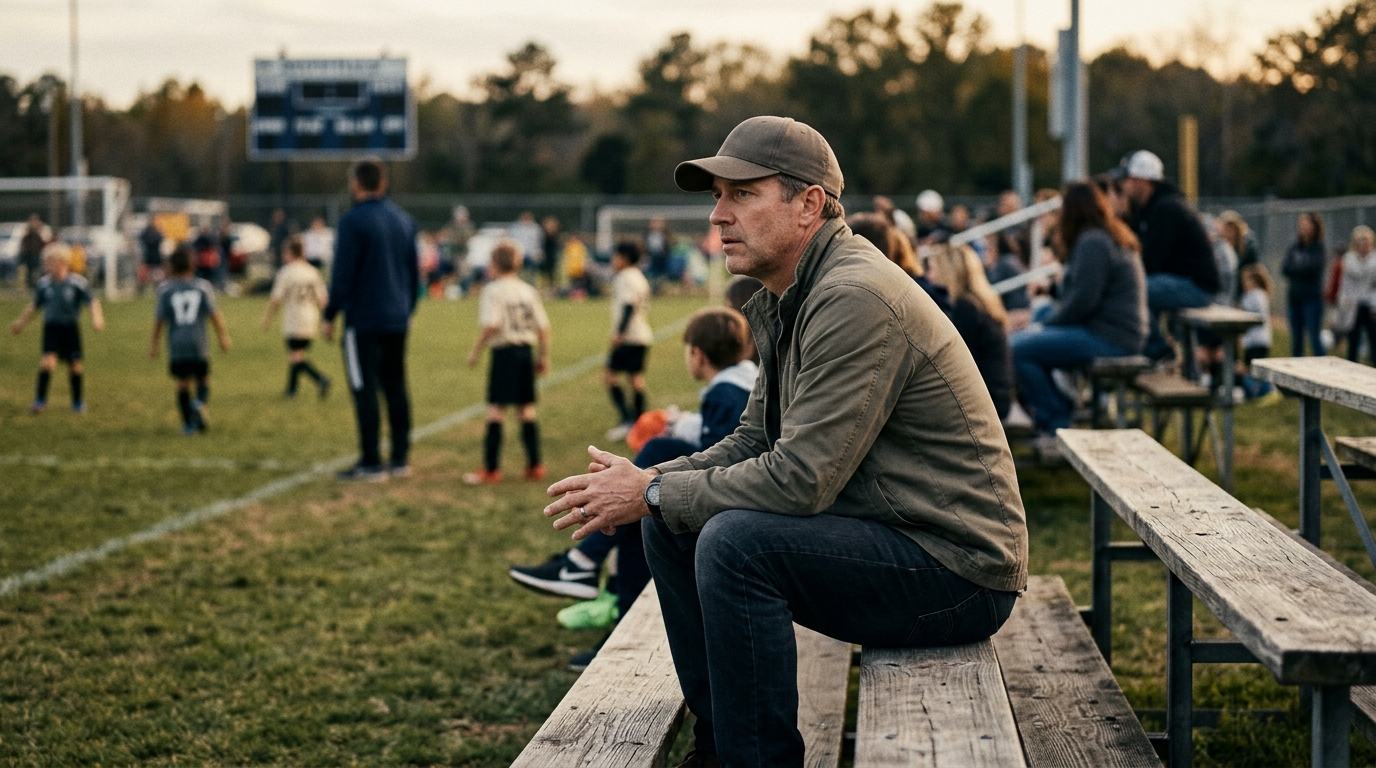
The final whistle blows. Your kid grabs their bag, half-listening, half-stewing. You spot the coach by the bench with three other parents already drifting that direction. You’ve got a question. Maybe a fair one. Maybe even a useful one. But your kid is ten steps ahead of you, watching without looking like they’re watching, and now the next two minutes matter more than whatever answer you were hoping to get.
I’ve lived this one from both sides. I’ve been the coach trying to stack cones, talk to a player, find the game ball, and answer a parent who swears they just need “real quick.” I’ve also been the adult walking off a field with something to say and having to decide whether saying it now helps anybody at all.
Most of the time, it doesn’t.
Parents usually think the hard part is what to say to their kid after a game. A lot of the time, the harder part is what not to do with the coach while your kid is standing right there.
Postgame is a bad time to solve much
Right after a game, everybody is a little cooked.
- The coach is still in game mode.
- Your kid is raw, whether they showed it or not.
- You are reacting to the freshest thing you saw.
That is not a great recipe for clear thinking.
I’ve seen good parents ask decent questions in bad moments and accidentally turn the whole ride home sideways. Not because they were rude. Not because the coach was terrible. Just because the timing put the kid in the middle.
When a parent goes straight to the coach after a game, a kid usually hears one of three things:
- “I need to fix this for you.”
- “Your coach can’t be trusted.”
- “Tonight is still about your playing time.”
Even if that’s not what you meant.
Kids don’t just hear your words. They read your lane.
Give the car ride one clean job
The ride home does not need to solve the season.
It needs one job: bring your kid down from the emotional ledge, whether that ledge is frustration, excitement, embarrassment, or confusion.
That gets harder when the last thing they saw was you cornering the coach by the bench.
If you think you might want to talk to the coach, make this your rule: unless it is about safety, logistics, or something truly time-sensitive, wait a day.
Let the coach have Sunday. Or Monday. Whatever the schedule allows. Let yourself have a night to cool off too.
That pause does two useful things:
- It keeps your kid from feeling like every rough game triggers a parent meeting.
- It helps you ask a better question when you do reach out.
There’s a big difference between, “Why didn’t she play more?” and “What should she be working on to earn more trust in that spot?”
One is heat. One is help.
What to do instead at the field
You do not need a dramatic exit. Just keep it simple.
If your kid is with you, your first move is toward your kid, not the coach.
Try this:
- Make contact. “Hey, let’s get your stuff.”
- Keep your tone level. Not fake-cheerful. Not investigative.
- If the coach says goodbye, return it like a normal adult. No icy silence. No sideline summit.
- If you really need to connect, use one sentence. “Coach, I’ll send you a note this week when you have a minute.”
That last line does a lot of work. It tells the coach you want to talk without dragging your kid into a live postgame review.
What your kid needs to see
Your kid needs to see that you can stay steady when things are unclear.
That matters more than parents think.
Because sports are full of unclear things:
- Playing time that feels uneven
- Positions they hoped for but didn’t get
- Corrections that sound sharper than they wanted
- Game decisions they don’t understand yet
If your kid sees you handle every uncomfortable moment by confronting somebody immediately, they learn that discomfort is an emergency.
If they see you pause, gather facts, and choose your moment, they learn something better: not every problem needs a performance.
Calm is a skill. Kids borrow it from us before they build their own.
When you do talk to the coach
Later is fine. Better, actually.
When you reach out, keep it short, specific, and future-focused.
Good:
- “Could you help me understand what she should focus on to help the team more?”
- “Is there one area he can work on this week?”
- “When you have time, I’d like a quick conversation about how we can support from home.”
Not as good:
- “He said you benched him for no reason.”
- “A few of us were wondering…”
- “I just want to advocate for my kid.”
That last phrase usually means the temperature is about to go up.
Advocating is not the problem. Doing it in a way that makes your kid the center of an adult tug-of-war is the problem.
The small win nobody notices
Sometimes the biggest parenting win after a game is invisible.
You wanted to say something. You had a decent case. You chose not to do it there.
You loaded the bag. You got in the car. You let the air clear.
That doesn’t mean you’re passive. It means you know the difference between protecting your kid and performing your frustration.
There’s a difference.
And kids can feel it from the passenger seat.