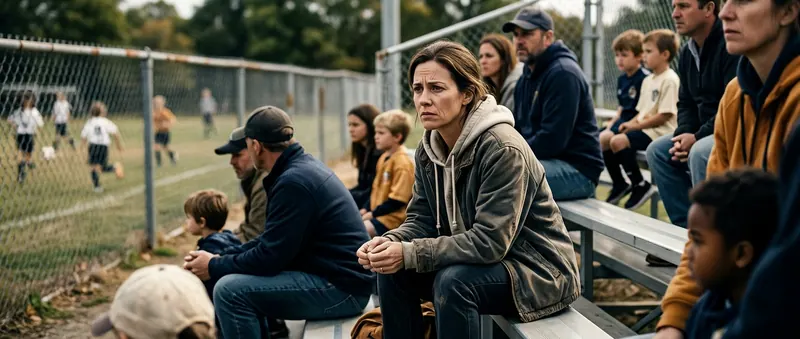
The game ended the way a lot of youth games end: one kid crying because they struck out, one kid hanging off the fence asking where the snack is, and three parents standing near the dugout doing that half-whispered, half-not-whispered recap that every kid within ten feet can still hear.
Meanwhile, your own player is walking to the car with their bag dragging behind them like it weighs 80 pounds. You’ve got thoughts. About the lineup. About the coach. About the missed grounder. About the time your kid perked up when another parent said, “Good hustle,” and then shut right back down when the adults started breaking down the game like postgame radio.
That ride home is where a lot of parents accidentally turn one rough inning into a three-hour problem.
So here’s a practical rule: pick one job for the ride home before the engine starts.
Not five jobs. One.
Because most bad car rides happen when the parent tries to do all of it at once: comfort the kid, correct the kid, read the kid, question the coach, teach the sport, protect the future, and fix the mood before the first stop sign.
That’s too many jobs for a ten-minute drive.
The ride home goes better when you know what your job is
Some days your job is simple support.
“Tough one. Glad I got to watch you.”
Some days your job is food and water.
Because a hungry, sweaty kid with a bad result is not ready for a useful sports conversation anyway.
Some days your job is listening.
Which means you stop filling every quiet second with your own review of the game.
And some days your job is saying almost nothing at all.
That part is hard for parents who care a lot. I know because coaches see it every season. The parents who mean well are often the ones doing the most talking. They’re not trying to pile on. They’re trying to help before the feeling sets in too deep.
But kids don’t always experience that as help. They experience it as, “I am not even in the car yet and we’re already on my mistakes.”
You do not have to process the whole game just because the game just ended.
Three jobs that actually work
If you need a place to start, these are the best three options.
1. Steady the temperature
This is the job when your kid is hot, embarrassed, frustrated, or shut down.
Your whole goal is to keep the moment from growing teeth.
- Keep your voice normal.
- Skip the play-by-play.
- Say one grounding thing: “Glad you’re with me.” “Shake it off for now.” “Long day. Let’s get home.”
That’s enough.
2. Let them start if they want to
If they want to talk, fine. But make them the one who opens the door.
That means no rapid-fire questions:
- Why were you standing there?
- What did the coach say?
- Why didn’t you swing?
- Did you even know how many outs there were?
Those don’t feel like conversation. They feel like film review without consent.
A better line is, “If you want to talk about it later, we can.”
It gives them room without making the whole car silent in a weird way.
3. Save adult business for adult time
If you’re upset about the coach, the lineup, the position change, or the tone used in the dugout, that is a separate job. Do not make your kid carry it home for you.
I’ve seen parents do this without realizing it:
“I don’t know what your coach was doing today.”
“You should’ve had more time at short.”
“That made no sense.”
Now the kid has a bad game and a loyalty problem. They have to sit there and figure out whether to agree with you, defend the coach, or feel worse.
That is too much for a child in a backseat with shin guards still on.
If you need to talk to the coach, do it later, directly, and without using your kid as your messenger, witness, or sounding board.
What to do when you’re the one who needs the reset
Parents need this just as much as kids do.
Sometimes the person who most needs a cleaner ride home is the adult driving.
You watched your kid struggle. You bit your tongue on the sideline. You heard another parent say something dumb. You’re irritated. It happens.
So give yourself one small rule before the car starts moving: don’t teach while you’re still mad.
That correction you swear is calm usually doesn’t land that way when your jaw is tight and you’re still replaying the third inning.
Drink some water. Turn the air on. Ask if they want music. Be a parent first.
Coaching can wait.
The point of the ride is not to win the recap
The best sports parents I’ve been around are not the ones with the smartest breakdown after the game.
They’re the ones whose kids can get in the car after a great game or a rough one and feel the same basic thing: safe, steady, and not alone.
That doesn’t mean you never talk sports. It means you stop demanding that every ride home do all the work.
Pick one job.
Support. Listen. Feed them. Leave it alone. Handle your coach issue later.
Small adjustment. Big difference.
Most kids don’t need a better postgame speech.
They need a car ride that doesn’t make the day heavier than it already is.