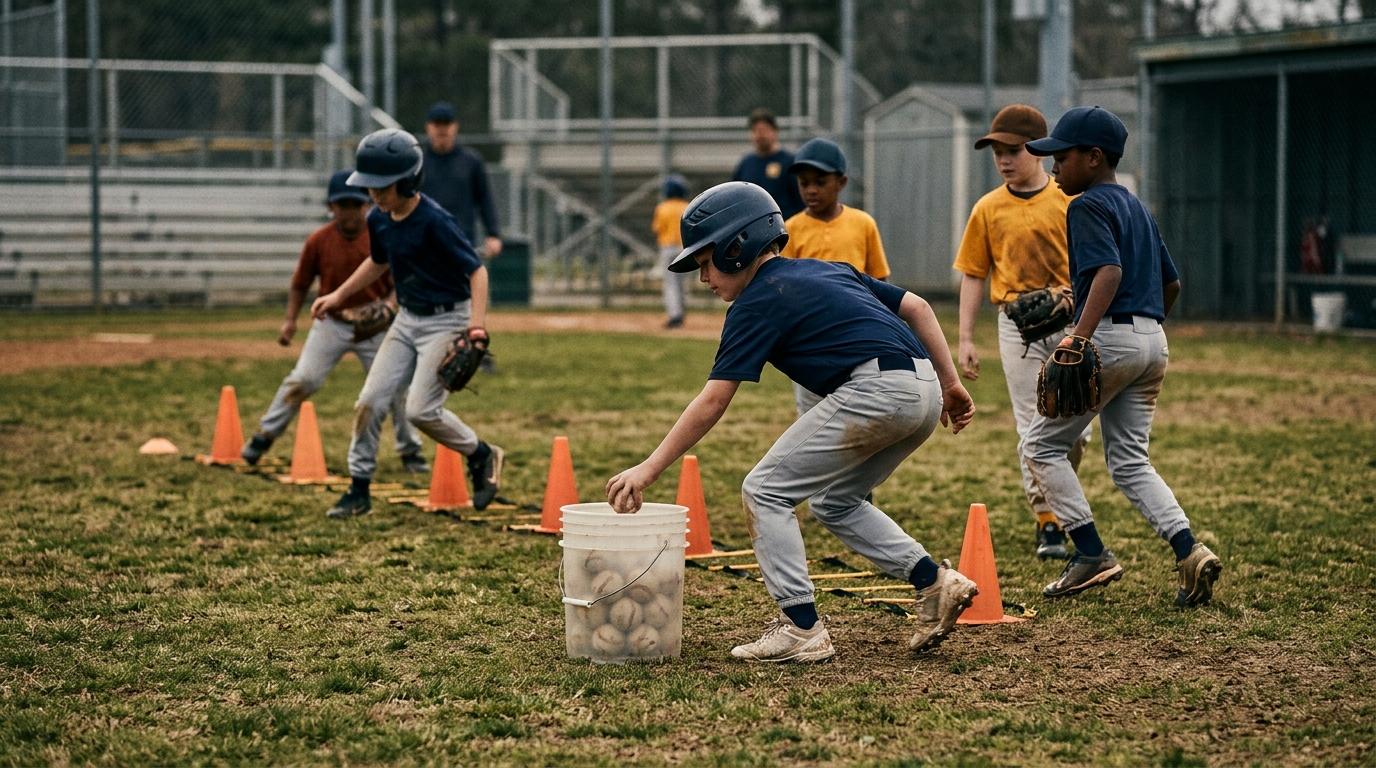
The bucket was sitting ten feet off the foul line, and not one kid asked why.
That’s how you know a drill has a chance.
We were halfway through practice, attention was starting to drift, and the usual signs were showing up. One kid was dragging the bat instead of carrying it. Two more were talking while a ball rolled right between them. A parent behind the fence did that little arms-folded shift that says, here comes the part where this goes off the rails.
Instead, we put a bucket down, grabbed ten balls, and turned cleanup, hustle, communication, and finishing a rep into one simple race against the clock.
No speech. No big reset. Just a drill that got everybody moving with a purpose.
What the 10-ball bucket drill is
This is a fast-paced team drill for almost any field or court sport where kids need to react, move under control, communicate, and finish the play instead of admiring the first part of it.
The setup is simple: spread ten balls or objects across a defined area, put one bucket or bin outside that area, and give the group one job—collect all ten and get them into the bucket as fast as possible while following your movement rule.
The movement rule is what makes the drill useful.
You can require:
- defensive slides
- backpedal then sprint
- shuffle and scoop
- jump stop before pickup
- call the name before the toss
- one athlete gathers, one athlete returns
It sounds almost too basic, which is usually a good sign in youth sports. Simple drills survive real practices.
Why it works
I like drills that clean up three problems at once.
This one usually does.
First, it teaches kids not to jog through loose-ball moments. A lot of young players are fine when the rep is clearly “their turn,” but get casual when the play looks messy. Games are messy. The players who react first always look more prepared, even when they’re not the most talented.
Second, it forces communication without making communication a lecture topic. If two kids sprint to the same ball and nobody talks, they feel the traffic jam right away. You don’t have to stop everything and give a TED Talk on teamwork. The drill tells on them.
Third, it rewards finishing. Not touching the ball. Not almost getting there. Finishing the job and getting the ball into the bucket.
That matters more than adults think. Youth players leave a lot of reps half-done. They field it but don’t reset. They grab it but don’t look up. They start hard and finish casual. This drill makes the end of the rep visible.
Fast is good. Finished is better.
How to set it up
You need:
- 1 bucket, bin, or equipment bag opening
- 10 balls, bean bags, or similar objects
- a marked space about the size of a small infield section, half court, or grass box
- one stopwatch or coach with a loud enough voice to count down
Scatter the ten balls across the space. Don’t place them neatly. Bad spacing makes kids think.
Put the bucket several steps outside the playing area so they have to gather and return with intent.
Divide players into two teams if you want competition, or run one group against its own best time if your team gets sloppy when races are involved.
Basic version
Round 1: clean pickup
Players move on your command, collect one ball at a time, and return it to the bucket.
Rules:
- one ball per trip
- no throwing from distance unless you add that version on purpose
- must use the assigned movement pattern
- must communicate on collisions or shared space
Time the round.
Then run it again and ask one question: What slowed us down?
Not eight questions. One.
You’ll usually hear the right answers from the kids: “We bunched up.” “Nobody called it.” “We were rushing and dropped one.” Good. Now they own the fix.
Round 2: add decision-making
Now assign values.
Maybe two balls are worth double. Maybe one color has to be picked up last. Maybe players can’t take a ball from the same zone twice in a row.
This adds a little thinking without turning the drill into math class.
You’re teaching them to move fast while still noticing what matters.
Where coaches mess this up
The biggest mistake is talking too long before starting.
It’s a bucket and ten balls. If your explanation takes two full minutes, you’ve already lost the room.
Second mistake: making it “fun” by making it chaotic. If kids are diving, kicking balls, or cutting across each other with no control, the drill stops teaching anything useful. Hustle and mess are not the same thing.
Third mistake: correcting effort when the real issue is organization. Sometimes the team isn’t lazy. They just don’t know where to go next. If three kids attack the same side every round, that’s not a heart problem. That’s a spacing problem.
Don’t call them flat when they’re just unclear.
Best ages and sports for it
This works especially well for ages 7 to 14, when players still need reps in reacting, sharing space, and finishing under a little pressure.
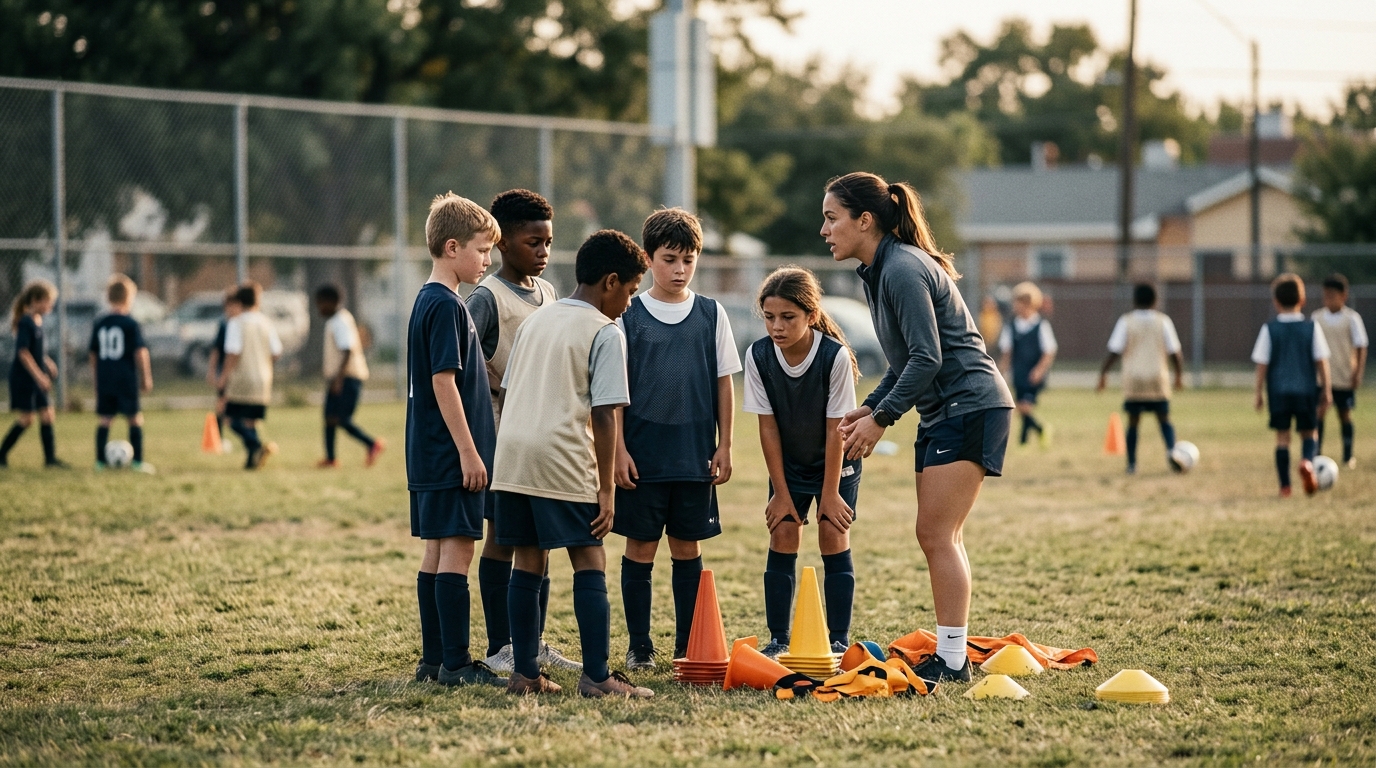
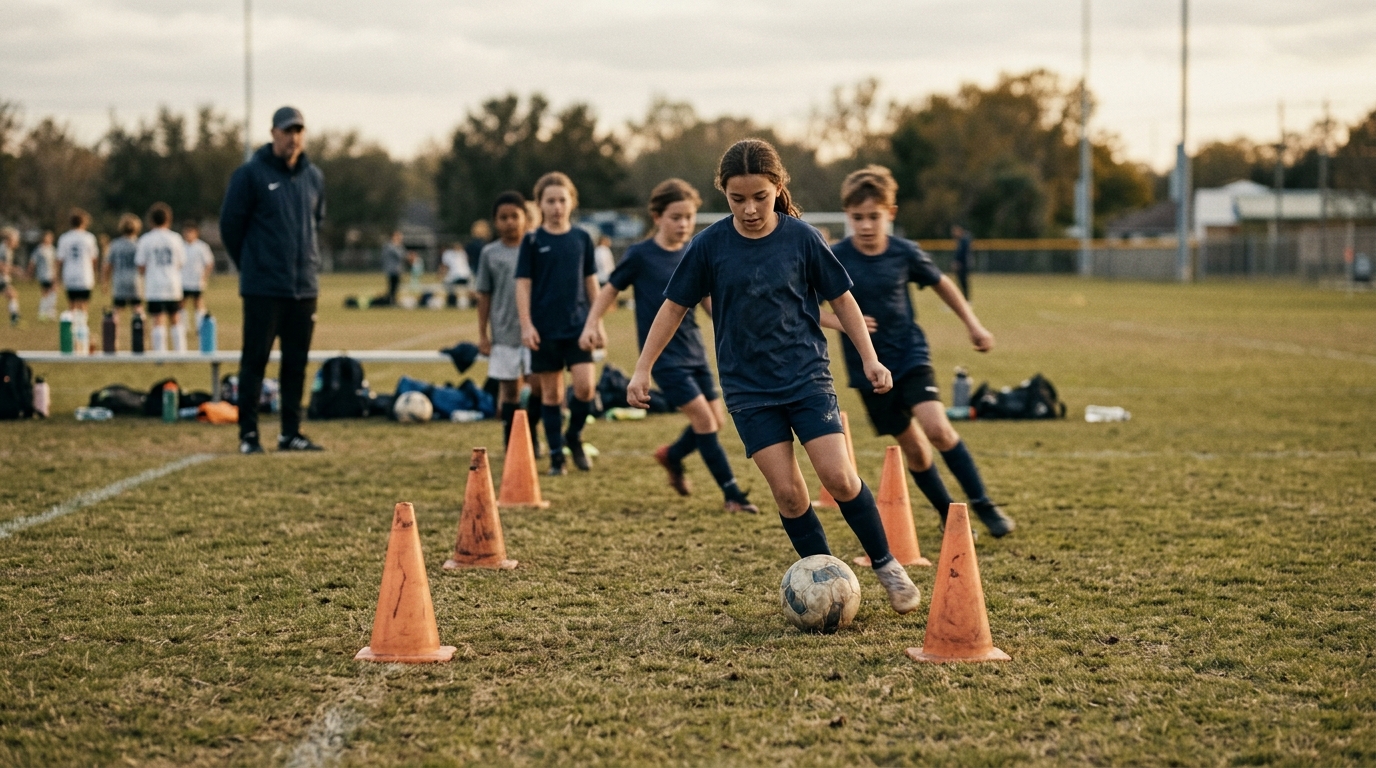
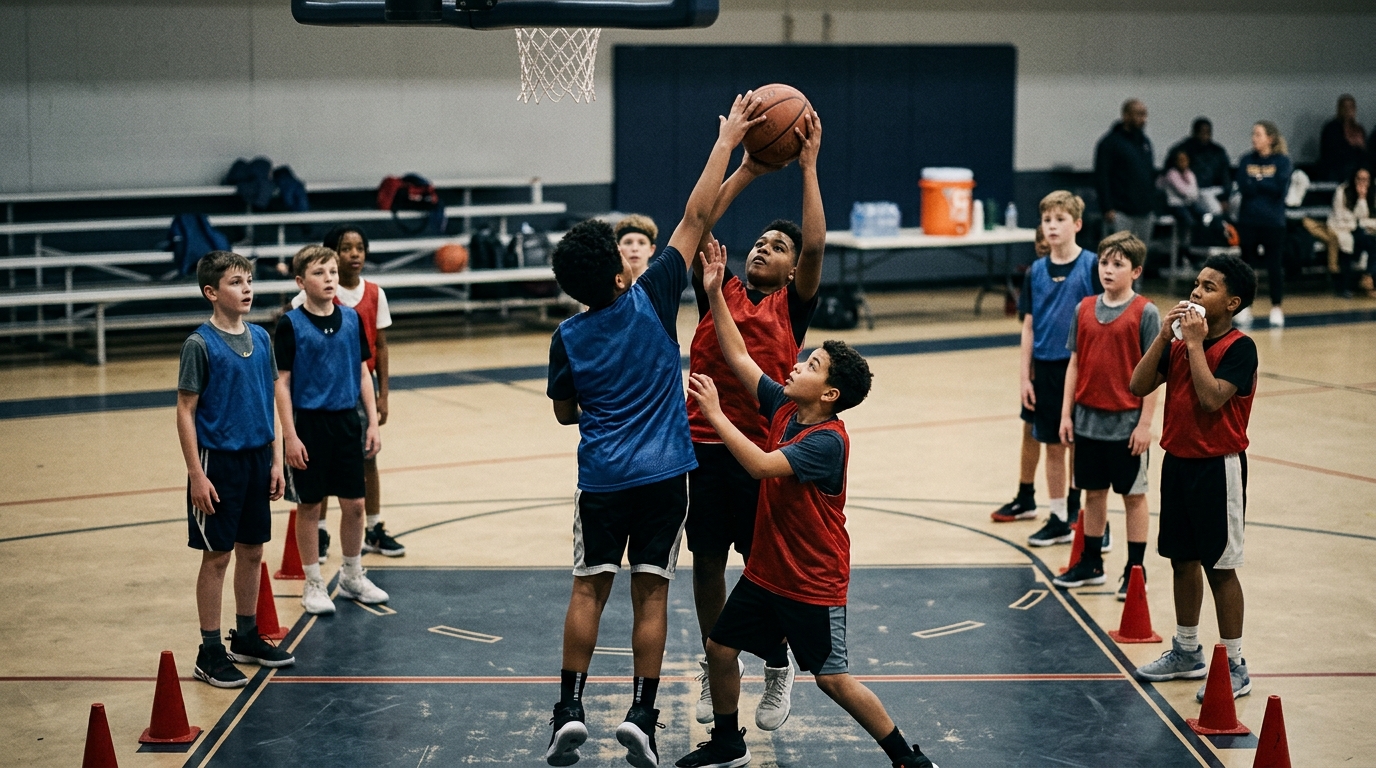
It fits baseball, softball, soccer, basketball, lacrosse, hockey dryland, and really any practice where loose-ball habits matter.
You can make it lighter for younger kids and sharper for older ones just by changing the movement rule and size of the area.
When to use it in practice
Not at the very start. Not at the dead end, either.
I like it right after the first teaching block, when energy dips a little and the group needs a job that wakes them up without turning practice into recess.
Five to eight minutes is enough.
That’s another youth sports truth adults learn the hard way: a good drill usually ends before the coach is ready to let go of it.
Run it, sharpen it, beat the time, move on.
The best part is what happens after. Kids start jogging harder to the next station. They pick up gear faster. They stop leaving balls where they land. Not because you gave another speech about accountability. Because now the standard has a shape they can recognize.
Sometimes that’s all a team needs.
A bucket. Ten balls. One clear job.