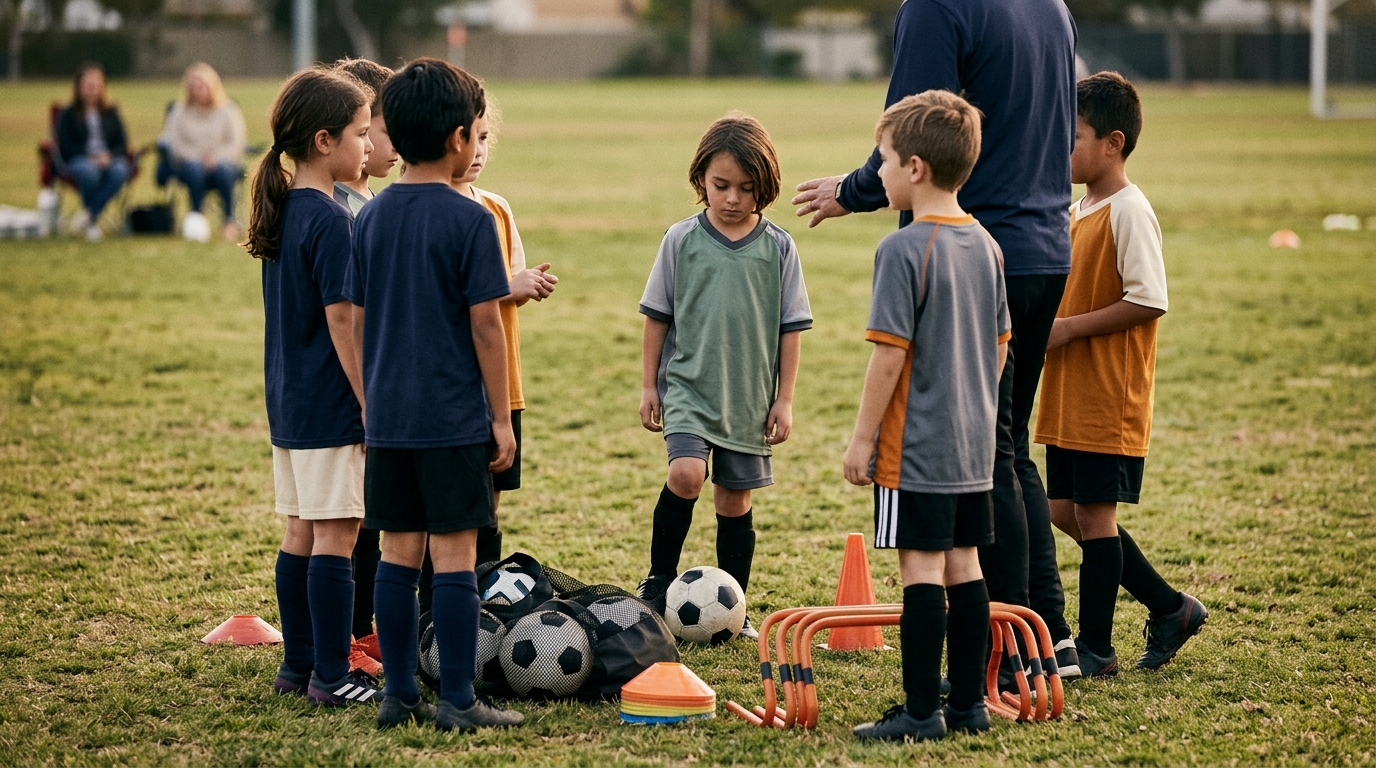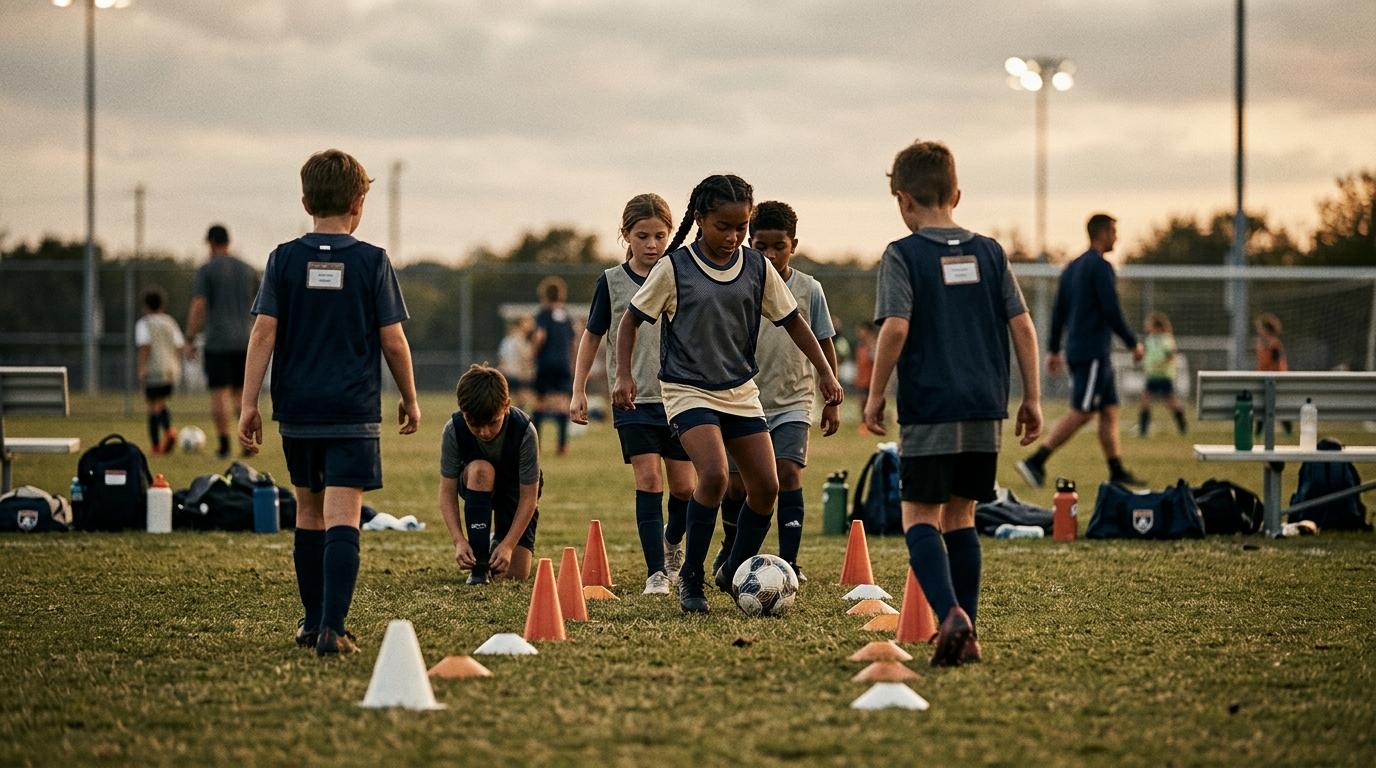

Six minutes into practice, one kid is tying a shoe for the second time, two are sword-fighting with pinnies, and the line at the cone drill is so long the first kid already forgot what the drill was.
I’ve seen that practice a hundred times. Good coach. Good intentions. Bad traffic pattern.
When kids stand, they drift. When they drift, practice gets loud, sloppy, and longer than it needs to be. That’s why I like a simple 3-station practice setup, especially for youth teams. It keeps more kids moving, gives you smaller teaching groups, and cuts down on the dead time that makes everybody nuts.
This is not fancy. It’s just organized. And organized wins a lot of battles before talent even shows up.
Why stations work better than one long line
The biggest practice killer in youth sports is waiting.
Not bad effort. Not lack of focus. Waiting.
If you have 10 to 14 kids and one coach running one drill, you usually have one athlete working and the rest rehearsing their dinosaur noises. Stations fix that fast.
Over the years, I’ve learned most young players don’t need more speeches. They need more useful reps. Stations give them that without making practice feel like military camp.
Micro thought: Busy kids behave better.
The basic 3-station setup
You’ll divide practice into three short stations. Each station should have a clear purpose, simple instructions, and enough activity that nobody stands around too long.
Think of it this way:
- Station 1: Skill work — one specific fundamental
- Station 2: Competition or pressure — a fun challenge using that skill
- Station 3: Decision-making or small-sided play — game-like reps
This works in almost any sport because the bones are the same. Teach it. Compete with it. Use it.
How long each station should last
For most youth teams, 8 to 10 minutes per station is plenty.
That gives you:
- 2 minutes to explain and demo
- 6 to 7 minutes of actual work
- 1 minute to rotate
If you stretch a station to 15 minutes, attention usually leaks out of the group. Keep it moving. Leave them wanting one more turn, not begging for water just to escape the drill.
A sample 60-minute practice
Here’s a clean structure that works for a lot of teams:
- 0:00–0:08 — dynamic warm-up with the ball or sport equipment
- 0:08–0:10 — quick explanation of the day’s theme
- 0:10–0:20 — station 1
- 0:20–0:30 — station 2
- 0:30–0:40 — station 3
- 0:40–0:50 — team activity or scrimmage that connects the stations
- 0:50–0:56 — conditioning through competition, not punishment
- 0:56–1:00 — recap and dismissal
That middle 30 minutes can carry the whole practice if the stations are set up well.
What makes a good station
A good station is simple enough that kids can start fast and clear enough that an assistant coach, parent helper, or even a responsible player can help run it.
Each station should answer three questions:
- What are we working on?
- How do you earn a win on this rep?
- Where do you go next?
If kids don’t know where to stand, where to move, or when they’re done, the station clogs up.
I’ve coached enough teams to know this part matters more than the cleverness of the drill itself. You can run a basic drill well and have a great practice. Run a brilliant drill with chaos, and it’s a mess by minute four.
Example station ideas by purpose
Station 1: Skill work
- Passing to a target
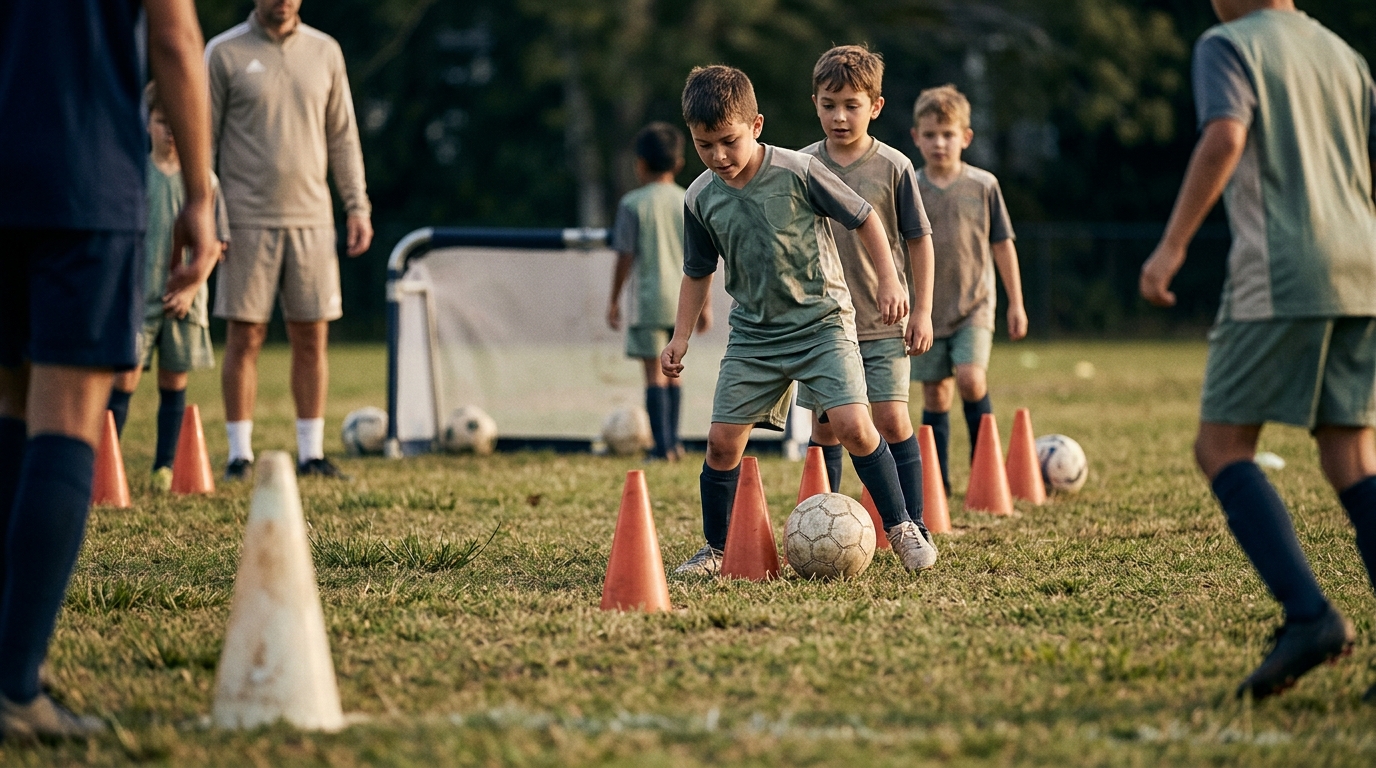
- Footwork through cones into a clean catch
- Dribble change-of-direction with eyes up
- Throwing mechanics into a net or partner
Keep the coaching tight here. One cue, maybe two. Any more than that and kids start collecting words instead of reps.
Station 2: Competition
- Partner point race
- Knockdown target challenge
- Relay using the same skill under time pressure
- Small accuracy game with scorekeeping
This is where energy jumps. Kids love keeping score. Use that. Just make sure the challenge rewards the right habit, not the sloppiest version done the fastest.
Station 3: Decision-making
- 2-on-1 or 3-on-2 scenarios
- Small-area possession game
- Read-and-react fielding or defending
- Limited-touch scrimmage rule
This station matters because sports are not cone courses. At some point, they have to look, choose, adjust, and recover.
Micro thought: A rep is better when a kid has to think during it.
How to group kids without drama
Don’t overcomplicate groups. Split by numbers, pinnie color, or birthday month. You’re not drafting the Olympics.
If ability gaps are huge, make one adjustment: put a steady, helpful kid in each group. Not your best athlete necessarily. Your steadiest one. Every practice has a kid who makes the group calmer just by acting normal. That kid is gold.
Equipment that makes stations easier
- Extra cones
- Pinnies in two colors
- A whiteboard or index card with station rules
- Enough balls so practice doesn’t stop during chasing missions
- A visible timer or phone stopwatch
The timer is big. When players know the station ends in eight minutes, effort usually rises. When practice feels endless, energy drops.
Kids can handle hard. What they struggle with is boring.
The mistake coaches make with stations
They talk too much at each rotation.
By station two, the group does not need a TED Talk. They need the next rep.
Demo fast. Name the point. Start the drill.
I learned this the same way most coaches do: by hearing my own voice too long and watching eyes glaze over in real time. If you want cleaner practices, trim your explanations first.
What success looks like
Success is not that every rep looks perfect.
Success is that kids are moving, touching the ball or equipment often, getting corrected in small bites, and staying engaged long enough to actually improve.
When practice ends and they’re sweaty, clearer, and still a little disappointed it’s over, you probably got it right.
That’s the beauty of the 3-station setup. It doesn’t ask you to be a genius. It asks you to be ready, clear, and efficient.
In youth sports, that’s more than half the battle.