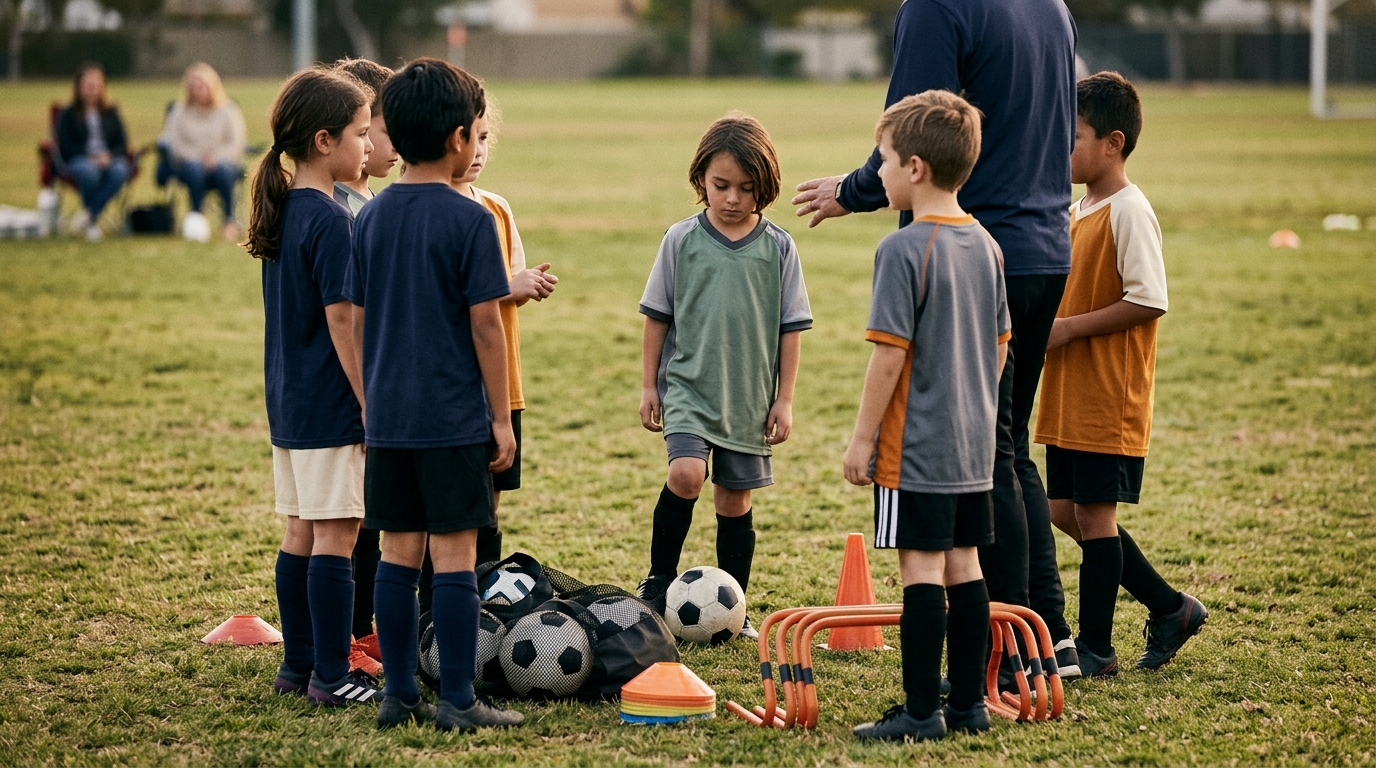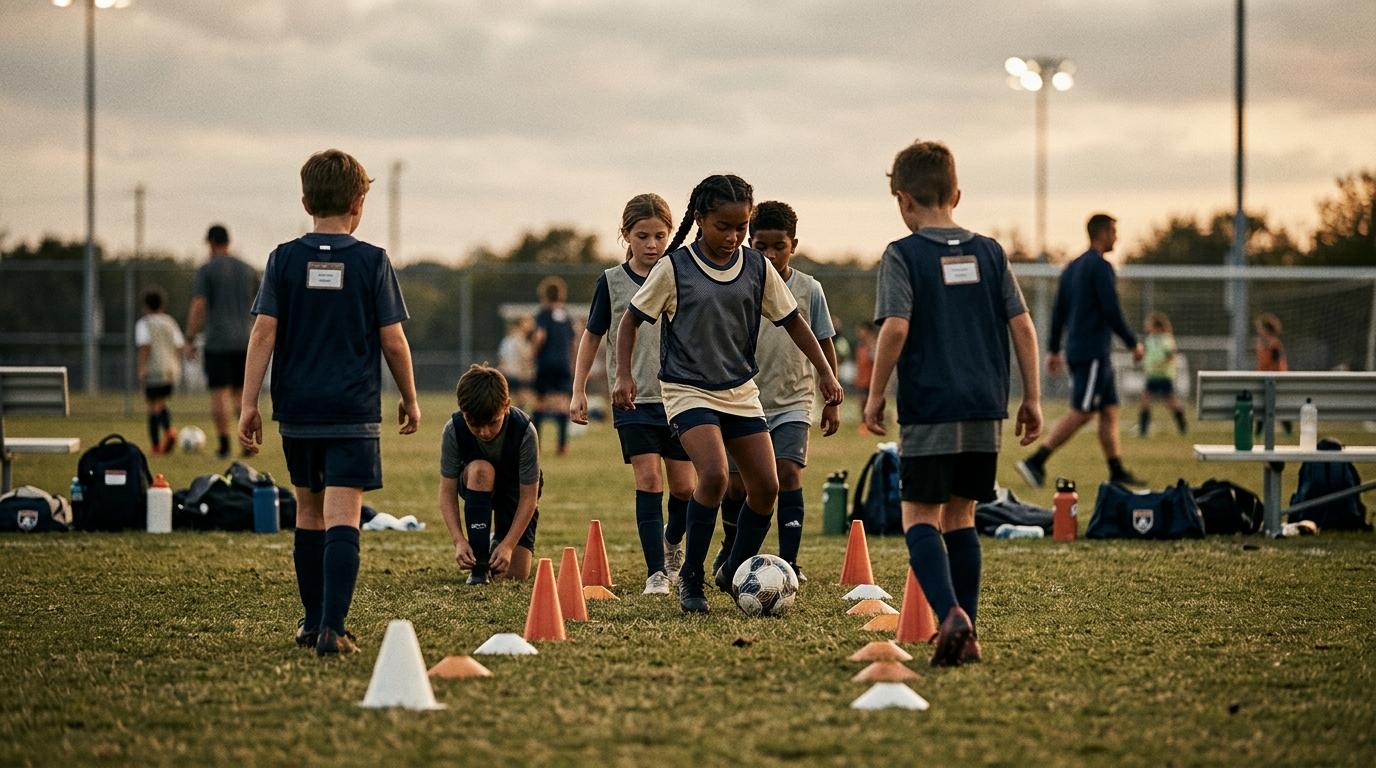

Two kids are racing each other through the parking lot. One still has a fruit snack in his mouth. A parent is digging through the trunk for a missing shin guard. Another player is already asking, “Are we scrimmaging today?” Practice starts in three minutes, and half the team is technically here, but not really here.
That’s a youth sports classic. Bodies at the field. Brains somewhere else.
I learned a long time ago that practice doesn’t actually begin at the whistle. It begins the second players step out of the car. If you leave those first few minutes loose, noisy, and accidental, you spend the next twenty trying to pull the group together.
That’s why I like a simple arrival routine. Not a speech. Not a conditioning test. Just a repeatable five-minute system that gets kids settled, moving, and ready to work.
It helps the team. It helps the coach. Honestly, it helps the parents too, because everybody knows what “walking in ready” actually means.
What the arrival routine fixes
Most rough practice starts come from the same few things:
- Kids arrive distracted
- Gear is half on or half missing
- Early arrivals mess around while late arrivals rush in scattered
- Coaches burn energy repeating the same directions
- The first drill starts before the group is actually focused
You don’t need to make this complicated. You just need to remove the dead time where chaos likes to grow.
Micro thought: Unstructured minutes turn into expensive minutes fast.
The 5-minute routine
Minute 1: Bag down, gear check, eyes up
Give players one home base for bags. Same sideline. Same fence. Same bench area. Every time.
Then teach one fast personal check before they do anything else: water, shoes, required gear, jersey or pinnie if needed.
I’m not looking for perfection. I’m trying to stop the mid-practice, “Coach, I forgot my mouthguard in the car,” conversation.
For younger teams, keep it simple: bag down, bottle out, gear on.
Minute 2: Quiet ball or movement task
As soon as they’re set, they start a task they can do without a coach hovering over them.
This depends on the sport, but the idea is the same: low-chaos, low-instruction, useful movement.
- Soccer: light touches in a small space, inside-outside taps, pull-backs
- Basketball: stationary pound dribbles, crossover series, form shooting close in
- Baseball/softball: wrist flips with a partner, dry swings, footwork around a cone
- Lacrosse: quick stick against a wall or partner passing
The rule is simple: when you arrive, you begin. No standing around waiting for entertainment.
Minute 3: Partner check-in
This is one of the easiest habits to install. Players pair up with the same assigned partner group for the week or the season. They do a quick equipment and readiness check.
Not deep. Not awkward. Just practical.
- “You got your mouthguard?”
- “You tied?”
- “Need a ball?”
- “You know today’s first station?”
Kids miss less when another kid is part of the system.
I’ve coached enough years to know this: teammates will catch things coaches can’t from thirty yards away.
Minute 4: Short movement build
Now the team shifts into a shared movement pattern. Think of this as the bridge between arrival and practice.
Keep it short and recognizable:
- Jog down and back
- Side shuffle
- High knees
- Backpedal
- Open the gate / close the gate
No need to turn this into a performance lab. You just want bodies warming up and the group beginning to move as one unit.
Minute 5: Team circle and first instruction
Only now do you pull them in.
This is where a lot of coaches start, and I think that’s backwards. If you call a huddle before kids have landed, half of what you say floats right past them.
By minute five, they’ve put gear away, started moving, checked each other, and burned off that first burst of parking-lot energy. Now you can give one clear message:
- What today’s focus is
- What the first drill is
- What good effort looks like
That’s enough. Save the long explanation for later if you need it.
Micro thought: Kids hear better after they move.
Why this works so well for youth teams
Young athletes do better with patterns than reminders. If you rely on fresh speeches every practice, you’ll feel like you’re always managing behavior. If you build a routine, the routine starts doing some of the work for you.
I’ve seen this with brand-new teams and experienced ones. The groups that settle fastest usually aren’t the most talented. They just know what entering practice looks like.
And from a coaching standpoint, that matters. You stop wasting your best voice on avoidable mess. You stop opening with correction. You get to coach sooner.
Parents feel it too. When the beginning of practice is predictable, drop-off gets cleaner. Kids step out knowing they have a job to do, not a patch of grass to wander around on.
How to introduce it without making it weird
Just say it plainly.
“From now on, when you arrive, this is what we do.”
Then walk them through it for a week. Expect to repeat yourself. Expect a few kids to forget. That’s normal.
What matters is that you don’t keep changing it.
If you coach younger players, post the steps on a whiteboard or say the same three cues every day. If you coach older players, hold them to the standard quicker. They usually like structure more than they pretend to.
One more thing: don’t overload the routine. The point is to calm the start of practice, not turn arrival into another full station.
A good practice start should feel boring in the best way
That’s usually the sign it’s working.
No frantic searches. No six kids tackling each other beside the bench. No coach begging for attention while half the team is still tying shoes.
Just players arriving, getting set, moving a little, and being ready when it’s time to begin.
It doesn’t look flashy. It looks organized.
And in youth sports, organized beats flashy a lot more often than people want to admit.