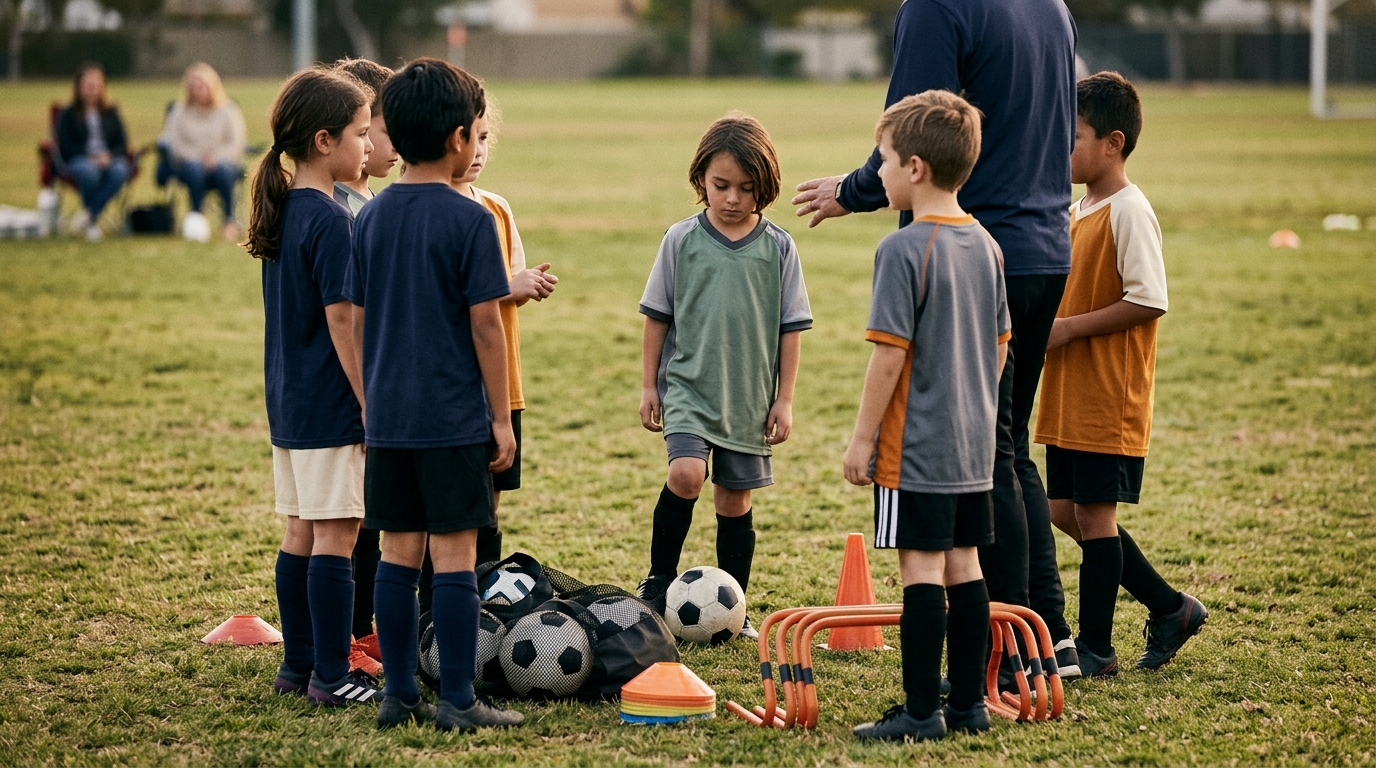

Two kids are still tying cleats. One is taking full-speed shots at an empty net. Another is hanging on the fence talking about school. A parent is yelling, “Practice started two minutes ago.” The coach has a whistle in one hand, cones in the other, and that look that says the whole thing already feels late.
I’ve seen that start a hundred times. It usually turns into a messy practice where the coach spends the next 20 minutes trying to get back the attention they lost in the first two.
The fix is not some genius drill. It’s a repeatable opening.
If you coach kids, the first 10 minutes of practice should look the same every time. Not because you’re rigid. Because kids are better when they know exactly how to enter the gym, the field, or the rink.
The calmest teams I’ve coached were not the most talented ones. They were the teams that knew what practice felt like right away. No wandering. No waiting for instructions. No standing around while adults figured it out.
Same start. Less chaos.
Why this matters more than coaches think
Most youth practices don’t go sideways because of effort. They go sideways because of transitions. Kids drift when there’s dead time. Parents drift too. Assistant coaches start side conversations. One missing ball turns into three missing minutes.
A consistent opening solves a bunch of problems at once:
- It gives early arrivals something useful to do.
- It pulls late arrivals into the group without stopping everything.
- It lowers the volume right away.
- It gets more touches, reps, and movement before the real teaching starts.
- It saves the coach from repeating the same five reminders every practice.
Little thing. Big payoff.
The 10-minute opening routine
This works for almost any youth sport with small tweaks.
Minutes 0-2: Drop gear, check in, start moving
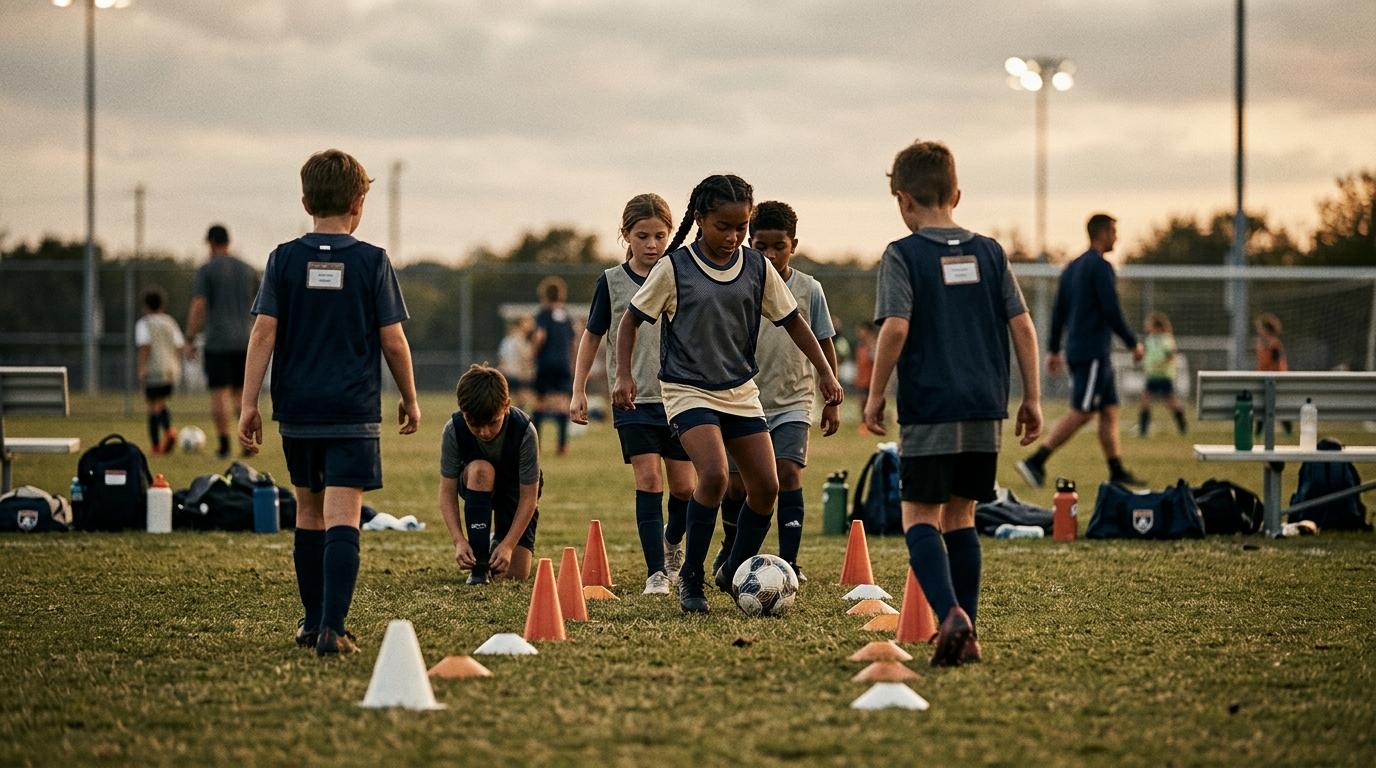
As kids arrive, they put bags in the same spot every time, get water where it belongs, and go straight into a simple movement pattern inside a marked area.
Think light jog, skips, shuffles, backpedal, or movement with a ball if your sport allows it.
The rule is easy: when your feet hit practice, your body starts.
No laps as punishment. No random free-for-all. Just immediate movement.
Minutes 2-5: Ball or skill touches
Now give them a familiar task that creates lots of reps and almost no standing.
Examples:
- Soccer: dribble in a grid with simple commands like pullback, turn, switch feet.
- Basketball: controlled dribble series with both hands and change of direction.
- Softball/baseball: partner wrist flips, quick hands, or dry swings in space.
- Hockey/lacrosse: stickhandling in lanes with head-up movement.
- Volleyball: self-toss passing or setting against a wall if available.
This is not the time for long explanations. Familiar work wins here.
Minutes 5-7: Short group huddle
Now bring them in briefly.
Not a speech. A huddle.
Tell them three things:
- What today’s main focus is
- What the first drill is
- What they need to remember about spacing, effort, or communication
If your opening huddle runs five minutes, it’s not an opening huddle anymore.
I like to keep this part tight because kids can handle direction better after they’ve already moved.
Still bodies wander. Moving bodies listen better.
Minutes 7-10: Fast competitive activity
End the opening with something short, active, and a little competitive. Nothing complicated. Just enough to wake up attention.
That could be:
- 1v1 keep-away in a small space
- Partner passing race
- Clean-field relay
- Footwork mirror challenge
- Small shooting or finishing game with quick rotations
You want energy here, not a lecture disguised as a drill.
What this looks like in real life
Here’s the part coaches learn the hard way: kids don’t need a perfect practice to succeed. They need a clear one.
I’ve coached groups where the first 10 minutes used to get eaten alive by late arrivals, bathroom trips, missing mouthguards, and side chatter. Once the opening became automatic, the whole practice changed tone.
Even the kids who struggled with focus started settling in faster because they weren’t waiting to be managed. They had a job the second they walked in.
And parents noticed too. Not because I gave some masterclass. Because practices looked cleaner. Start times felt real. The gym felt organized instead of loud and scrambled.
That matters.
Simple rules that make it work
- Post it or say it the same way every time. Repetition is your friend.
- Use drills kids already know. The opening is for rhythm, not novelty.
- Set up before players arrive. If you’re building the first activity while they’re watching, you’ve already lost useful minutes.
- Make late players join without resetting the whole group. No stopping to catch one kid up.
- Keep lines out of it. Lines kill practice energy fast.
What coaches get wrong
A lot of adults think practice starts when the whistle blows and everyone is perfectly attentive.
That’s not youth sports.
Practice starts the second the first kid shows up bouncing off the walls from school, carrying a giant water bottle, and asking if today is scrimmage day.
If you don’t plan for that version of practice, you’ll keep coaching the mess instead of coaching the team.
The best opening routine is not flashy. It’s dependable. Kids know where to go. They know what to do. You get less drift, less talking over people, and more actual coaching once the session gets rolling.
And honestly, that first 10 minutes does something else too. It tells your team, without making a big speech about it, that their time matters.
That message lands.