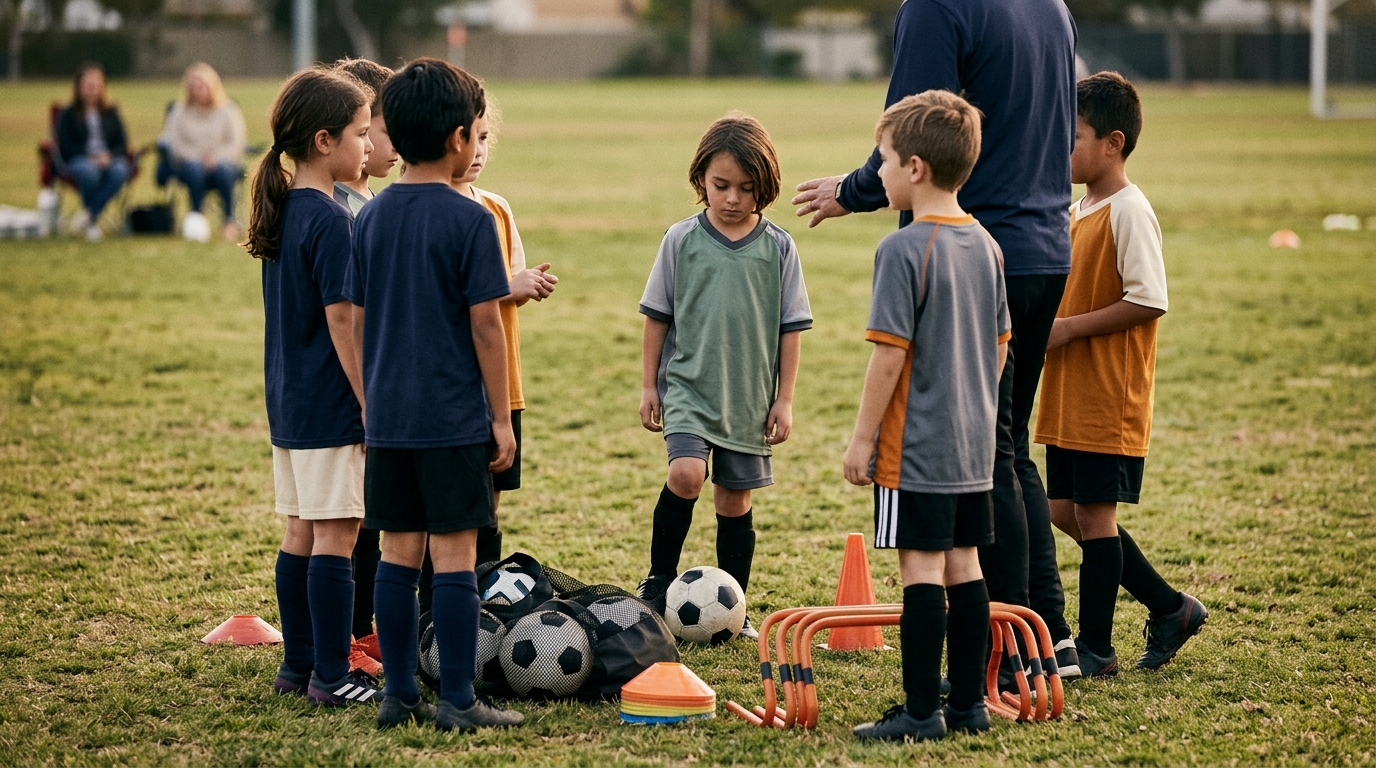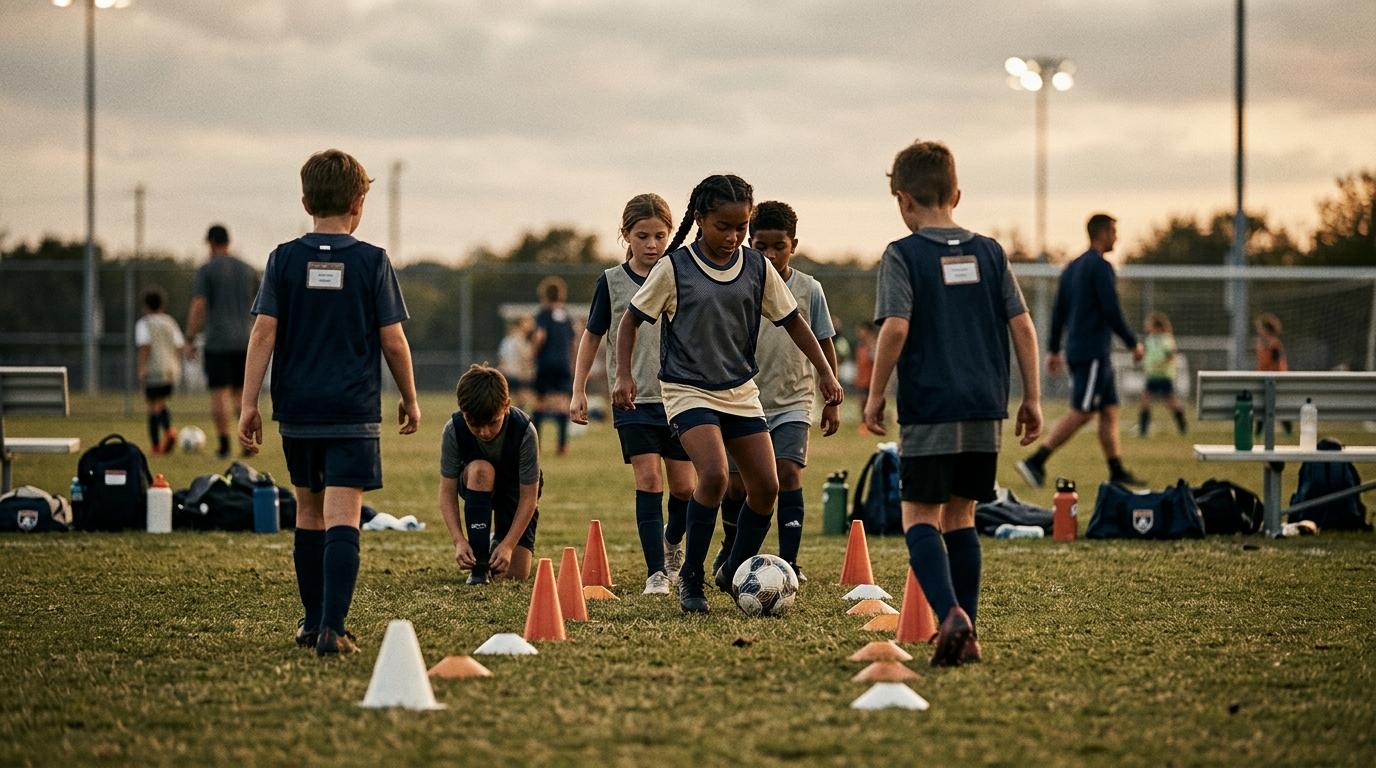

Three minutes before kickoff, one kid is tying a shoe, one is chasing a water bottle rolling toward the fence, and two parents are already doing the math with their eyes.
How long is my kid sitting?
You can feel it coming before anybody says a word. A sub pattern that lives only in the coach’s head feels fair right up until the second rotation gets skipped because the ball stayed in play, the score got tight, or everybody forgot who already sat.
I learned this the hard way. Not because I didn’t care about playing time. Because I thought I could track it on instinct while also coaching the game, managing the bench, watching matchups, and answering a kid asking if they could take off their hoodie. That’s too many jobs for one brain.
A simple bench rotation board fixes more game-day nonsense than most speeches ever will.
What a rotation board actually does
This is not some fancy system. It’s just a visible plan for who goes in, who comes out, and who already sat.
When kids can see the order, they stop asking every two minutes. When assistants can see it, they can help. When parents can tell there’s a plan, the temperature drops on the sideline.
Most of all, it helps you stay consistent when the game gets noisy.
If your substitutions depend on memory, emotion usually sneaks in.
What you need
- A small whiteboard or clipboard with paper
- A marker or pen
- Your lineup
- A simple rotation order written before the game starts
That’s it. No app required. No color-coded spreadsheet necessary. If you’ve got one, fine. But paper still works when the sun is bad and your phone is at 12 percent.
How to set it up in two minutes
1. Write the starters
Put the starting group at the top.
If your sport has rolling subs, list the bench players underneath in the order they’ll enter. If your sport uses shift changes or planned intervals, note the unit groups clearly.
2. Mark the first swap before the whistle
Don’t wait until the game starts to figure it out. Decide the first rotation ahead of time.
Example:
- 8:00 mark: Maya for Tori
- 12:00 mark: Ben for Luca
- Next stoppage after 16:00: Ava in, Jess out
Be realistic. Not every sport gives you clean substitution windows. That’s fine. The point is to know the next move, not predict the entire game like a magician.
3. Put one person in charge of the board
If you have an assistant, great. If not, do it yourself, but keep the job simple. Update only what matters:
- Who went in
- Who came out
- Who still needs a turn
Do not turn the board into a stats sheet. This is not the place for shots, steals, touches, or deep thoughts.
4. Show the bench players the order
This part matters. Kids behave better when they know what’s coming.
You don’t need a team seminar. Just point and say, “Here’s the order. Stay ready. If something changes, I’ll tell you.”
That sentence alone cuts down the constant, “Coach, am I in next?”
How it helps during a messy game
Every youth game gets weird. An injury happens. A kid needs a breather early. Somebody forgets a shin guard. A long inning or a nonstop stretch blows up the clean rotation you planned.
The board still works because it gives you a reset point.
Instead of guessing, you can glance down and see who got skipped. Then you fix it on the next chance.
That’s the real value. Not perfection. Recovery.
I’ve stood on enough sidelines to know most conflict doesn’t come from one mistake. It comes from repeated confusion. A kid sits longer than expected, nobody explains it, and now the whole bench starts creating its own story.
The board keeps the story honest.
What to say when the game gets tight
Let’s be plain about it. There will be moments when competition and rotation rub against each other.
If you need to hold a sub for a specific situation, fine. Just don’t act like nobody noticed. Tell the player the truth in one sentence.
“I’m holding this group for this defensive set. You’re still next.”
Short. Calm. Clear.
Kids can handle a brief delay better than they can handle mystery.
Unclear feels personal fast.
Common mistakes to avoid
- Changing the order every few minutes. If the board means nothing, the board means nothing.
- Keeping it hidden. A secret rotation plan helps nobody.
- Using it only when parents are watching. Kids notice performative fairness too.
- Overcomplicating it. If you need ten symbols to read your own board, it’s too much.
Why this matters more than coaches think
Players don’t just react to minutes. They react to predictability, communication, and whether the adults seem organized.
When the bench feels random, effort drops. Attention drifts. Kids stop preparing to enter because they don’t trust the signal. Then coaches call that a focus problem when really it was a structure problem.
I’ve coached long enough to know this: the smoother your logistics, the better your teaching lands. A chaotic bench bleeds into everything else.
So make the plan visible. Write down the next sub before someone asks. Give the bench something solid to look at besides your face.
Because once kids start asking, you’re already behind.