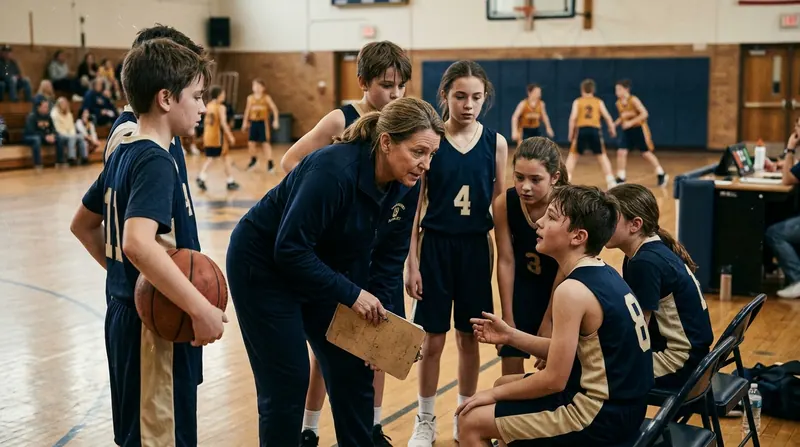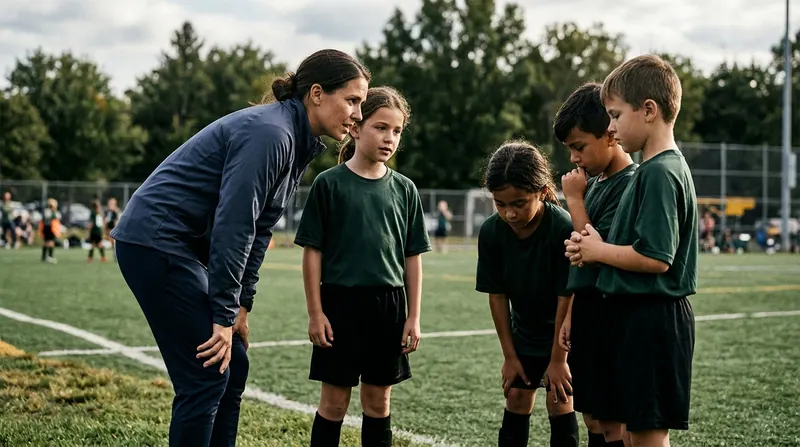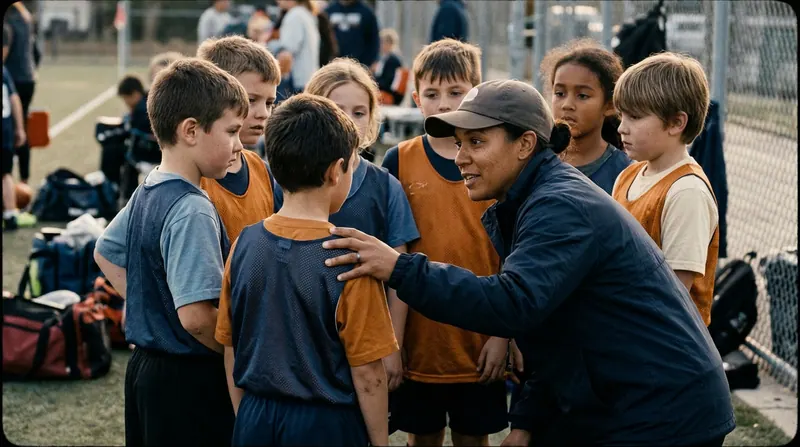
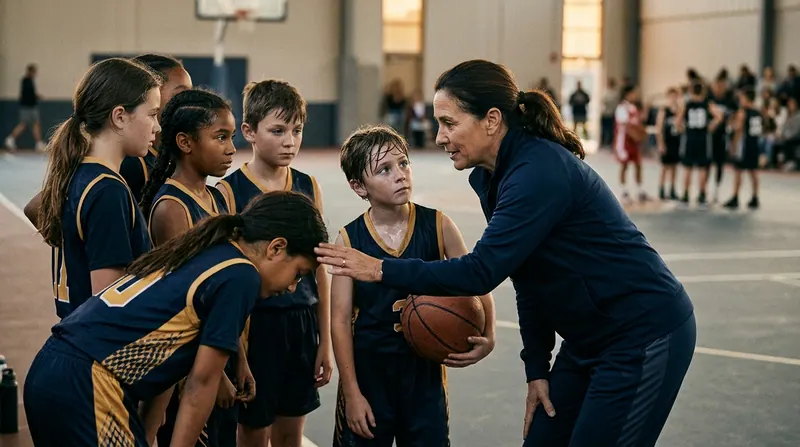
It was 7:28, parents were already pulling up, and practice had that loose end feel to it. One kid was toe-poking balls back into the bag. Two were half-wrestling over a pinnie. A couple more were mentally in the snack line. We had maybe 90 seconds left, which is exactly when a lot of practices quietly fall apart.
That’s when I stopped it and said, “One last ball. If this rep looks like us, we’re done. If it doesn’t, we do it again.”
Nothing magic about it. No speech. No punishment voice. Just one clear standard dropped right at the end.
And sure enough, backs straightened up. Talking stopped. The pass got cleaner. The finish had some intent to it. We ended on something that actually looked like the team we were trying to become instead of the tired version that was ready to drift to the parking lot.
Coaches miss this all the time: the last rep of practice teaches more than you think.
The end of practice has a memory advantage
Kids remember the ending. So do assistants. So do parents watching from the fence. If your last few minutes are a mushy mix of half-effort, random chatter, and “good enough,” that’s what hangs in the air until next time.
I learned this the hard way years ago. I used to treat the end of practice like an airport gate. Once we were close enough, I just wanted everyone boarded and gone. Balls rolled everywhere. Instructions got sloppy. Dismissal took forever. Then I’d wonder why the next practice started flat and unfocused.
Because the previous one never really had a clean finish.
The end matters because it sets the carryover. Not in some dramatic culture-poster way. In a very practical youth sports way. The last rep tells them what counts when they’re tired, distracted, and watching the clock.
Anybody can look organized in minute six. Minute seventy-two tells the truth.
What the “last ball” rule actually does
The tactic is simple: before your final rep, final play, final serve, final possession, or final sequence, you name exactly what has to show up for practice to end.
Not ten things. One thing.
- “Last ball. I need everyone talking.”
- “Last rep. Sprint to your spot when the play flips.”
- “Last serve. Full routine first.”
- “Last possession. Wide spacing and one strong finish.”
- “Last ground ball. Field it, set feet, clean throw.”
Then you watch it honestly.
If they meet it, you’re done. If they don’t, you reset and do one more.
That’s the key: one more. Not six more because you’re annoyed. Not a conditioning detour because they were sloppy. This is not about trapping tired kids in a closing lecture. It’s about teaching that the standard still exists at the end.
Players pick up pretty quickly that you mean what you say. The last rep stops being a throwaway. It becomes a little team checkpoint.
Why this works better than a long closing talk
Most end-of-practice speeches are too late and too wordy. Kids have already slid into pickup mode. Their bodies are still there, but their attention is halfway to the car.
A last-ball standard gives them something physical to do, not just something verbal to hear. That matters. Young athletes understand expectations faster when they can attach them to an action.
I’ve used this with little kids and older players, and the principle holds up: if you want clean habits under fatigue, you have to ask for them under fatigue.
Not every day has to end with intensity. Sometimes the standard is composure. Sometimes it’s listening. Sometimes it’s cleanup done right. But the end of practice should belong to something on purpose, not just whatever mess is left over.
How to use it without making practice feel heavy
This works best when your tone stays steady. Matter-of-fact beats dramatic.
Don’t sell it like a movie moment. Just define the rep and the expectation.
- Be specific. “Better energy” is mush. “Talk on every pass” is clear.
- Keep it short. One sentence is enough.
- Make it realistic. Ask for one sharp behavior, not perfect execution.
- Be consistent. If you say the last rep matters, watch it like it matters.
- Don’t weaponize it. This is not your chance to squeeze in extra punishment at 7:29.
And if they nail it, say so plainly.
“That looked like us. Done.”
That line carries weight because kids know exactly what you meant. You’re not praising noise. You’re naming alignment.
It helps tomorrow start faster too
Here’s the sneaky benefit: when you consistently end practice with one honest standard, the next practice usually begins cleaner. Players have a better memory of who they were at the finish. That becomes the version you can call back.
“Same communication as our last ball yesterday.”
Now you’ve got continuity without needing a whole recap speech.
That’s useful coaching. You’re not reinventing your tone every practice. You’re building a trail kids can actually follow.
Teams get more consistent when the ending stops being accidental.
Every coach has those final 60 to 90 seconds where the gym starts to empty before anybody has technically been dismissed. Don’t give those seconds away. They’re small, but they carry.
Use the last ball to show what still matters when everybody’s tired and ready to go home.
Because if the final rep looks careless, that’s what leaves with them.
And if the final rep looks sharp, that leaves too.